When we launched our Big North West Upgrade last year, we said it would mark a step change in the scale and pace of investment in the infrastructure that supports everyday life across our region.
Now, 18 months on, we’re beginning to see that commitment become reality.
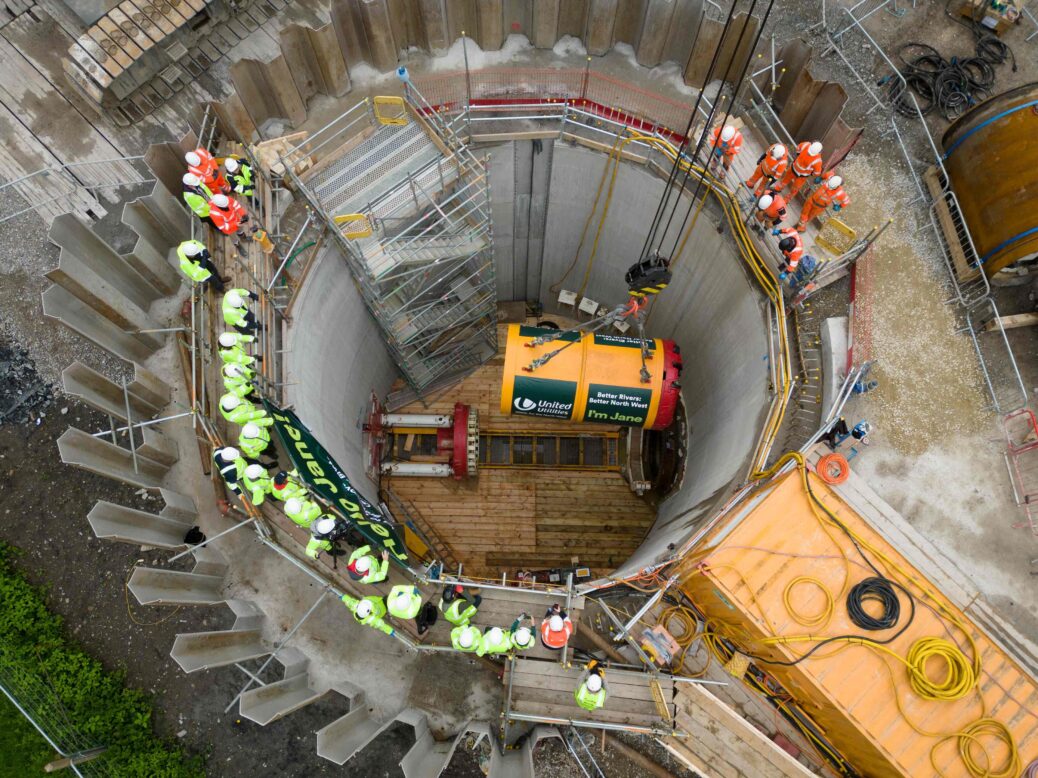
Over 1,000 projects are under way from Crewe to Carlisle as part of the £13bn we will invest by 2030. Whether we’re strengthening existing infrastructure or creating new capacity, our focus is on building resilience and supporting growth for the north-west.

More than 30,000 jobs are being supported by the programme and we have engaged more than 100 suppliers – many of them local businesses. At the same time, we’re investing in our own workforce of more than 7,500 people, including a record intake of apprentices.
Overall, the Big North West Upgrade is forecast to generate £35bn of economic value while delivering measurable benefits for customers and the environment.
We’re already seeing encouraging signs of progress. Last year, 80 per cent of our key operational metrics improved. This included avoiding any category one pollution incidents and record low levels of sewer flooding. Storm overflow spills have fallen by 38 per cent over the past two years, and we remain on track for a 60 per cent reduction over the decade to 2030, helping to protect rivers, lakes and coastal waters.
Across our water network, we’re renewing more than 900km of mains to reduce leakage and support growing demand. Major refurbishments of the Vyrnwy and Haweswater aqueducts will strengthen supply security for millions of people across Greater Manchester, Merseyside and beyond.
These improvements are becoming even more vital in the face of climate change, with longer periods of dry weather, such as we saw this summer, putting pressure on water supplies. Meanwhile, more intense rainfall and severe storms can overwhelm wastewater pipes.
Few places illustrate these challenges more clearly than Windermere, the iconic heart of the Lake District.
Rising temperatures increase the risk of harmful algal blooms, while heavier rainfall places strain on the area’s sewer network which, like much of the north-west, carries both wastewater and surface water in the same system.
We understand the strength of public feeling about protecting Windermere and share the ambition to see the lake thrive for generations to come. That’s why we’re investing £200 million across the Windermere catchment by 2030, putting us on track to achieve the government’s spills reduction target 20 years early. But we also recognise that long-term challenges require long-term solutions.
Over the past year, we’ve worked closely alongside local stakeholders, campaigners, regulators and leading international engineering experts to explore the feasibility of a “super sewer” that would divert all controllable wastewater and highways runoff away from Windermere. Over the coming weeks, the group’s findings will be shared and could help shape a future in which only rainwater enters the lake.
Subject to support from the government and regulators, it would be one of the UK’s most ambitious environmental projects: creating jobs, supporting economic growth and setting a new benchmark for freshwater protection. The “Only Rainwater into Windermere” initiative reflects a wider approach we’re taking across the region. By working closely with local communities, elected representatives and various partner organisations, we can effectively ensure our investments address local priorities and delivers the greatest possible impact.
That’s why we have dedicated operating teams serving each of our five counties – Cheshire, Cumbria, Greater Manchester, Lancashire and Merseyside – with local staff who know their patch. It is also why we are developing closer partnerships with local authorities to bring more co-ordination to the essential services we deliver.
In Greater Manchester, we’re working with the Combined Authority and the Environment Agency through an Integrated Water Management Plan that takes a joined-up approach to flood risk and water quality. In Merseyside, we’re partnering with local authorities through a £30m programme to make Liverpool a “spongier” city through sustainable, nature-based drainage schemes.
We want to build on these partnerships across the north-west, recognising that the best outcomes are achieved when organisations work together towards shared goals.
That same principle guides our approach to supporting customers who may be struggling with their bills. By working closely with charities and community organisations, we have developed one of the most comprehensive affordability packages in the sector. Worth £525m, it is designed to help one in six customers.
Everything we are delivering is underpinned by our strong and sustainable financial model. As a public company listed on the London Stock Exchange, we are able to attract investment from around the world into the north-west.
Our shareholders range from some of the biggest global institutions in the world to local public pension funds investing in local infrastructure. In April, we raised £800m of new equity from these shareholders, allowing us to make the Big North West Upgrade even bigger.
Last month, Ofwat – the Water Services Regulation Authority – gave us provisional approval for an additional £975m of projects specifically focused on supporting the government’s housing, digital and climate ambitions.
Subject to final approval, these investments are expected to boost employment and create a further 4,000 jobs across the supply chain.
There is still much more that needs to be done, but we are making real progress. We’re proud of what has been achieved so far, and we’re committed to working in partnership with local communities to drive further improvements.
Together, we can seize the opportunity to build a stronger, greener and healthier north-west for generations to come.
Related