Labour must develop a practical plan for local places that lets go of the past and creates the common ground for the infrastructure, security and welfare that we need in the future.
The second new Labour government in two years has come into power with bold statements of intent. The cost of living, social care, welfare and council house building are all in Andy Burnham’s sights, and his delivery route of choice is devolution.
There’s a risk, though, in his choice of rhetoric, of defining the government mission against the past instead of looking to the future. Care must be taken when harking back to a time in Britain rooted in dirty, dangerous and extractive work.
The reindustrialisation the government calls for can’t be about rebuilding old industries. It must be about taking pride in the development of new ones.

That means looking at the essential, and urgent, need for climate adaptation and AI readiness not as sources of anxiety but as the means to develop better ways of living.
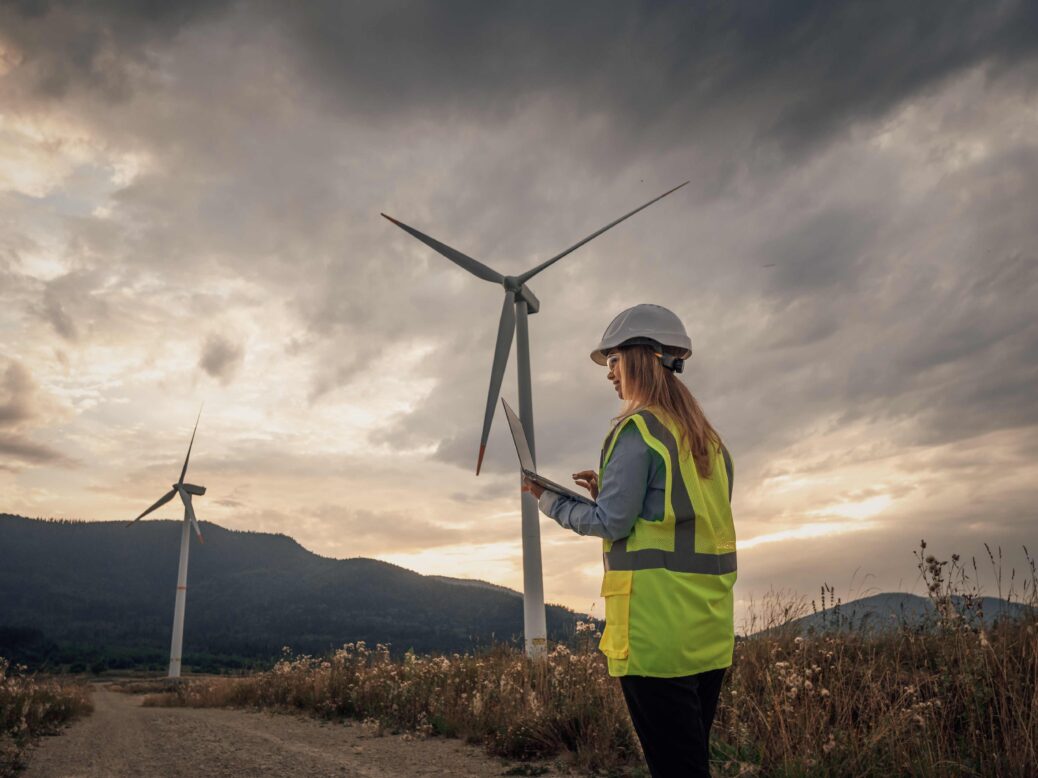
It means, bluntly, learning to love wind turbines, or local heat and data centres in the same way as we admire Victorian water towers and sewage treatment plants. This isn’t so much Nimby versus Yimby as it is optimistic planning for a different kind of world with new priorities.
There are good reasons for thinking this needs to be led and coordinated closer to home, and those reasons aren’t primarily Andy Burnham and N.10 North.
New technologies work best when more of their operation is decentralised compared to the Victorian and postwar systems we grew up with.
Water resilience will require a mix of local solutions: grey water reuse, rainwater capture and storage, drought prevention, and measures to slow and absorb water where it falls.
Flood management, too, needs multiple interventions across a catchment, from local drainage and natural flood management to wetlands, retention basins and targeted defences.
This is more cohesive than relying on ever larger volumes of water being channelled rapidly towards a single river.
Energy presents a similar case for local coordination. The growth of intermittent renewable generation makes microgrids and local distribution networks increasingly important, allowing supply and demand to be balanced closer to where energy is generated and used.
This kind of local flexibility can reduce pressure on the grid, limit the need for costly reinforcement of transformers, substations and cables, and make a more resilient energy system possible. Bigger blades also mean wind energy everywhere, not only in blustery Scotland.
Our future needs in energy and water are best approached with systems of subsidiarity. Ownership is, here, a secondary argument. What must come first is the right kind of planning and delivery to achieve the best result. That in turn must drive governance.
Place can be a translation device that makes the contribution to the monthly bill feel like a fair one, rather than an invisible Whitehall trick.
When Copenhagen developed its new range of flood defences, the investment cost was carried by the water company, which in turn charged city billpayers over several years to recoup that capital.
This wasn’t a cost spread nationally; it was one raised and covered locally in the areas with the new wetlands and flood-resilient parks, and with storage pipes and retention basins below.
With billions of new infrastructure spending needed in the water sector, the debate as to who pays for what and where is already acute; spreading that cost appropriately is not a problem to be left to tomorrow.
Even new defence pressures will need local responses. Emergency preparedness, as we know only too well from recent climate events, and from Covid, is highly localised.
Neighbourhoods are crucial, not only because they provide a sense of belonging and because we are loyal to home turf, but because the practical demands of the next hundred years are going to be experienced at a much more local scale than the last 40 years of free-trade and global growth have taught us is normal.
Place is the natural “common ground” that binds communities and underpins the infrastructure and renewal we need. This isn’t nativism, or nostalgia, it’s just good sense.
What does all this mean for public services? We argue that many of these same considerations apply in thinking about how we respond to demands driven by larger demographic trends. An ageing population has the dual pressure of increasing numbers of older people requiring regular respite and care, with a smaller number of working-age people to provide it.
Solutions are going to have to lean in to peer support, communal living arrangements and distributed professional care. They can no longer rely on a centralised system that is creaking at the seams.
Withdrawal into the family is not going to be an answer when the families aren’t there or simply cannot cope with the pressure of supporting multiple members for much longer periods of time.
As Louise Casey has noted: “That means having a proper conversation with the public about who social care is for, what the state should provide, what families can reasonably be expected to do, and what we should all contribute in return”.
Our claim here is that new pressures are not necessarily bad. They are the reality we need to face up to in the best ways we can. And happily, tighter links and stronger in-person networks work.
The word we use to sum up what is needed in infrastructure, systems and services alike, is reciprocity.
Reciprocity relies on the face-to-face. It develops amongst people who know each other.
It is built on the familiarity of interaction. The kinds of billing systems that will pay for local adaptive infrastructure will need to be reciprocal. They must not only expect a contribution but make one. The underground flood chamber needs its overground park so that local billpayers can see and experience the benefits daily, not only when the floodwaters rise. The same goes for welfare.
The future of care is going to rely on contribution rather than entitlement. There may be inspiration in the past, but the future is going to have to be built new. Together, we must establish this new common ground.
Related