Every year, more than a billion meals’ worth of good food goes to waste in the UK: fresh, edible surplus that never makes it to a plate. This would be enough to feed every child in the UK for a month. We are a group of CEOs from the community redistribution sector, and we believe that more needs to be done to rescue it.
We have all come together under the National Programme to Redistribute Surplus Food, which was announced by the government in May. Under the banner of the Coronation Food Project, inspired by His Majesty the King, it sets out a plan to triple the amount of food we redistribute over the next ten years.
Redistributing more surplus food is not a systemic solution to poverty, and this plan should be delivered alongside measures to address the root causes of poverty, hardship and hunger. However, for as long as such poverty exists, surplus food redistribution is a powerful way to alleviate symptoms of food insecurity and support grassroots organisations helping people address challenges in their lives.
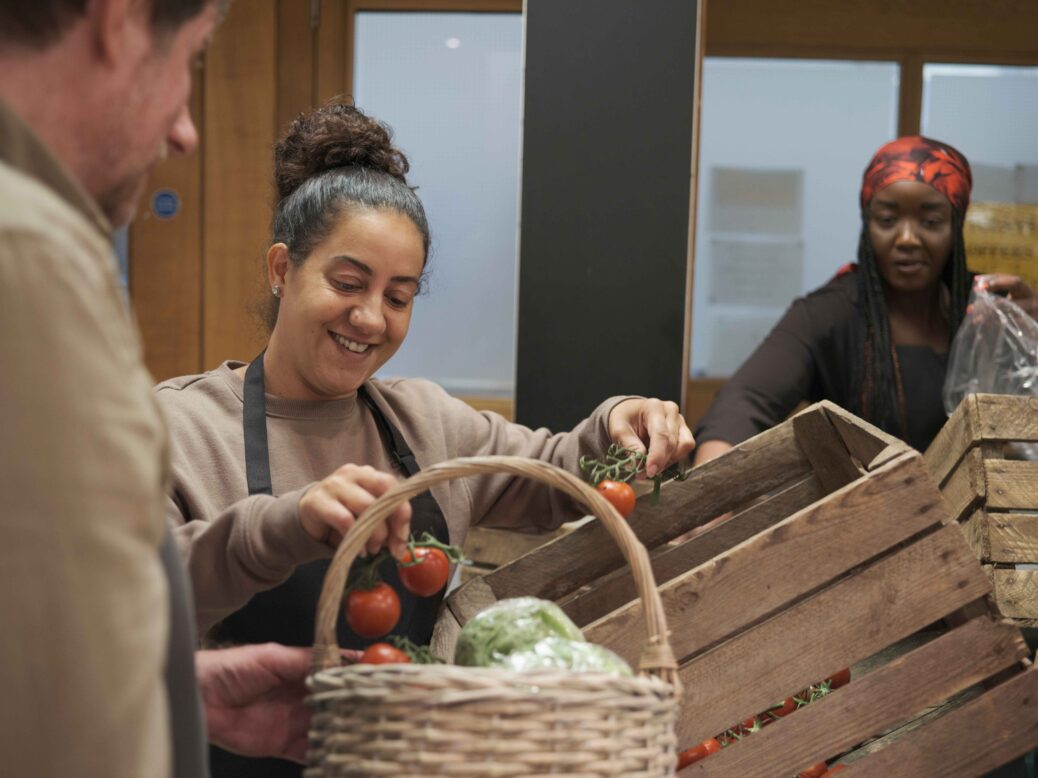
Moreover, this food has the power to animate the social fabric of our country. It can fill the tables of children’s groups and school holiday programmes. It can sustain lunch clubs for older people where friendships are forged and isolation is addressed. It can support food pantries, homelessness shelters, refugee support services, domestic violence refuges and the countless grassroots organisations that bring people together with wraparound support that transforms lives.

That is why, our sector, which includes City Harvest, Community Shop, the Bread and Butter Thing, His Church, Felix, Feeding Britain, Neighbourly and the wider Xcess Network, is committed to making that happen and is supported by allies like frontline advice and support charity Trussell.
We know that no single organisation can do this alone, and government, business and philanthropy each have a distinct part to play. This is an undertaking characterised by its ambition and scale, and we have a five-point plan to get our sector moving forward:
1 – We will work together to source more food and create a joined-up network that is reactive to the changing and unpredictable nature of surplus food.
2 – There will be greater collaboration on infrastructure, with organisations working to share data, resources and volunteers, and build coordinated last-mile delivery.
3 – We will process more food through innovation and investment in cooking, canning, freezing, juicing and baking to create a consistent supply of food in usable, longer-life and convenient formats.
4 – We will build a shared supply chain to ensure less duplication or differing technologies across the UK, so suppliers have the same experiences from Shetland to Penzance.
5 – We will use food to create social value, turning into a community asset that lets thousands of local groups and local people make full use of it.
This isn’t only a job for the charity sector. If we are serious about tripling redistribution, food businesses need to change how they see surplus. Getting good food to communities must become the default: ahead of animal feed, ahead of anaerobic digestion and ahead of disposal. This means a factory treating a batch that fails quality control as something to save, not scrap, and a wholesaler rescuing mislabelled stock rather than writing it off. It means engaging with one national system, building on what the Coronation Food Project and the Alliance Food Sourcing model, developed with IGD and industry partners, have already shown works. And it means reporting surplus honestly, so we can see what is genuinely unavoidable and what isn’t.
We will need philanthropists and funders too to give the sector the long-term, patient funding it needs
to build this infrastructure properly. Vitally, we need government to change the policy that determines whether donating food makes financial sense.
We are asking for five things:
1 – A surplus scaling fund to immediately cover the direct costs businesses face when they redistribute surplus.
2 – Corporation tax reform, so redistributing surplus is the economic default rather than the exception.
3 – Food redistribution written into Environmental Land Management Schemes to secure surplus from farms.
4 – Redistribution built properly into food policy architecture, across all four nations, and embedded in the Food and Circular Economy Strategies.
5 – Mandatory food waste reporting, so we finally have the data to see where the surplus in the system is.
These policy asks are achievable and aligned with government priorities. We have already taken the first step ourselves: we have all signed the Coronation Food Project Covenant, committing ourselves to collaborating over the next decade to triple redistribution.
We are doing this because working together means that more food reaches more people. The surplus is there. There is enough to go round. Rescuing it isn’t just good for the planet. It’s good for people, and it’s good for the communities we all want to see thrive.
Vic Harper is CEO of The Bread and Butter Thing; Richard Gammage is CEO of City Harvest; Gary Stott is executive chairman of the Community Shop; Andrew Forsey is CEO of Feeding Britain; Charlotte Hill is CEO of Felix; Trevor Cockings is president of His Church; Steve Butterworth is CEO of Neighbourly
Related