
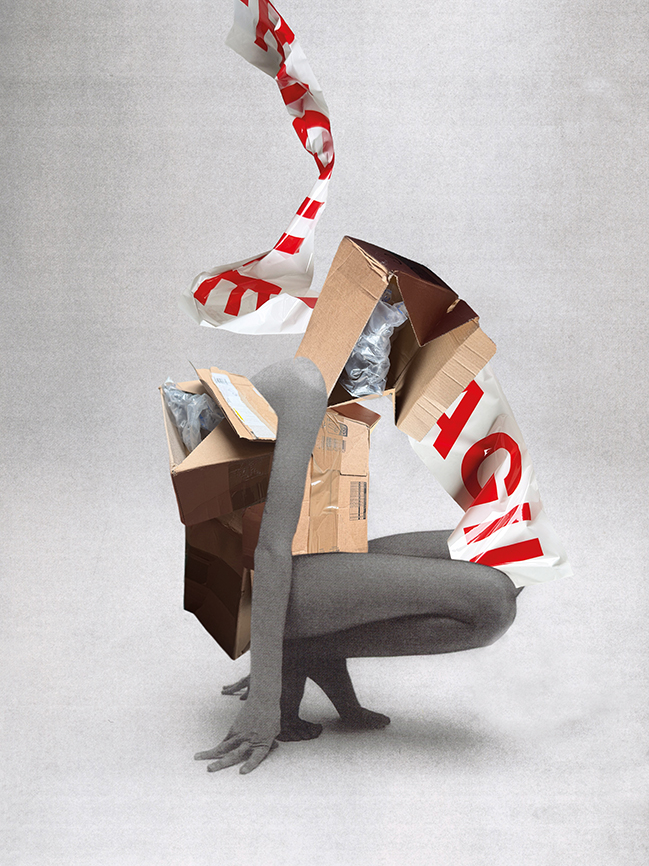
Banbury Lodge rehabilitation centre is a former care home in Oxfordshire with space for 20 residents. The manager Nick Dunkley shows me a common room where they come to relax. There’s a timetable on the wall: medication at 8am (Benzodiazepines for alcohol addiction, methadone for heroin), then group therapy, which is where they are now, in small clusters behind closed doors. In a storeroom to the rear of the building, parcels delivered to residents are looked after by staff. Residents generally do their online shopping on Monday and Thursday nights, when they have time with their mobile phones – then they wait for things to arrive, and sometimes it’s a long wait, because these days there are a lot of parcels on the roads.
Dunkley tells his patients that online shopping is a feature of their addiction, but he cannot and will not take away this moment of personal freedom. He has parcels in the storeroom that have been there for months, ordered by patients who left ages ago. He does not send them on to a forwarding address – because it was never really about the product inside. The peak releases of dopamine from online shopping come at the seeking and identification of a purchase, the anticipation of the point of sale, and the click itself. In this respect, it follows exactly the same chemical pattern as gambling or scoring drugs.
There is a similar box of “dead” parcels in my local corner shop in north London, alongside the Vinted goods dropped off by delivery companies Evri and Relay that day – items belonging to people who have no intention of picking them up, because they’ve regretted their purchases and are waiting for them to be returned. I see them when I go to collect my own things, which at one point, earlier this year, was around twice a day. I’m ashamed to be seen so often by the corner-shop staff, rifling through the box of black wrapping which leaves its trace on your fingers like someone going through a bin for a bit of old tobacco. I see the same names coming up as I turn over the parcels, and I fantasise about contacting them to see if they are aware they have a problem too.
Vinted is now the largest fashion retailer in the UK after Primark and Next, and we are the second biggest user in the world, with one in four Brits on the app. The second-hand goods platform, valued at £8bn, was launched in Lithuania in 2008 by Milda Mitkutė, a woman with too many clothes; she remains a partner in the company. In a three-year period starting in the pandemic, between 2021 and 2024, Vinted’s UK market ballooned from eight million users to 17.4 million. The company hasn’t released figures about how many people are on the app at any one moment, but it just took me exactly 54 seconds to sell a pair of Crocs, mid-morning on a workday, and in that time I had nine different offers. So it is probably accurate to say that everyone is on it, pretty much all of the time.

Between January and March 2026, UK Addiction Treatment (UKAT), which counts Banbury Lodge among its residential centres, received 5,000 online enquiries about shopping addiction – a 25 per cent rise on the same period the previous year. The centre considers shopping alongside all addictive behaviours: another aspect of the same human drive which presents itself “like Whack-a-Mole” as each compulsion is worked on. In a small therapy room with a box of tissues between us, Dunkley describes Zoom sessions with patients who have come to him for help with cocaine or alcohol but do not realise that there is anything amiss when they keep leaving the call to answer the door to the Evri driver. Compared with substance abuse, with its 28-day or 90-day programme, shopping addiction is far more difficult to treat.
“Shopping is like cocaine – you’ve got the high intensity and a very short half-life – you get that instant peak and then it falls off very quickly,” Dunkley says. “The way you deal with drugs is by putting people on a longer-acting, low-intensity substitution. With shopping there isn’t anything. So that’s why it becomes really tricky in terms of the managing of it.”
I began using Vinted in September 2024 when I decided, for reasons I could not explain at the time, that I wanted to get rid of all the clothes I’d owned for 20 years. I’d had the same things since I was in my early twenties – they were looked after, loved and worn thin in patches – but suddenly, they all looked drab to me and had to go. A few weeks ago, having been on the app around 18 months, I reached a turning point when I went to my bedroom to try and resell a jacket I should never have bought – I knew it would be far too small – and as I arranged it on the hanger to take photos, my stomach started cramping. “Excitement,” says Dunkley. “Cocaine addicts get stomach upsets when they’re about to score.”
I tell him the moment inspired me to research this piece and that writing it will hopefully get me off Vinted – that I’m lucky to be able to explore it in my own work. He tells me an addict’s biggest defence is to find a point of difference between themselves and another addict. Compulsive use of Vinted is obscured by a powerful force field of self-justification. People love to say they “use it for the kids’ clothes”, with a certain strange light in their eyes. “It makes me feel like I’m saving the planet!” others will cry: I assume they’re taking the acres of wrapping to designated soft plastics sites in local retail parks and not just throwing it in the bin. On Mumsnet, a woman begins a thread strangely: “Anyone addicted to Vinted? (Light-hearted!)” On Reddit, where things are more confessional, another describes fabricating toilet breaks at work so she can “sit on the pot” and scroll the homepage for dopamine.
The “gamification” of online shopping platforms refers to the integration of rewards and other psychological triggers pioneered by video game designers. It was first perfected by the e-commerce giant Shein, whose hyper-personalised experience is designed to create a feeling of emotional connection in the buyer. Through data matching, brand affinity and size and weight analysis, Shein made you feel warm and fuzzy inside: wow, everything on here will look good on me!
In the last 12 months, in France and the UK, Vinted has surpassed Shein in customer base and revenue – and its own parasocial setting is much more sophisticated, not least because you are interacting with real people selling their own things. Alongside a social media-inspired cocktail of likes and infinite scrolling, Vinted’s homepage uses an advanced algorithm to display stuff truly unique to your taste – an infinite, personal, constantly updating jumble sale of the mind. Each time you look at this jumble sale, it will present better versions of the thing you’ve just bought, encouraging you to buy them too and sell the inferior version, thus keeping you on the app. The money from your sale is stored in a pot rather than going directly to your bank account: this “free money” then sits there, to be used for future purchases, and is often spent accidentally before it can be withdrawn. Vinted shows you how much money you’ve made on the app, but not how much you’ve spent. And though many users, myself included, fantasise about deleting their account, there is always something left to sell, because of all the mistakes and poor purchases brought about by the addiction in the first place. I have never had a compulsive relationship with alcohol, cigarettes or drugs, and I have no social media accounts – yet Vinted dominates my life.
“I don’t think addiction can be caused by technology,” says Dunkley. “Lots of people have the ability to shop and they don’t get addicted. Lots of people use drugs and alcohol but they don’t do it compulsively. People use shopping to delay anxiety, though we all know it makes anxiety worse.”
Shopping addiction, or compulsive buying, can be an early symptom of clinical depression – it offers a momentary release from pain, until the buyer’s remorse sets in. In rehab centres around the country, you’ll still find the words of the Big Book, the foundational text of Alcoholics Anonymous, printed out and stuck on the walls. Because when it comes to addiction, no one has defined it better: they call it a state of profound disconnection and deep internal unrest – a “spiritual malady”.
I leave Banbury Lodge wondering if I can be back home in London by 3pm, when the light will still be good enough for me to photograph and list the three things I’ve decided to sell on Vinted to atone for the £160 I spent on a flocked velvet denim coat at midnight. I don’t know if the coat will fit, and I can’t return it if it doesn’t. Selling reduces the shame of my initial spend; it is the best way to justify my habit to myself. I often do the mental maths in the shower in the morning, where I used to let my mind drift to other, more insoluble problems. I suspect the constant sense of financial deficit, and making it back up by the skin of my teeth, is part of the appeal.
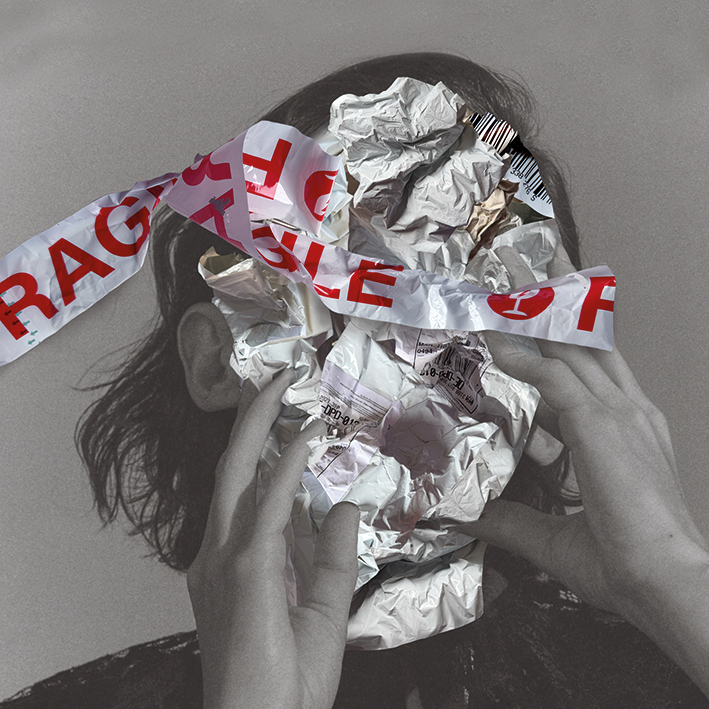
The UK is a nation of micro-capitalists. We are good at three things: betting shops, porn and car-boot sales. The Cash in the Attic-mentality probably goes back to the Blitz, a badge of ingenuity and resourcefulness. But these days, bargain hunting is a kind of lust. In a study conducted in September 2025 by the coupon gurus VoucherCodes.co.uk, 41 per cent of people ranked their buzz from finding a bargain higher than their buzz from sex – for most, the buzz lasted about an hour, but 8 per cent said it could last them a whole week.
While Ebay was founded on the auction model (and lost the market when they introduced their “buy it now” option, which was much less exciting), Vinted pioneered the “make an offer” function. Knocking someone down on their three-quid T-shirt is all about power, and power is a thrill. Vinted combines the thirst for a bargain with mass addiction to the mobile phone and fantasies around clothing which go deep into the psyche. Yet not everyone develops a “problem” with it – or with shopping in general. In 2016, an oft-quoted analysis published in the journal Addiction found that just 5 per cent of people who shop do so compulsively. A 2022 study revised that figure to 10 per cent after the pandemic lockdowns, when e-commerce platforms and credit instalment systems like Klarna and Clearpay targeted people sitting at home on furlough, lost and worried. In those difficult months, delivery drivers and postal workers were often the only reliable marker in the day, beyond the press conference with its daily death toll. A part of the national psyche was reshaped during the pandemic: the feeling that you had to have something to look forward to, coming your way in the post.
In the years since lockdown, the topography of sending and receiving has changed for good. The courier service Evri now delivers an estimated 4.4 million parcels per day in the UK. It handled a billion deliveries over a 12-month period in 2025-26, an increase of 17 per cent on the previous year. Evri considers its primary delivery partner, Vinted, the key volume driver, yet it’s just one of the courier services offered. In the same period, the number of UK lockers installed by Evri’s largest private competitor InPost grew 45 per cent – there are now 15,000 of those dotted around the country. Royal Mail, with its regal name and uniformed worker, was founded on a promise of dignity and personal service, but as it fell into decline expectations were reshaped, and now parcels are dumped and recipients rifle through boxes. Like fast fashion, this is turbo capitalism of the lowest order: a drop in standards so sharp that no one had time to notice.
In January this year, Vinted got a sizeable push in North America. Silently and without fanfare, the company starting absorbing import VAT and customs taxes for sales between the UK and US, meaning you are not likely to realise those £10 sandals are actually coming from North Carolina (another reason to question the green credentials). In early 2024, Vinted started asking members for their National Insurance number, after the UK government introduced new reporting requirements for digital platforms to help it “bear down on tax evasion”. This means that if you sell items for more than you originally paid, or make profits of more than £1,000 a year – both of which are very easy to do – you have to pay tax. It was Napoleon who called us a nation of shopkeepers, and our enthusiasm for Vinted is now our great export to the world.
Yet there is something driving these profound structural changes to consumerism that goes beyond convenience, or the desire to make a few bob on the side. The unexamined compulsion to order and receive a steady stream of new things is the scar tissue of the pandemic – and the British high street is being permanently reshaped by the force of addiction itself. Ian Hamilton is a professor of addiction studies at York University. “Businesses like Klarna and Clearpay bear some responsibility for shopping addiction in the same way that William Hill and Betfred have responsibility in the gambling industry,” he tells me. “They need people to be in debt to make money. And Jeff Bezos always talks about reducing friction when it comes to buying. Well, it takes no effort at all to buy something on Vinted.”
In the last few years, Hamilton says, shopping addiction has caught psychiatry on the back foot. “It is the pinnacle of addiction in the sense that it is treated so light-heartedly, but it is something you can practice so discreetly.” It is considered a behavioural addiction but is viewed in mental health treatment as an “impulse control issue” rather than a distinct mental disorder. This, Hamilton says, is not enough. “You can’t just do a thought experiment and decide to avoid Vinted. You’re fighting your brain and your body.”
The old advice about compulsive buying is outdated, because it suggests that shopping only really becomes a problem when you’re in debt (irrelevant for an era in which you can get a bathing suit for a pound) or unable to move for hoarded possessions (not a problem in a world where you can sell them on). And it will not “affect your relationships” – as the terminology goes – if you keep it hidden, which is so easy to do, when the purchase is delivered to the corner shop then secreted in the backpack before being pushed under the bed. Alone on the bus with your phone there is nothing to break that circuit between the impulsive “want” and the click that will make something yours. Britain has become a nation of functional shopping addicts and it’s doing us no apparent harm at all – apart from changing the chemistry of our brains.
Sam is 42 and ten years sober from addiction to cocaine and alcohol, a relationship that took him into rehab in his early thirties and is still controlled with weekly AA meetings. He is now training to be a therapist. But drugs and drink were not his first addiction. At age seven, growing up in Newcastle, he set up a small business selling penny sweets for 5p each to fund his growing collection of football cards; when most kids at school got one or two packs a week, he’d get around 30. “When I was a kid we were shown love with stuff,” he tells me over a Turkish pastry in a café in Kilburn. “So the idea came very early that stuff makes you happy.”
When Sam left rehab, he was answerable to everyone for not touching a drink or a line of coke, but no one was watching his shopping. The “12-step [programme] didn’t talk about shopping addiction. If I shared about it in a meeting everyone would laugh, as if to say, we all relate!” The anticipation of a spend is still the same as the anticipation of a bender, he explains. “I do the same little jig going shopping that I used to do when I was running out to meet the dealer. And I get the same kind of nausea too. The first five minutes after I’ve got a new thing is amazing. Then: nothing.”
Over a ten-year period after leaving rehab, he amassed a huge collection of the colourful Pendleton Ralph Lauren clothing popularised by rappers in the 1990s. He built three wardrobes to accommodate it all; he does not wear it, but he won’t sell it. He now has to avoid TK Maxx, a major stockist of the brand, because when he goes in, he has what he describes as an out-of-body experience. “The feeling is, ‘I know this is stupid, but I WANT IT.’ It’s as childlike as that. I can’t sit with the anxiety of wanting it and not getting it… With anything I’ve collected over the years, once I’ve finished the collection I lose all interest. The basic idea is that when I complete a collection, I will be happy. And I will stop.”
I can relate to what he says about collecting. I have lost track of the times that I’ve seen an item of clothing – like him, the more colourful and extreme the better – and told myself a) I will be a different person if I have that, and b) it is the last thing on Earth I will need. While, with alcohol and drugs we might be trying to temporarily escape ourselves, when we buy clothes we are trying to embody some kind of change. I am shopping to try and complete not a collection, but myself. I’ve noticed an extraordinary intensity of disappointment if I click back to an item I was previously pondering and find it has been sold; it feels like a new self has been temporarily blocked by some higher power.
Compulsive behaviour, a powerful sense of “neurology” at work, is playing out in plain sight through daily interactions on Vinted. There was the time the app went down for a minute, and when it went back up again I had five different women begging me to hold an old Fair Isle jumper with a moth hole in it – they all wanted it so much. Increasingly, when you accept someone’s offer for an item you’re selling, they never actually buy it – suggesting they have rapidly moved on to something else, or are trying to get a handle on their urges.
Most offers are made late at night, when the brain is shutting down and more susceptible to impulse. This is the case for Beth, who was diagnosed with bipolar disorder at 18, which is treated with lithium. She is most vulnerable to Vinted around midnight: the next morning she wakes up and dreads seeing what she has bought. The feeling that drives her to purchase, she says, is that she cannot live without an item.
Behaviour on Vinted has deteriorated during the time I have been writing this piece. I find myself nauseated by the flakiness, the unmistakable note of passive aggression at work when a complete stranger calls you “hun”. And yet I continue. I was naive to think that writing this piece would “cure” me simply by pulling the impulse out of my unconscious and into the daylight, because shopping has rewired my brain. I write a sentence, and then I look at clothes on the homepage to give myself a “rest” – a few moments ago I bought a pair of gold ballet shoes. I go on it when I have had an argument with my partner, or the time I found out my kid was the only one not invited to a birthday party. Pretty much every purchase I’ve made follows a strong emotional pattern, with a difficult feeling displaced by a colourful piece of tat.
Clothes remain the top product bought by both male and female shopping addicts – they hold our deepest fantasies of renewal and regeneration. Roland Barthes saw, in consumerism, not the material object but the commodification of powerful human desires. Banbury Lodge told me that young mothers at home are particularly vulnerable, as are women in their forties wrestling with considerable physical and psychological change.
The bag did not look real. The photo was taken at a festival, and it covered half of the woman modelling it, giving the impression that either it was very large or she was very small. Flanking the bag like flags in the wind were countless strips of material of every colour under the sun – flamboyant and utterly useless. “She” was very special, the seller told me; the terms “she” and “her” are used for much-loved items (though not so loved that the owner intends to keep them). There was nothing like “her”, and didn’t I know it. I paid my £50, fully aware that there was no situation in my daily life in which I could use the bag, and when she arrived I put her under the bed. She might have to live in a box, but at least no one else got her.
The tendency to anthropomorphise clothing is, according to the German psychologist Astrid Müller, a key feature of compulsive buying and is thought to be connected to object attachment, one of the most primal human impulses. “There is such an emotional attachment, and that attachment has to do with fantasies, erroneous beliefs about possessions,” Müller says. “The specific thing about shopping addiction is that combination of low self-esteem and high materialistic values. You can’t stop because you think this thing will help you for a second, make you better. But it’s very short term.”
Müller grew up in the former German Democratic Republic and was astounded at how quickly compulsive buying became an issue in East Germany after reunification, with sudden access to credit and a world of new products available. She has been studying shopping addiction for 30 years, running closed treatment groups at the University of Hannover. Ten years ago, when she was invited to present her work at conferences, the audience would be chuckling, as though her subject offered a kind of light relief. Now she has increased government grants, and her research unit is thriving alongside an improved understanding of behavioural addiction. But she has not yet achieved her goal. “While it is often associated with other mental disorders, it does not necessarily resolve once a co-occurring anxiety or depressive disorder subsides,” she says. “Recognising it as a stand-alone mental disorder would enable better clinical care and inform appropriate preventive and consumer policy strategies.”
For those in treatment, the impulse to shop can’t just be swapped out with something else. “It’s the short term, strong feeling of gratification you have to ‘replace’ and that is the trickiest part,” says Müller. “You can’t replace it. You have to look for what drives the motivation. You feel depressed? You don’t want other people to see that. It’s safety behaviour: ‘I need something new to feel better – I don’t want anyone to see inside.’”
Three years ago, I lost two babies in quick succession, the first at nine weeks of pregnancy, the second further along at 18 weeks. They were my last attempts to have a sibling for my daughter. My Vinted problem started a year after the second loss, when the big, almost religious feelings had turned into angry, bitter ones that grew like little thorns underfoot. Then, last autumn, the suicide of someone I knew left me in bed with a mysterious exhaustion. For six weeks I had no energy to read or work, but I sure had the energy to look at Vinted. At times, the anxiety was a virus in my bloodstream. Then I’d open up my personal jumble sale and the pain in my chest would abate.
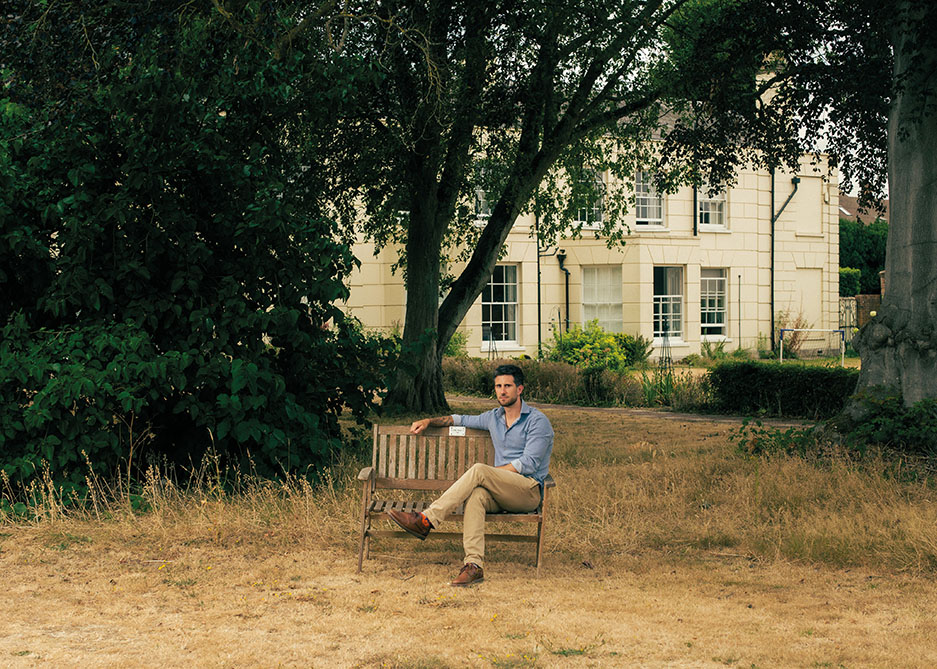
Photo by Charlie Foregham-Bailey
Life Works House is a branch of the Priory in the village of Old Woking, a former parsonage from the Georgian era with stone floors worn down by centuries of feet. In a Portakabin out back, staff show me the daily schedule for the nine clients in residence, there for help with a range of issues, from alcohol addiction to gambling. There is no medication on site: the Life Works centres are part of a new initiative treating behavioural addictions, looking at the connection between emotion and action to try and break cycles. There are virtual reality headsets for exposure therapy, loaded with virtual scenarios: clients are rigged up to heart-rate sensors to see how they react. One cocaine addict attended a virtual party in one of the headsets, and, without thinking, headed straight for a table and snorted a “line” in mid-air.
The therapy services manager, Kanny Sanchez, is a neat, energetic man from Madrid, with a sleeve of tattoos; he was once a patient here. “Shopping addiction is this close to being recognised as a behavioural addiction,” he says, referring to the Diagnostic and Statistical Manual of Mental Disorders (DSM-V), the guidelines used alongside Nice (the National Institute for Health and Care Excellence) by UK psychiatrists. “I cannot think of one person who has come here for compulsive buying disorder – but 60 per cent of people here have compulsive tendencies around shopping.”
Currently, gambling is the only behavioural addiction recognised by the DSM-V, and Sanchez says that shopping addiction is “very, very close to gambling, chemically. The anticipatory craving kicks in and then there is a very severe drop down where people become dopamine depleted. That’s when guilt and shame come in. It is so immediate.” Sanchez sees similarities between gambling and shopping apps, including the “variable result”. I had long suspected that this was part of Vinted’s appeal. On the train to the Priory, I bought two items from people who were ignoring my questions: I had no idea whether the things were still available, would fit, or indeed whether the seller was still alive. I’m sure that I felt a bigger high when I clicked, knowing I might be wasting my money. “That unpredictability is a huge hit of dopamine,” Sanchez says. He tells me he knows people who put their children to bed early so they can spend time on Vinted.
At the Priory, shopping addiction would generally be treated with dialectical behaviour therapy, a system developed by the US psychologist Marsha Linehan in the 1970s for people who struggle with emotional dysregulation. “You’re using shopping to regulate certain emotions – so once you’ve got a handle on the behaviour itself, you can see more of what is going on in you,” Sanchez says. “We would say, whenever you feel that anticipatory craving, you walk away for 48 hours, see if you can regulate the feeling without the need for something external. That way, you can make a link between emotions and behaviour. Then maybe we can come back to the object and see if you really want it.” The problem with Vinted, he says, is you can’t walk away and return in a few days’ time. “Because there is only one! The object that is purposefully unique is desirable to most.”
Sanchez says there is a close link between shopping addiction and ADHD, and people with eating disorders often also have a problem with it, because there is a level of body dysmorphia present in many who spend a lot of money on clothes. But he does not think it helpful to separate addictions from one another: the “spiritual malady” described by Alcoholics Anonymous makes no mention of drugs, alcohol, gambling or any other vice.
“Somewhere along the line, in an individual’s life, something happens to them – they might be aware of it, they might not – and it breaks that individual inside a little bit,” he says. “Their soul, their spirit, whatever you want to call it, something inside them splits. And at that point they begin, deep down, to feel that they are not enough. They start to seek out an external thing to help them cope. It is an instinctive feeling deep down in an individual. People feel it in different places.” He puts his hand on his chest: “I feel it here.”
While the Priory treats substance abuse with programmes between 28 and 90 days, Sanchez thinks treatment for a shopping addiction could last up to a year – comparable to that for an eating disorder, because in both cases you can’t simply cut the trigger out. For me, he says, Vinted would be a “bottom line” – that is, it has to go – and I’d need a trusted person, like a sponsor, to help me separate my emotional impulse and my actions when I’m tempted to open it up. The first 21 days of abstinence will be really hard, he says, as my dopamine will go down. “Boredom will kick in – but ‘boredom’ is just an individual learning to live with themselves. You’ll need another month or two to let your dopamine baseline go up to what it is naturally. Then you’ll ask: why did I go there?”
I tell him I worry I will get depressed if I stop. “It has already changed your brain chemistry,” he says. “A shopping problem can cause depression as well as the other way round. You are asking your brain to create a huge spike of dopamine each time you do it. It is exhausting.”
I also tell him that as he’s talking, I’m looking forward to opening Vinted on the train home. “The beginning of the craving,” he says, putting a hand on his chest again.
I’m preparing to take the Priory’s advice and stop “using”, but the question of how to replace not the thrill but the need for the thrill still confounds me. I remember a time, before the events of three years ago, when I did not need to look at Vinted last thing at night; it was also a time when I did not have to put a hot water bottle on my chest to go to sleep. And even if I can get a handle on the impulse within me, I cannot change the revised structures in which we live, which target that impulse and make it so much easier to re-route emotion into buying new stuff.
I recently had a few flashes of the old me for the first time in ages: I listened to music on the Tube instead of looking at Vinted, which felt like a huge achievement. But I also bought – ten minutes ago, hunched over my phone, near the office – a pink cardigan printed with a huge image of a tent and a camper van in a woodland scene. And as I did so, I thought: I don’t feel like someone who has a camper van and a tent. But maybe this cardigan will make me into one?
[Further reading: The anomalous delight of More Or Less]
Content from our partners



Related

This article appears in the 10 Sep 2026 issue of the New Statesman, The World According To Ed
Join the debate
Subscribe here to commentShopping used to be fun and sociable but on a recent expedition to the nearest, out of town and out of my way shopping centre, to buy a kettle I was told the one I wanted was ‘display only’ and I should check online beforehand to see if items I wished to purchase were in stock because they didn’t have the space to store everything. Not even a kettle! I heard another customer say ‘so we’ve come on a wasted journey.’
On another occasion, I went to buy a sun-umbrella only to be told they only sold them online, so I traipsed to a different department store where they had just what I wanted but they said I would also have to buy the four chairs and the table to go with it which I did not need and would have been awkward to take home on the bus!