
Prince William; men who refer to their friends exclusively by surname; women called Clemmie who study history of art at UCL; Bear Grylls; Boris Johnson; Silver Spoon’s ex-boyfriend. What boarding school hath wrought! The peculiarities of Britain’s ruling class were germinated and nurtured in the dusty halls of Eton and Marlborough College, Downe House and Shrewsbury – those meccas of society-sanctioned emotional neglect and real tennis.
I can forgive the nation’s public schools, maior et minor, for all that: someone has to stitch personality disorders into the souls of England’s elite. Tradition requires constant maintenance, so my Etonian friends remind me over dinner (before anyone accuses me of left-wing revolutionary fervour). But did these schools need to traumatise an entire generation of Ruperts at the palate level? Awash with Chinese cash, and in possession of some weighty endowments, there really is no excuse for this level of canteen fare.
I think of it this week after lunch at Noble Rot, Mayfair. It is a Monday at 1.30pm (no, you go back to the office) and I am sitting opposite a similarly work-shy friend. We inspect the menu: “Yum, rice pudding,” I say to myself, before being rudely cut off. “Gross, no. Reminds me of boarding school,” she scolds. The sentiment was echoed by a colleague later on – can’t eat that sloppy, insipid muck; reminds her of her boarding house, so on and so forth. Meanwhile, another writes in: he still cannot stomach custard after years spent at that big old school near Slough. Roast turkey, too.
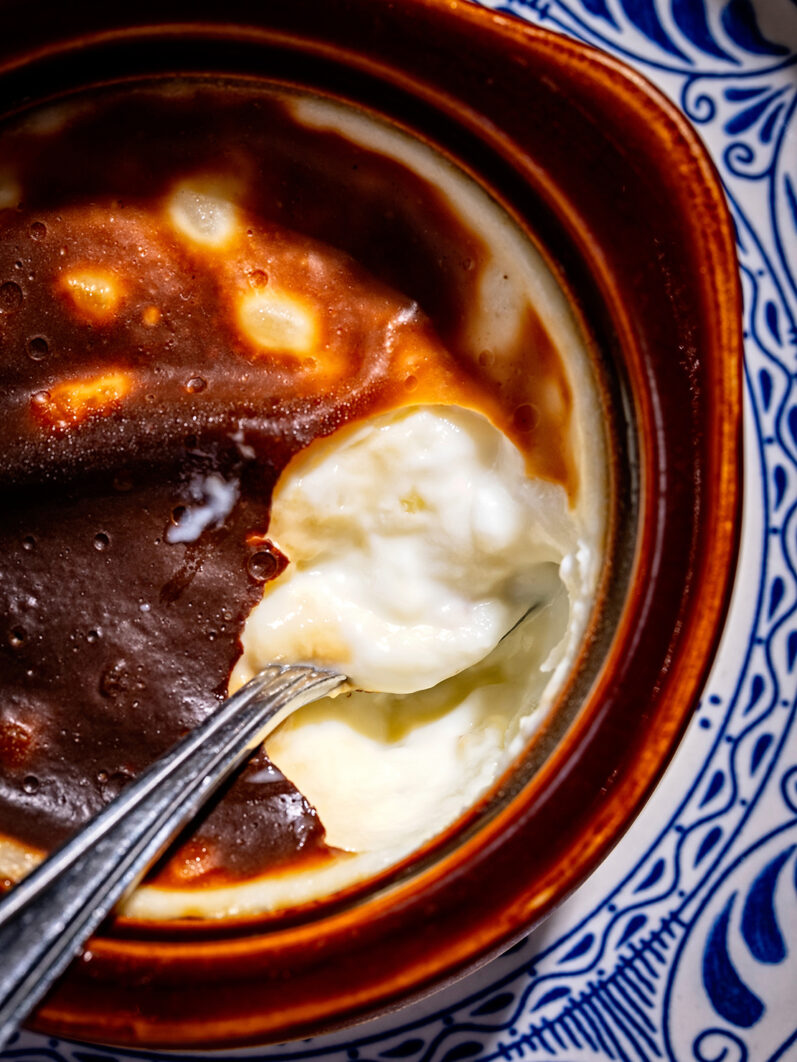
Sincere pity for the afflicted cohort. Custard and rice pudding are two shining jewels in England’s culinary offering. (The jury is out on turkey, but let’s not get distracted now.) And I have empirical evidence. Because we are here for the set lunch – at £28 for three courses it is about the best thing you can do in London while bunking from your professional responsibilities – my companion has no say in the matter of rice pudding. Warm, lactic, swirled with a spicy ginger syrup – it’s a testament to the sheer power of dairy, served on a hot plate on a rainy October afternoon.

It is the best dessert* I have eaten this side of Bouchon Racine’s crème caramel (August 2024). And guess what? My recalcitrant friend agrees, and promptly repents. “I had no idea it could be this nice,” she says, laden with sorrow. What about all those wasted years? Haunted by Thursday night dinners of school days past – the words “cold”, “congealed”, “ubiquitous” and “constant” are all mentioned to me in my research – good people have denied themselves better pleasure. It goes particularly well with the Gewürztraminer we are drinking (Eton catering department: take note!).
*“Pudding” if you are an aristocrat allergic to such arriviste, bourgeois vernacular.
All of this is just to lead me towards a simple and noble defence of the set lunch. It forces limitations: the offering today is a light duck salad to start, roast pork with lentils and mustard for a main, and rice pudding to finish. If given a choice, my fellow diner would never have known there was an alternative to years of suffering without one of life’s smaller but no-less-important-for-that luxuries. Or, to put it another way: is the set lunch society’s great equaliser?
Don’t be so glib. But it must be true that an inability to choose is good for us sometimes. It has, at the very least, been a successful and horizon-expanding day for one former rice-pudding detestee. And as restaurants – through no fault of their own – grow prohibitively expensive, what better way to fling open their doors to willing customers also burdened by all the knock-on effects of martial misadventure and exploded pipelines? It works for the chef because the portions are smaller; they can use up excess produce that would otherwise go uneaten; and fill their restaurants during slow hours on the promise of an affordable lunch – though the Gewürztraminer will not be included.
The world is costly to everyone right now. We should do our very best to patronise the places trying to make it cheap. And who knows – even if you come bearing the best education known to the world – you might even learn something.
[Further reading: There’s big trouble in Little Portugal]
Content from our partners



Related



This article appears in the 05 Nov 2026 issue of the New Statesman, Nigel Farage's bastards
Join the debate
Subscribe here to comment