
“Dwith da?” “Dith. Dith. Which means ‘day good’ – good day!” In Truro, the new leader of Mebyon Kernow, Michael Bunney, is teaching me Cornish. He is wearing a traditional Cornish necktie of yellow tartan, has attained grade two in the Cornish Language Board exams and is moving on to grade three (of four). Bunney’s passwords are in Cornish, and his fiancé Mark is fluent – when they want to talk discreetly about someone in a pub, they switch languages. So forget “hello”, “goodbye” and “thank you”; this is the land of “dydh da”, “duw genes” and “meur ras”. This is the annual party conference of Mebyon Kernow, the “sons of Cornwall”, the political party that campaigns for Cornish national recognition and autonomy (if not quite independence).
They aren’t the first to make the case. “When I cross into England myself,” wrote John Betjeman, “particularly up-river over the ancient bridge at Gunnislake, I always feel like presenting my passport.” And whether I arrive in a different country when I cross the Tamar on the train down, I sense that I have arrived in an older one. Here, everything human seems an intrusion, and pays due fealty to the landscape. The trainline hooks up gingerly to follow around estuaries, the farms crouch meekly between valleys, and words like “ravine” or “gorge” or “mesozoic” would not be over-tropical. Only the cattle look at home. As the train speeds downhill, past the towns of Liskeard and Par, I squeeze my nose and blow.
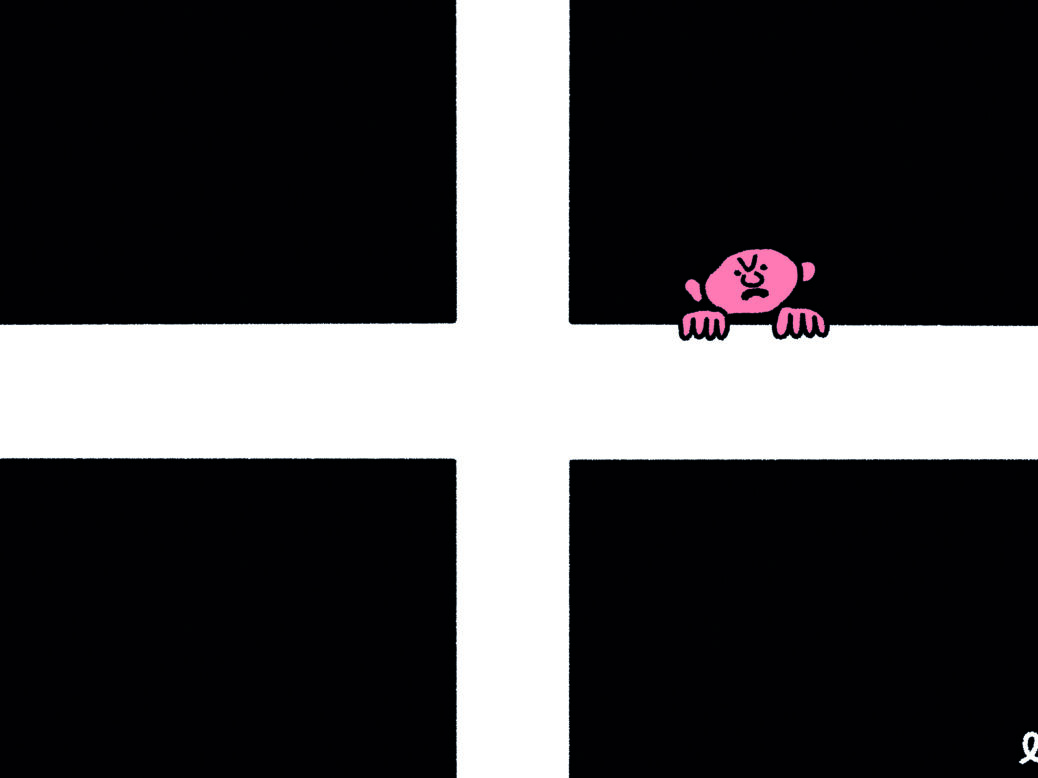
Should the day come when a Cornish parliament is established, the room is ready. Cornwall County Council’s main chamber, which is hosting Mebyon Kernow’s conference, is arranged like a modern European parliament: circular, panelled and with perky black antennae microphones at every seat. About 60 of the party’s 500 members fill the rows. This is an important conference for Mebyon Kernow, marking its 75th year, and forms a retrospective of its achievements: bilingual signage, the spread of Cornish flags (black field with a white cross), the recognition of the Cornish as a minority in 2014 – which is called a “significant international treaty”. (Everything outside of Cornwall is “international” – so Plaid Cymru are Mebyon Kernow’s “international partners”.)
This conference also marks the transition of power from Dick Cole, Mebyon Kernow’s leader from 1997 and the longest-serving party leader in the UK, to Bunney, who stood unopposed. The party can feel the winds of change. Andy Burnham has talked of little but devolution since he became Prime Minister. On 19 October, Cornwall’s MPs travelled to No 10 North to discuss new powers. While Mebyon Kernow rejects another “local government tweak” and demands a national parliament, politics is with them. In his speech, Bunney promises change. Economic: a rebalancing of Cornwall’s second-home economy, and action against companies like South West Water. Spiritual: an alternative to the “rise of xenophobic English nationalism” and a progressive alliance with parties of the left. He intends to stand in the next general election.

In the corridor outside the council chamber, Cornish nationalism is proclaimed on every lip and leaflet. A fiddler with bronze bracelets and thick plaits plays a jig. You can buy Cornish-language Tintins, Cornish Winnie-the-Poohs, or Tim Saunders’s The High Tide: Collected Poems in Cornish, 1974-1999 (reduced, £4.50). I speak to Mike Cawley, the chairman of Cornish Wrestling, a man with an Asterix moustache that curls up his cheeks. He says the sport dates from around 400 BC, the age of chariot warfare; bouts ceased when either fighter hit the floor, when they would have been most vulnerable to horses or spiked wheels.
Mebyon Kernow’s youth wing, Kernow Rydh, is also in force. Wilf, who’s 22, was introduced to Cornish nationalism by his grandmother, Penny Mustill, the author of Summer Needs No Brightening: An Gof and the 1497 Cornish Rebellion. He lives with his grandparents on Bodrifty Farm near Penzance, originally an Iron Age site which he proudly tells me was first mentioned by Pytheas the Greek geographer in the fourth century BC. I feel sadder when I speak to Ethan. At 23, he is also a Kernow Rydh member and, having finished a biochemistry degree in Belfast, is living at home in Falmouth. He doesn’t think he’ll stay in Cornwall. It’s hard to make a living here. He wants to move away to work, perhaps to London.
Everyone I speak to say they are Cornish, not English, even if they are inescapably British. But they find Cornishness hard to define. Wilf says “Cornish humour” is essential. Bunney says he’s “always been aware” he is Cornish. “I was brought up without even knowing that I knew that I was Cornish.” I ask if I could become Cornish. “If you moved here and felt you belong here and after however long, depending on your sense of identity, you felt Cornish, then that’s brilliant and you’re very welcome.” Dick Cole is more vague: “Identity is so personal, and I think it’s up to people how they perceive their own identity. I wouldn’t tell anyone what they’re not.”
Over pasties at lunch, I begin to sense foreboding over the afternoon motions. “I just hope that the next part is respectful and reasonable…” says one flat-capped party member, sucking on a vape outside the building. On the conference agenda, I spot the “NAME CHANGE” motion. This had been prompted at National Executive level by the “gender bias” and “ethno-nationalist tone” of Mebyon Kernow (“sons of Cornwall”). There are two proposed alternatives: Medhoryon Kernow, meaning something approximate to “speakers for Cornwall”, and Movyans Kernow, “a movement for Cornwall”. Members gather to debate the motion, and several have brought Cornish dictionaries with them.
Sam opposes the change – he thinks, in the middle of an election cycle, that it is a distraction from Mebyon Kernow’s real goals (he adds, for clarity, “I’m not a misogynist and I’m not an ethno-nationalist”). Sheila disagrees – “I am a woman, and I didn’t join MK for many years, because of the name.” One drawly man in a bandana suggests adapting the English to “suns of Cornwall”, because we all “give out light, like a star or a flame”. But a woman, also in a bandana, suggests that any name change might seem tokenistic unless the party materially supports “Flinta” people (female, lesbian, intersex, non-binary, transgender and agender).
Deborah says the working group behind this motion has already voted on a change, as has the National Executive, and that she knows people who are put off by the current name (“Stupid!” hisses the woman on my right). But Stephen worries about “excluding” people who can’t pronounce the new name. Eventually, it is decided the issue required further discussion. A series of indicative votes are taken to guide the National Executive (the woman on my left hums appreciatively when this is suggested). On the principle of a name change: 25 for, ten against, five abstentions. Bunney asks if anyone had written that down; it was unclear. “We’re ready for government, guys!” he jokes.
Some of our moodier political commentators have spoken darkly of the “Ulsterisation” of the UK in recent years, sensing a hooded, sectarian violence abroad, not just in Belfast or Ballymena, but across these Isles. Well: a restive Celtic fringe, hostility towards London, chafing against centralisation, quibbles over ethnicity, queries over historiography, a localism by turns proud and petty, flags, mobilisation against water companies, a hatred of rentierism, the fierce regulation of political language, and mass movements dogged by superficialities. Kernow-isation continues apace.
[Further reading: Meet Mr England, the champion of a very fragile masculinity]
Content from our partners

Related
This article appears in the 28 Oct 2026 issue of the New Statesman, Bin the Budget
Join the debate
Subscribe here to commentHow much external influence, or internal protection against external forces, do they imagine an independent Cornwall would have? We need to oppose this Balkanisation.
I was always taught (by my brother then living in Looe) that the Cornish for “hello” is “y’r allright then” and the reply is “y’er, an you?|”