

It has long been fashionable for politicians and commentators to worry about the “Americanisation” of British politics. Concerns of this nature date back more than a century, to debates about extending the franchise. Opponents argued that giving working people the vote would undermine sound economics and stable politics. The Liberal MP Robert Lowe told the Commons during the 1866-67 debates: “Everywhere…where the lower classes get the upper hand, the spirit of protection arises. Look at America.” Luckily this fear mongering didn’t prevent the UK embracing the vote for women and workers. If this was an example of Americanisation, it was a positive one, which has had a transformative impact on our politics.
In the post-war era, fears of Americanisation centred much more on the rise of personality politics and the use of polling and branding agencies to shape campaign messaging and policies. When the Conservative Party first hired a branding agency, one Labour MP said politics was being sold to voters like “packaged goods” in “the worst sort of Americanisation of our public life”.
Later, under Thatcher and then Blair, these concerns centred on the importation of televised political debates and the creation of new politicised advisor roles such as the No 10 chief of staff. There is no doubt that in this period US politics held sway in Westminster. When the West Wing actor who plays the president’s chief of staff visited the UK, he was surprised to find senior politicians gushing at him. One told him his visit was “one of the greatest moments of my life”. Many argue that these later shifts have hollowed out British politics and weakened our democracy. In reality, driven as they are by technological developments and wider societal changes, they would likely have come to the UK in some form regardless of the US.
Given this mixed history, we should today be cautious about using “Americanisation” to critique of British politics. But one trend in British politics can hardly be described as anything else: the rise of big money. This issue is in the headlines once again in the wake of a two-record breaking £36m donations to Reform UK – and comparisons with US politics are both inevitable and justified.

Concerns about the role of moneyed interests in our politics are not new either. In the 19th century, political candidates (mainly wealthy landowners) could spend their personal wealth bribing voters to support them on election day. With the rise of more organised political parties and national campaigns, the issue of money in politics morphed to one about donations from unions, businesses and individuals to parties and the influence this had on their policies and election outcomes.
But it wasn’t until the 1990s that these debates translated into substantive action. On the back of the “Ecclestone affair”, which saw a motorsport magnate donate £1m to government and appear to win preferential treatment for Formula One as a result, the Political Parties, Elections and Referendums Act 2000 was introduced. This created the Electoral Commission, made it illegal not to declare donations to political parties, set national spending limits for political campaigns and made it harder for foreigners to donate to political parties in the UK. It was a huge step forward in regulating money in politics, but it failed to make one crucial change: it did not cap the size of donations that businesses, individuals or unions could make to political parties. This failure is now playing out in our politics in increasingly damaging ways.
The UK has seen an increase in the amount of money spent during general elections which is being supplied, to a large extent, by a rise in donations by so-called mega-donors. In December 2024, IPPR, the research institute I lead, wrote that: “Total political donations, adjusted for inflation, have more than doubled since the turn of the century in the UK (Draca et al 2023). More concerning than volume is concentration. There were more donations over £1 million in 2023 than ever before since records began. Before 2017, the sum of £1 million+ donations has never breached the £10 million mark. Since then, it has been breached four times – three times by the Conservatives and once by Labour. The growth in donations over £1 million has been especially sharp in the Conservative party.”
Recently, however, our concern about the mega-donations made to-date is starting to look positively quaint. Over the weekend it was announced that Reform UK has received a record-breaking £72 million in political donations from cryptocurrency billionaires Ben Delo and Christopher Harborne. This is three-quarters of what all UK political parties put together spent on the 2024 general election. No political party in the UK has ever received a donation this large before.
This, I would contend, is more evidence – the clearest yet – that what we are seeing is indeed the Americanisation of British politics when it comes to money in politics. Because, unlike other European countries, which have caps on donations to political parties, the US has long had a culture of big money in politics.
In 2024, nearly $15 bn is thought to have been spent on the presidential election by congressional candidates, the main political parties and independent groups seeking to influence the outcome. This is double the amount spent in 2008, which itself was double what was spent in 1998. And a growing share of this revenue has come from large donors as has been established by the Brennan Center for Justice. The UK is some way off this degree of money in politics – but it is on the way.
The rise of money in politics, and in particular from mega-donors, is problematic because it is dangerous for democracy. A central tenet of liberal democratic theory is that it only works if there is a reasonable level of democratic equality. Put simply: every individual should have an equal say in the decisions that shape our society. This argument has been made by political scientists and philosophers as diverse as Aristotle, Tocqueville, Jefferson and Rawls.
There are many reasons why this condition may not be met in practice. But one is certainly a system where political parties increasingly raise large sums of money from a few sources and are swayed by the interests of those donors. This is particularly concerning when these donors have interests that systematically diverge from the interests of citizens, as is often the case with big businesses or wealthy individuals. And looking at the impact of the big money in US politics is instructive in understanding what the consequences might be in the UK.
Firstly, as the political scientist Larry Bartels has found in his book Unequal Democracy, money in politics can swing elections. He finds that the Republicans have systematically out-fundraised the Democrats, and this has contributed an additional 1.5 to 7 per cent of vote share to the GOP in presidential elections. This could easily have swung election results in some presidential elections. If this is the case, democracy in the US is quite literally “for sale”.
Secondly, as Bartels and his collaborator Martin Gilens have shown, this growth in moneyed interests directly impacts the policy positions taken by political parties and implemented by government. In the US they find that where the top 10 per cent of earners support a policy position it is more likely to happen, even if it is opposed by the rest of the population. As Jacob Hacker and Paul Pierson argue in Winner-Takes-All Politics, this has shaped an economic consensus across both main parties in favour of tax cuts, business deregulation, and attacks on unionisation, that have benefitted the super-rich and business interests at the expense of the middle and working classes.
Finally, there is evidence that in reducing the real and perceived influence of citizens in democracy, a growing influence of money in politics can contribute to low and unequal voter turnout, which then becomes a “democratic doom loop” as mainstream parties become less responsive to their interests. This, in turn, is also fuelling populist politics as voters turn to populist parties who promise to “drain the swamp”, even as they take donations from the same (or even more concerning) private donors and legislate in the interests of these donors. This is set out most compellingly Jane Mayer’s book, Dark Money.
The American experience is, then, a cautionary one. We must act now to divert Britain down a better path. Luckily, there is an alternative. Other European countries such as France, Germany, Belgium, Italy, Spain and Portugal have a cap on political donations to limit the influence of money in politics. The UK should follow suit. We should pick Europeanisation over Americanisation when it comes to money in politics.
In countries with significant state funding, individual caps are very low. For example, in Belgium, the cap is €2,000 annually. The UK could emulate this model, bringing in state funding of political parties. Many will argue this is antithetical to British liberalism. But this is an odd argument given we already have elements of state funding for politics, such as Short Money and indirect subsidies such as free party broadcasts and mailings.
A cap on donations is still workable even if we in the UK decide that we don’t want to embrace a more comprehensive form of state funding of politics. In systems where there is no or limited state funding, caps can be introduced but at a slightly higher level. In Italy the cap is set at €100,000. This would still push big money to the side and put voters back at the heart of the political process.
At IPPR, we have been calling for a cap for the last few years: “In 2011, the Committee on Standards in Public Life recommended that “[a] cap of £10,000 should be placed on donations to a political party or regulated donee from any individual or organisation in any year” (CSPL 2011)…Introducing a cap as low as this would require having a clear plan for alternative sources of party funding. At the moment, we do not. Given that …We propose the government introduces a higher cap of £100,000 on political donations for an individual or company in any year. This will only affect so-called “super-donors”. At the same time, the government should initiate a wider cross-party conversation on the future of political financing, examining various proposals for a less concentrated and corruptible politics.”
The Labour government has yet to act on this call, despite a pledge in its 2024 manifesto to “strengthen the rules around donations to political parties”. When I have talked to senior figures in the party about a cap on donations, mostly under the previous prime minister, they were consistent in their opposition. The reasons for this are not entirely clear.
It is possible that senior party figures believed that Labour could out-fundraise their opponents, including from larger donors. If this is the barrier, it shows both a huge moral failing and a staggering short-sightedness. There have been years when Labour has raised more than the Conservative Party, but these are vanishingly rare. And neither main party has achieved donations as large as those secured by Reform UK in the last few weeks.
More likely, Labour was derailed by the opposition by some of the largest trade unions who fear a cap would prevent them donating to political parties on behalf of their members. I would argue that in the wake of the Reform donations, trade unions must ask themselves if opposing a cap is really in their members’ interests. But it would also be perfectly legitimate to introduce a cap which focused on large individual donations and exempted collective donations from groups of individuals such as unions. Unions are, after all, just an amalgamation of working citizens.
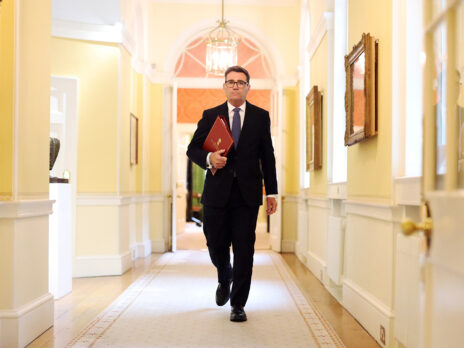
Andy Burnham has previously said that he was in favour of a cap on donations. Since coming to office as prime minister, briefings from No10 have suggested that he has reversed this position. If this is true, I sincerely hope that news of Reform UK’s mega-donations will make him reconsider. Because last week’s donations to Reform are not a one-off. The American experience is clear: money in politics is subject to a “ratchet effect”. It is a race to the top, with each step on the ladder further eroding democracy. The government must intervene now to put voters not money in control of our politics, before it is too late.
This article was also published on the author’s Substack, Harry Quilter-Pinner.
[Further reading: Reform has peaked]
Content from our partners



Related

Join the debate
Subscribe here to commentthe key phrase, within a wider context, is “Americanisation” or “Europeanisation” of our political system…..the choice is a clear one …..and has profound consequences
Following reforms some time ago there is a system of opt in political levy in which the members of a trade union can participate. My own view is that all “corporate” donations should be banned (the trade union political levies being aggregated individual donations) and that there should be a reasonable limit on individual donations which must come from the individual funds of registered voters and complete accountability for every penny spent by or on behalf of a political party or election candidate whether in an election or on campaigning and recruitment