
It’s sentimentality, of course, to laud the people of one place or another – “there’s nobody like the Glaswegians” or “Geordies are special” or blah, blah, blah. People, by and large, are people. All of which said, there is something about the Scouse mixture that makes Liverpool feel, well, different. It’s the way the city leans out to the winds and salt of the Atlantic, and the way its peoples have been shaken together more than in any other English city. From the Jewish migrants fleeing Russia who got stuck on the Mersey on their way to the US, to the historic Chinese community, the black and Asian sailors who disembarked for life – and, of course, the huge Irish population. Together, it’s a city that’s never felt to me quite like England.
Labour’s vibe deficit
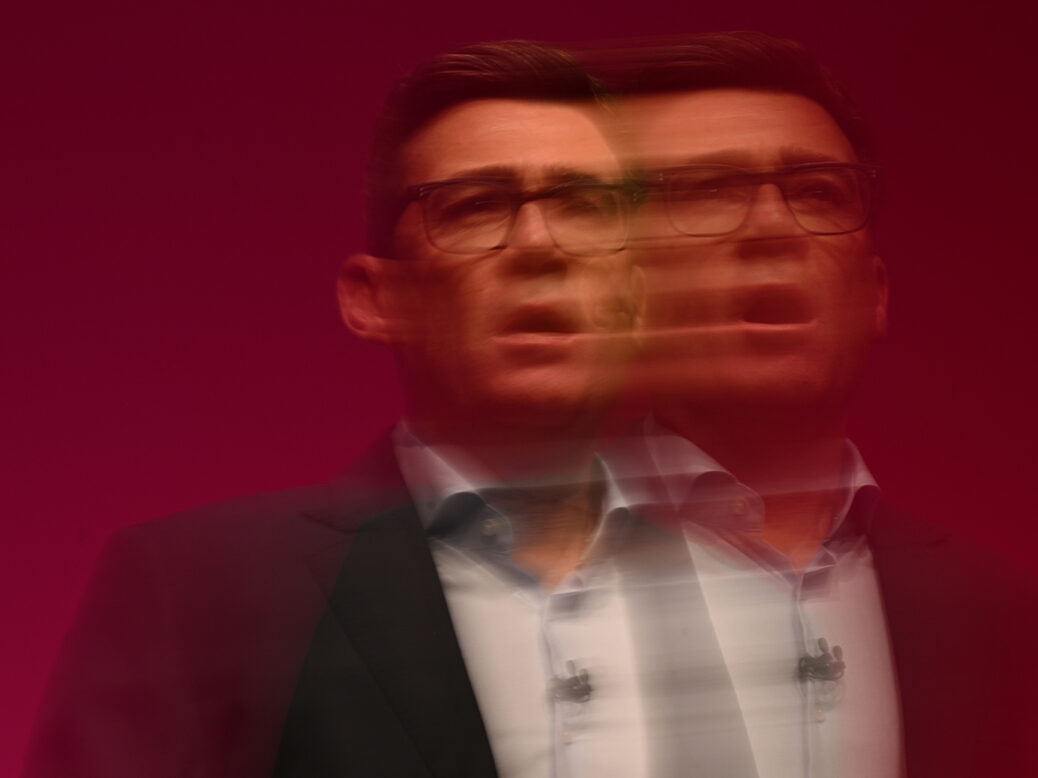
Which brings me to the most obvious gap in the positive vibes and rhetoric of Labour in Liverpool. You could call it, broadly, “culture”. Whether or not you agree with them, Labour is eloquent on global challenges, the economy, the climate and defence. But much of the country is talking instead – angrily and online – about Islam, migration, gender and belonging. On these subjects, Andy Burnham’s new model party is effectively voiceless. Much work needs to be done to find the right language to engage. It will be based around British values, respect, neighbourliness and a sense of proportion. It will make clear that our secular settlement allows no group to dominate shared public spaces, whether they be the Orange Lodge or Shia Islam. And, like Burnham on other subjects, it will have to sound confident, kind and self-assured.
The Greens’ punchy ground game
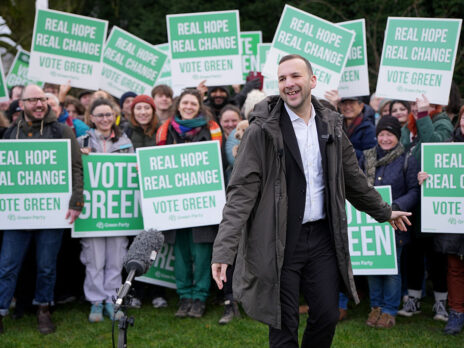
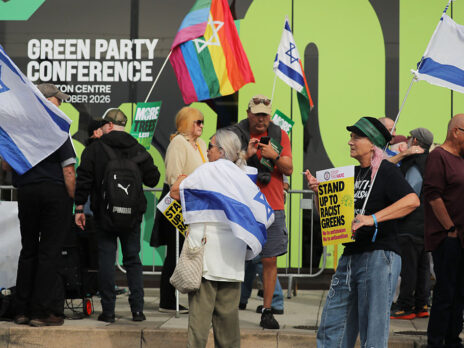
Because culture always matters – to many people more than economics. At a Scottish fringe event, somebody asked plaintively why the Greens seemed to be cooler than Labour. And, as a voter in the forthcoming Holborn and St Pancras by-election, I can attest that the Green campaign is formidable and that its propaganda leaflets are punchier than those put out by Labour. I can’t tell what’s going to happen, but if I were Burnham, I’d count on nothing.
Churchillian perspectives
Meanwhile, to the Wallace Collection, that gorgeous, ornate box of art treasures in Marylebone, to give a talk on Winston Churchill, a show of whose paintings is there just now. It’s well worth seeing. He was a serious and dedicated painter for most of his life; neither a “great painter” in the sense of changing the direction of art history, but certainly not a bad or cynical one, either. His best pictures have a freshness, energy and optimism that are infectious. What I hadn’t realised, however, is that Churchill was also involved in the biggest and most popular exhibition ever held at Hertford House, the home of the collection. In 1942, “Artists Aid Russia” was jointly organised by Clementine Churchill and Agniya Maisky, the wife of the Soviet ambassador. It included 900 works by living British artists and the building was hung with Soviet banners. A second exhibition followed later in the year, with a more obviously propagandistic theme, including portraits of Stalin. That show, “25 Years of Progress”, was curated by Ernő Goldfinger, the Hungarian-born modernist architect, who later infuriated Ian Fleming by demolishing Victorian cottages in Hampstead to make way for modern flats. Fleming used the name Goldfinger for his famous Bond villain. Goldfinger threatened to sue; Fleming reacted by suggesting that he would rename the character Goldprick. No court case followed.

Presidential misnomers
I’ve interviewed Jacob Coxon, the former OpenAI and Anthropic researcher whose name pinged around the world with his warning of human destruction by the end of this decade – not, as he emphasised to me, in ten years’ time but in three or four years. How? By driving us mad. As wise New Statesman letter writers have pointed out, the trouble is rarely technology – it’s bloody humans. But one detail needs sorting. Donald Trump has tried to rename AI “Superintelligence” or “SI”. The trouble is, that name has a specific meaning – the further development of artificial general intelligence, or AGI, to the point where it is cleverer than all of us. It was popularised a dozen years ago by the Swedish philosopher Nick Bostrom. Trump loves renaming things. But this is a bit like me deciding that I’m going to rename all vegetables “chocolate”, and expecting farmers to follow suit.
Hotel chocolats
Speaking of chocolate, shout-out to Sainsbury’s, who provided little gift bags for people staying in the Labour conference hotel. Mints, chocolates – thank you very much. But it was a genius idea to include vitamin tablets and blister plasters.
[Further reading: In Liverpool, the Labour Party hopes for hope]
Content from our partners


Related
This article appears in the 01 Oct 2026 issue of the New Statesman, Sunshine and Rain
Join the debate
Subscribe here to comment