
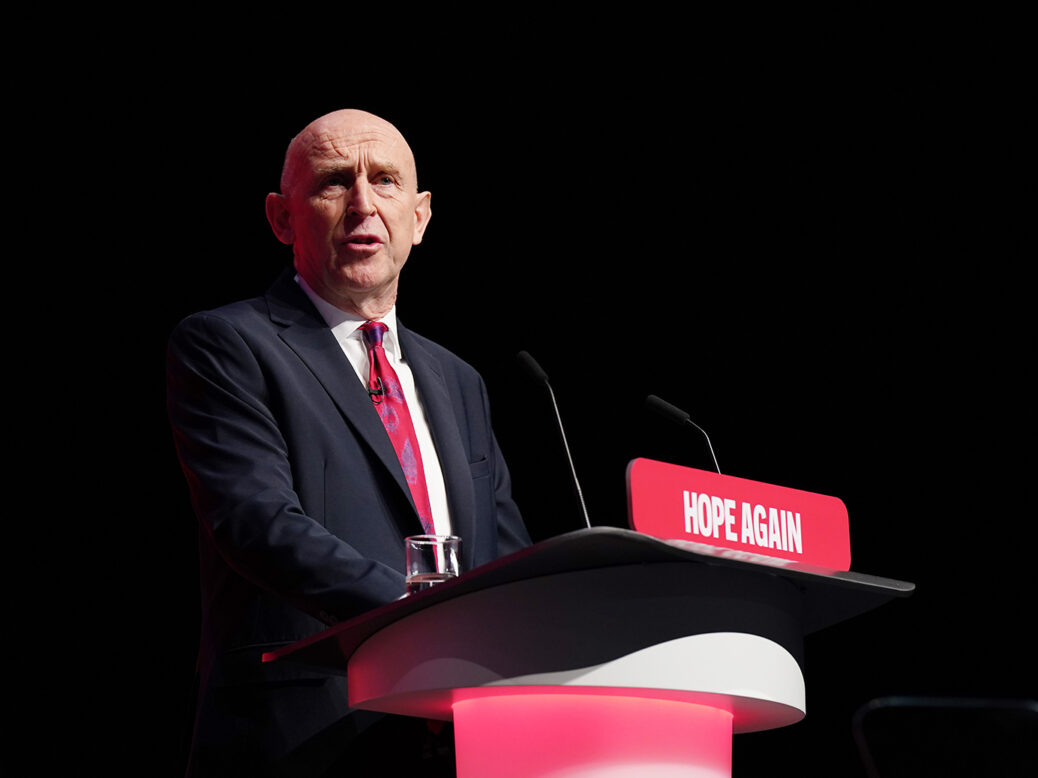
John Healey appeared caught between hope for the future and nostalgia for the fiscal climate of the 1990s at his first Labour conference speech as Chancellor.
The Chancellor, who was a parliamentary private secretary to Gordon Brown between 1999 and 2001, referenced his former boss frequently in his speech.
He recalled how – shortly before Brown’s conference speech in 1999 – the then-chancellor was stuck for a red tie, so he leant him one. “Gordon made his speech with my tie on. I’ve never worn it since – until today”. (In the moments after his address had ended, Andy Burnham could be heard on the Labour Party livestream asking Healey – “can I borrow this tie for tomorrow.”)
Healey’s speech had strong hints of old Labour but with modern touches. His reinstatement of the trade union learning fund received the biggest applause of his speech. The fund had been set up by Tony Blair in 1998 to help workers learn new skills but was scrapped by the Tories in 2021. Healey said this new iteration would come with a focus helping workers to “harness artificial intelligence” which he described as the “greatest innovation of our time”.

Similarly, his announcement of a new £100m local apprenticeship service is to be delivered through devolved powers to metro mayors. “It’s mayors who know their areas best,” Healey said. He described this announcement as a “downpayment” on the work of Alan Milburn, the former Labour minister who is currently looking into youth unemployment. It will be “fully funded” the Chancellor said, through “savings from the DWP”, suggesting that further attempts at welfare reform are likely coming down the track.
Healey’s announcement on defence too, had an old Labour feel to it. He spoke of a “new age of industrialisation”, before revealing to delegates that the government plans to roll out new contracts for British shipyards, crediting the GMB union for working with the government on this agenda. “Trade unions are full partners in this age of industrialisation,” he said.
He gave little indication, however, of the government’s wider plans for defence spending – an issue over which he resigned from Keir Starmer’s government. Burnham has reiterated that his commitment to this issue is the reason he made Healey his chancellor. Before he gives his first budget in a month’s time, the Chancellor must find almost £5bn to fund the Defence Investment Plan. Healey remained tight-lipped over how he intends to do so.
Instead, he set a cautious tone. He faces a tricky budget in October and vowed to stick to the fiscal rules. “There is nothing progressive about losing control,” Healey said, “because working people always pay for it”. A difficult international picture, coupled with rising UK borrowing costs, leaves the government in a tricky bind. Harking back again to the era he entered government; Healey said the money that was available to New Labour “is simply not there now”. This government clearly wishes it was.
[Further reading: Wes Streeting’s Blue Labour turn]
Content from our partners



Related

Join the debate
Subscribe here to comment