
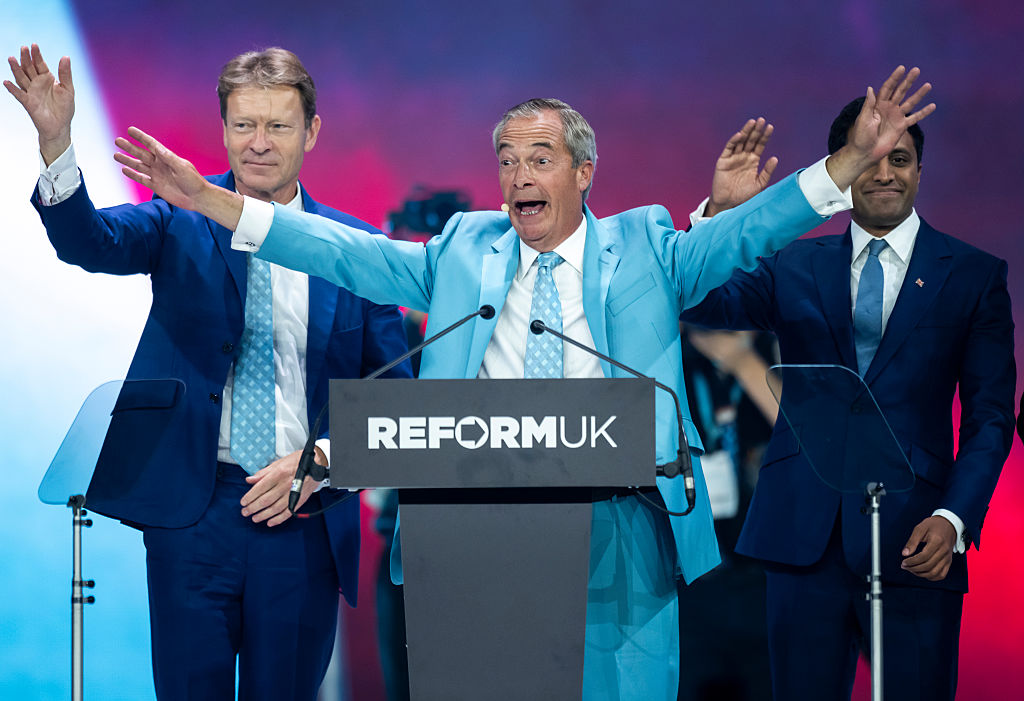
Those planning the 2026 Reform conference said their aim was to “put on a show”. It worked. Before the diplomatic accord with the French hard right, a tax-cut pledge costing £20bn a year and viral videos of female hecklers getting beaten up by pensioners, it began with two key advisers, James Orr and Dan Jukes, standing down after they were caught in a donations sting conducted by Channel 4 and Verbatim Investigations.
The right-of-reply request came through to Reform HQ two days before the conference began. “Only a small number of people knew: our lawyers, the press team and the people involved,” said a party figure.
On the first night of the conference, Nigel Farage was settling down for dinner with his star guest, Jordan Bardella of France’s Rassemblement National party, while most of Reform’s other senior figures were attending a dinner for sponsors. Then the documentary was aired and posted on social media. “People realised it was worse than we had imagined. It blew up pretty quickly,” said a Reform source.
The sting showed Jukes and Orr meeting with an undercover reporter who pretended to be the son of a wealthy American. They discussed ways to facilitate foreign donations in spite of UK electoral law.

That night in Birmingham, the core team held a crisis meeting: Farage, head of comms Ed Sumner, chief comms officer Miles Goslett and a few other backroom figures. Most Reform MPs woke up on Friday morning, like the rest of the public, to a curt statement announcing Jukes and Orr had been suspended (both deny any wrongdoing). The action was settled when Jukes, who has worked for Farage since he was 18, offered to “fall on his sword”.
After a year with Farage’s party mired in scandal, Westminster insiders pondered: is this the Reform crack-up we have been waiting – and, frankly, hoping – for?
In private, senior party figures concede they are weaker this year than last. At its 2025 conference, Reform was averaging 31 per cent in opinion polls and had a ten-point lead over Labour. Twelve months on, it is neck and neck with Labour, on 23 per cent. It awaits inquiries over three financial scandals. But the hope that Reform will implode is wishful thinking. The internal view is that each setback damages the party and its leader, with voters already inclined to vote against them, but Reform can still win as long as tactical voting against them is inefficient.
“Despite the setback, you can see the party getting itself in the right place,” said a party figure. Internal research shows there are three reasons voters in the “middle bucket” will not go with Reform. The determined focus now is to neutralise every one of them. As the same source puts it: “Number one, they don’t think we have a plan for government. That’s why we had the first 100 days [as the] focus of conference. Two, they incorrectly think we’re going to privatise the NHS, so we’re announcing new policies on student loans for nurses. And three, they think we won’t be careful with their money. That’s why [Robert] Jenrick has been writing to bond holders and coming up with billions in savings.”
Farage has told his “shadow cabinet” that they need to focus relentlessly on message repetition and discipline because “we have the policies to win”. That means the toughest line on migration, and 20 key policies in other areas that party believes flow directly from that, including higher pay for workers, and preferential treatment for British businesses. Despite the departure of Orr, who held a policy role in the party, “the wheels will keep turning” on all of this.
That message discipline is a better use of time than the petty factionalism between different camps – the Faragist old guard, the Tory defectors, the Zia Yusuf ultras. One source downplayed it all: “There are no more splits than any normal party has.”
Top Reformers also believe the dividing lines with the Conservatives are getting clearer. The Tories are planning to outdo last year’s flagship conference pledge to abolish stamp duty by launching an attack on inheritance tax. Kemi Badenoch’s new shadow chancellor, Andrew Griffith, was in Sweden last month praising the country’s wholesale abolition of inheritance taxes. It’s almost a replay of 2007, when David Cameron and George Osborne were facing a popular new Labour prime minister who, it was feared, would call a snap election.
Reform welcomes this. It believes Badenoch is walking into an electoral trap, with the Conservatives’ core pledges pitched at a dwindling number of asset-rich voters while Reform ruthlessly targets the mass of asset-poor earners whose swing votes will decide the next election – hence the conference pledge to raise the personal income tax allowance threshold.
The party is developing a stronger ground game than its opponents. The ReformGo app, tested by party activists during this spring’s local elections, rivals the digital contact registers used by the two main parties. Through it, Reform has “gamified” its on-the-ground campaigning. Activists are now awarded points for each door knocked and can win prizes. In a multi-party system with high tactical voting, slim margins and low turnout, that kind of machine politics will be vital.
While Farage talks often of an imminent election, senior figures are more sanguine. One said: “We’d be ready tomorrow. But we don’t really believe Burnham is going to go early and give up a massive majority to, at best, end up in a rainbow coalition with the Greens. No way. We’ve probably got two years at least.”
The show isn’t over yet.
[Further reading: The other big story of Reform conference]
Content from our partners



Related
This article appears in the 10 Sep 2026 issue of the New Statesman, The World According To Ed
Join the debate
Subscribe here to commentThe panglossian view expressed about Reform being prepared for another general election does assume that its funding sources won’t be impeded by electoral laws or that further scandals won’t emerge now that the Murdoch press,Guardian and the BBC are less constrained to investigate Reform’s affairs.If we add in Reform’s recent poor by election results and Burnham’s speed dial quasi populist Tiktok comms the picture looks less than promising for Reform.Any notion that Greens will hold the balance of power also seems shaky with an unconventional leader whose messages collide with party policies or sometimes the actual truth. A recognition that Starmer’s policy on Israel was wrong cannot but add to the recommitment of Labour supporters willing to canvass or donate to the party at the expense of the Green party.