
This may come as news to younger readers, but – once upon a time in British politics, we had this thing we called “hope”. A recession, we imagined in our innocence, would be followed by a boom. New technology would make the world better, rather than worse. You’re shaking your head, I know. It sounds so foolish now. Hope can only disappoint you. Hope was a mistake.
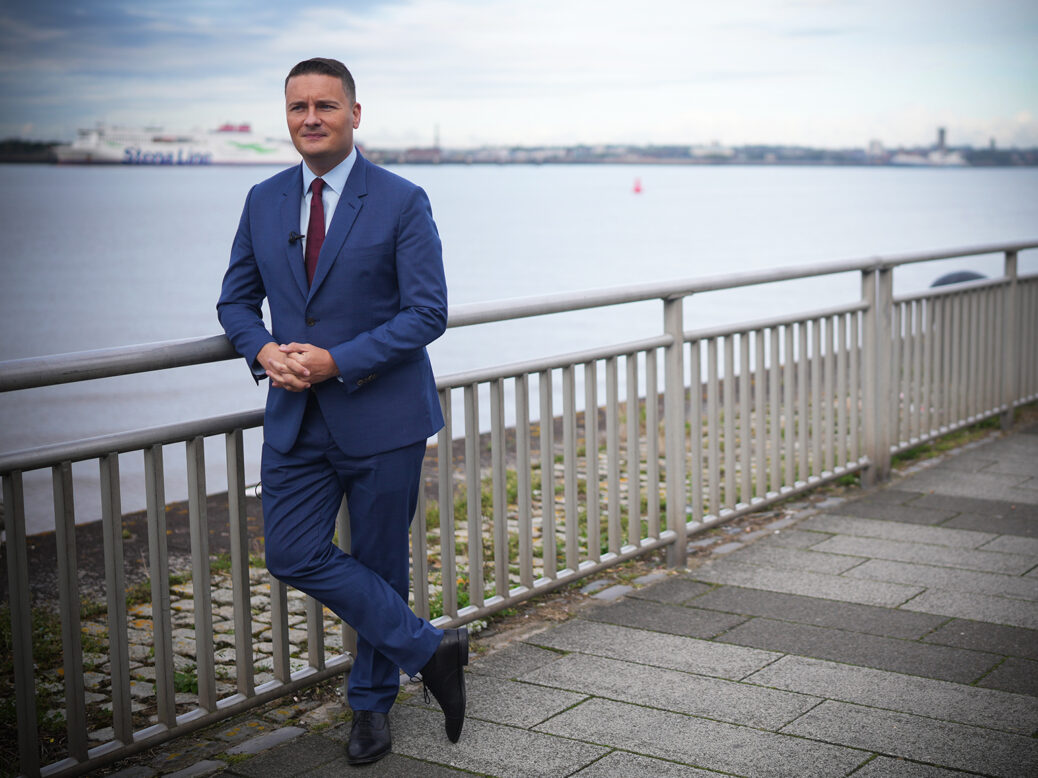
Please bear that in mind when I tell you that Wes Streeting is pivoting to the left.
The clearest manifestation of this latest unexpected twist in the narrative came during an appearance on Nick Robinson’s Political Thinking podcast, when the former health secretary unveiled his plans for a “wealth tax that works”. Equalising capital gains tax with income tax, Streeting argued, would address the iniquities of taxing labour more than capital and raise £12bn in revenue at the same time. This is not a wealth tax in the sense proposed by the Green Party, which would simply mean top-slicing the assets of the ultra rich. But it would close a morally repugnant loophole that allows the wealthy to pay a lower effective tax rate than their staff.
There’s more. Since standing down as health secretary – he does have the votes to challenge Keir Starmer, he just doesn’t want to right now, for some reason – Streeting has also described Brexit as a “catastrophic mistake”, and said that the UK should one day rejoin the European Union. An appeal to the liberals, an appeal to the left – anyone would think there was a leadership race going on.

Can Wes really win over the parts of his party that are a bit unnerved by the whole “Nigel is right, vote Labour to stop him” thing? The idea that being on the right of the Labour Party simply meant being on the right has always been a tad simplistic. And one of the most controversial policies that Streeting put forward before government involved replacing the partnership model of general practice with salaried GPs – in effect, a nationalisation.
Yet it would take enormous optimism for anyone even slightly to the left to accept Wes as their saviour. His position in the kaleidoscope of Labour Party factions has meant close links with Peter Mandelson which, it is just possible, might turn out to be a problem. Equally problematic could be the small fortune in donations he’s accepted from private health firms. His tenure was also, let’s say, controversial among trans rights groups.
Most importantly, there’s a leadership race on – which Wes definitely has the support to get into, by the way – and he knows that even having a hope of winning it will require showing a bit of previously well-hidden leg to the left. Perhaps Wes Streeting genuinely is committed to his wealth-tax-that-works. But it must be easier to trust that if you retain no memory of how Keir Starmer got the top job back in 2020.
As Streeting pivots left, Andy Burnham is twirling right. (The incumbent Prime Minister, who still maintains he can save his job, seems tragically unable to move at all.) Facing a historically Leave-y and notably Reform-curious electorate in Makerfield, Burnham has stressed the “not reversing Brexit any time soon” part of his agenda over the “even though it’s obviously been a catastrophe” bit. (His and Streeting’s positions are actually not that far apart – both are variants on: “This is an obvious disaster which I have no current plans to address” – but where’s the fun in that?)
More upsettingly, the Guardian reported unnamed – and thus deniable – sources saying he would be backing Shabana Mahmood’s immigration changes. These include extending the time people have to wait before getting settled status – up to, in some cases, a quite frankly insane 20 years – plus finally showing those bastard refugees what for. If you’d dared to hope Andy Burnham might represent a definitive end to Labour’s lurch towards Farage-ism, then now you know better.
Even so, he’s running one of the better campaigns in the Makerfield by-election. The Green Party withdrew its candidate, Chris Kennedy, in a matter of hours; the Times went on to report that he’d shared social media posts describing attacks on ambulances run by a Jewish charity as a “false flag”. Full marks to the party for acting quickly, but we must surely dock some points for attempting to claim Kennedy had withdrawn for “personal and family reasons” rather than immediately owning up to what had happened.
Then there’s the horrific social media history of Reform candidate Robert Kenyon uncovered by anti-racism campaigners Hope Not Hate: sexism, homophobia, creepy comments about Carol Vorderman (classic), plus apparent support for a Covid lockdown conspiracy theory. Another anti-fascist campaign, Searchlight, meanwhile claims he was once Facebook friends with three far-right organisers. Reform says that being Facebook friends “does not constitute an endorsement of his views”, and declined to investigate the posts. This man may soon be an MP.
The main thing connecting these stories is that every one of them makes a compelling case for delusion and despair. Whatever happens in Makerfield next month, or in the Labour Party afterwards, it is extremely hard to see a route to the sunlit uplands. Things can’t only get better. In British politics in 2026, hope is a mistake. But I’ll see this for Streeting – it’s an innovative politician who gets the disappointment in first.
[Further reading: Should the Green Party stand in Makerfield]
Content from our partners



Related

Join the debate
Subscribe here to comment