
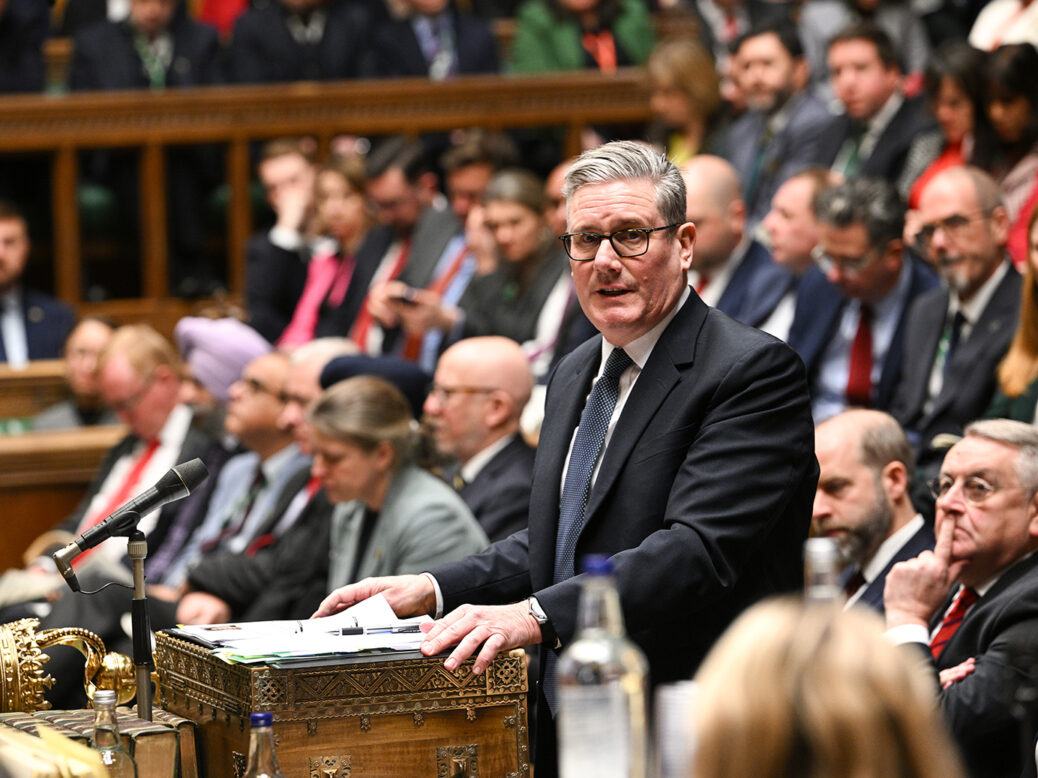
Whenever a government U-turns, a familiar response ensues. The media report the decision as a “humiliation” for the prime minister or the cabinet member involved. Unflattering comparisons are drawn with Margaret Thatcher’s 1980 Conservative conference speech, in which she declared: “You turn if you want to – the lady’s not for turning!”
In truth, as the former Labour cabinet minister Andrew Adonis once observed, “good governments U-turn – and U-turn frequently”. Thatcher herself was more flexible than her adamantine reputation suggests, softening her monetarist policies in 1982. Tony Blair and David Cameron routinely changed course when political necessity demanded it, with the latter’s strategist, Lynton Crosby, speaking of scraping the “barnacles off the boat” – a line echoed by No 10 today.
A better test is whether a government’s U-turns convey strength or weakness. Are they strategic retreats that demonstrate sensitivity to public opinion and a refusal to be diverted from the administration’s core purpose? Or are they the product of incoherent thinking and inadequate preparation?

The problem for Keir Starmer is that too many of his U-turns fall into the latter category. Estimates of the total number vary – a widely cited figure of 13 includes some changes made in opposition, such as the £28bn green investment pledge – but a clear pattern runs through the most significant. The government has too often adopted policies without first settling on a compelling rationale for them.
Compulsory digital ID cards – a fundamental change in the relationship between citizen and state – were sold by Starmer as a means of tackling illegal immigration, rather than, as cabinet ministers such as Bridget Phillipson wanted, as a positive benefit for public service users. Cuts to winter fuel payments and to disability and sickness benefits were transparent exercises in saving money, not improving policy, and were consequently easier to oppose.
The eventual abolition of the two-child benefit cap was inevitable for a government committed to reducing child poverty – an ambition Starmer had referenced privately while in opposition. Yet the decision to remove the whip from rebel MPs ensured that any subsequent change would be viewed as an exercise in party management rather than an act of principled policy.
For Labour, the problem is that the public have noticed this haphazard pattern. Until recently, polling by YouGov showed that voters were more likely to interpret U-turns positively rather than negatively. But for the first time since the question began to be asked in 2019, that balance shifted in July 2025: 41 per cent now say U-turns show the government to be “incompetent and weak”, compared with 33 per cent who say they demonstrate a willingness to listen and to reflect new situations.
Starmer’s U-turns are ultimately a symptom of the government’s woes rather than their cause. In contrast to successful previous administrations, Labour did not settle on an overarching purpose in advance: Thatcher had privatisation and the free-market revolution; Blair had public service reform; Cameron had deficit reduction. Under Starmer, by contrast, missions, milestones and foundations have come and gone. Instead of advancing towards a clear destination, the government risks appearing as if it is merely going round in circles.
This piece first appeared in the Morning Call newsletter; receive it every morning by subscribing on Substack here
[Further reading: The battle for Labour’s leadership has already started]
Content from our partners


Related


Join the debate
Subscribe here to comment