
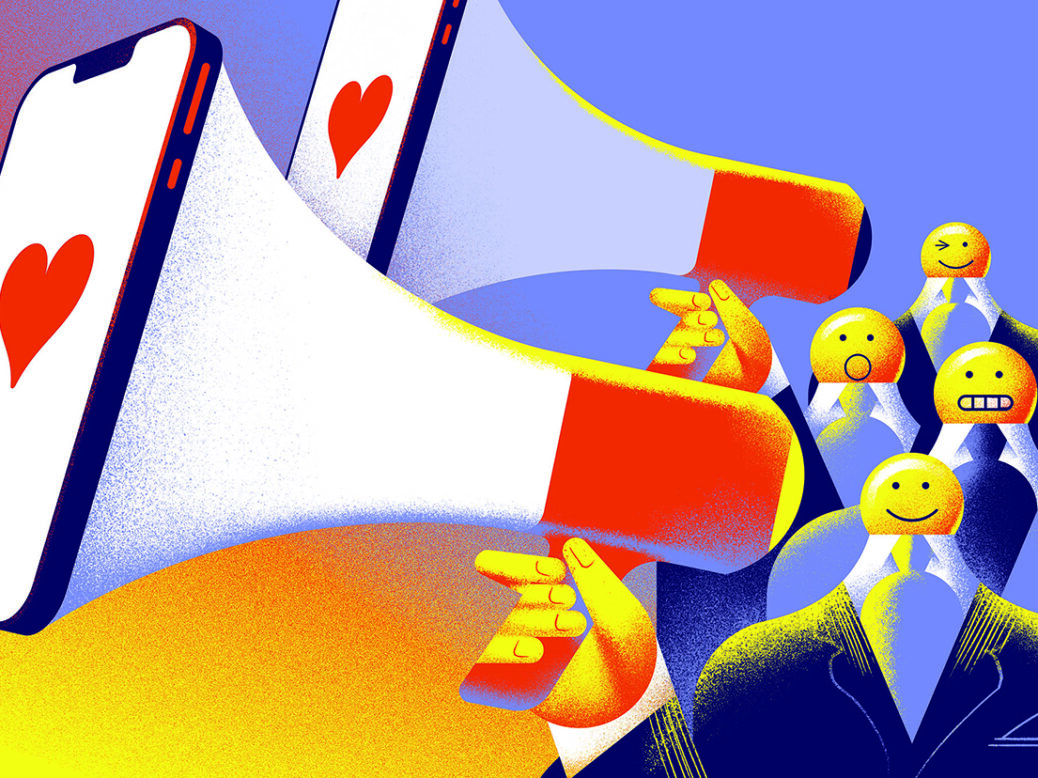
“Stop scrolling,” Zack Polanski declared on TikTok last month. “I need help.” This was one of many videos he posted on the social media platform while campaigning for the Holborn and St Pancras by-election. “We’re not going to win it through donations,” he said, “and we’re not going to win it through the media.” He was, for once, right: the Green Party wasn’t going to win it, by any means. But this raises a question. When Polanski was elected as the party’s leader last year, much was written about his facility with social media, his ability to communicate directly to the TikTok generation. Andy Burnham, who joined the platform before he ran in the Makerfield by-election, has been described as the first TikTok Prime Minister, but Nigel Farage remains the most popular British politician on the platform. Are any of our politicians good at TikTok?
Unfortunately, the only way to answer this is to watch all of the TikTok videos posted by every leader of a major political party in the UK, a process that leads a person to ask some questions about their own career choices, but also the direction that politics has taken. We live in what Neil Postman called “the peek-a-boo world”, an environment of endless disposable communication, in which detail and nuance are erased by novelty. Who’s best at this game?
In one of his most popular videos, Polanski stands on a beach and claims to have “met a man recently” (no further detail is offered) who wanted to “shoot the people coming across on small boats”. He stares sadly at the waves and wonders how anyone could think that the arrival of hundreds of thousands of unauthorised migrants in the UK was a bad thing. “The boats, the boats, the boats,” Polanski repeats, “but something doesn’t add up… I call bullshit.” There is loads of money to go around – “more than ever” – but it’s all been taken by “the elites… the problem this whole time was the super-rich, and their yachts”. He doesn’t explain anything about how these nameless elites have “stripped away” the money that would otherwise have gone to working-class people. They just have, and it’s been spent on yachts. “Follow the money,” Polanski declares in another video, “and you will see both Starmer and Farage, wining and dining hedge-fund billionaires [and] arms traders.” Has he followed the money? Does he have receipts? Don’t be silly; that would take ages.
Burnham’s rise to TikTok popularity has been faster – and more carefully gamed, with the help of a team of specialists – but the PM also seems more at ease on the platform, more relaxed in front of a camera. Normal Andy loves to make a video about having a pint. If you wanted to construct a really dull conspiracy theory, you could argue that the real aim of a number of Burnham policies – reducing business rates for hospitality, letting young people use digital ID apps – was to allow him to make a little video from the pub, to show Normal Bloke PM eating pork scratchings and trying to “split the G” on a pint of Guinness. In the real world, Burnham faces grim choices, but on TikTok things are simpler: he’s against queueing in pubs, and those twats who put their phone on speaker on the bus, and those twats who get their phones out at gigs.

Given the extent to which social media rewards frivolity, Ed Davey ought to be one of its star performers. The Lib Dem leader’s account does post Davey doing Davey: here’s Ed in front of some alpacas, here’s Ed doing archery, in a canoe, driving a tractor. Here’s Ed wishing David Attenborough a happy 100th birthday; the video cuts to a picture of Davey cuddling a small goat. But these posts don’t reach large audiences. The most popular video on Davey’s account – aside from a party-political broadcast – doesn’t include the Lib Dem leader at all. It shows Farage, joking on stage as a protester is attacked by the crowd at the Reform conference.
How is it that on a social media platform for young people, the most popular leader of a UK party is a posh, 62-year-old white man? Surely this is the domain of Polanski, a young leader who is talking to a young party through a young medium? How is Farage reaching an audience almost ten times the size? The truth is that TikTok is not exclusively a place for young people, and it is ageing fast. About one in five users in the UK is aged over 45, and the fastest-growing segment of users is those aged 45-64. In the top 20 most popular accounts among UK users, the only news brand is the Daily Mail.
More importantly, Farage understands the medium. He inhabits it. TikTok is also full of automatically generated slop that is used to impersonate and denigrate politicians. Farage’s team makes weird AI videos about him. In one, a strange AI-generated video of the Reform leader (younger and slimmer than the real thing) stands in a nightclub with his eyes closed, swaying slightly to the music. That’s it. He posts this stuff on his own channel and it is watched by hundreds of thousands of people.
Other politicians receive abuse and criticism and do their best to ignore it; Farage is nourished by it. He ingests it and regurgitates it to his followers. One of the most popular videos Farage has posted shows him out campaigning by a road somewhere; a woman drives past, yelling “wanker!” and immediately drives into the back of a car in front. This video has been watched by about a million more people than watch BBC News at Ten. In another video, a young man rips up a Reform leaflet that has been put through his letterbox and stamps on it; Farage has posted this video himself, to allow his fans to enjoy the man’s puny, embarrassing rage. A young woman complains that everyone in her town is “dressing like Nigel Farage”; his team have repurposed the video to show off some of his best outfits.
It’s this random stuff that does numbers. There’s the occasional video that looks like a party-political broadcast – Nigel on a beach in Essex, flat cap and tweed jacket, Labradors scampering at his heels – but these don’t do particularly well. What his audience likes is immediacy, irrelevance, a total lack of embarrassment. They reject detail; they reject context. On a street somewhere in England, an older woman tells Farage she has never known such fear in the country. “What do you fear? Crime?” Farage asks. “Everything,” she replies. “Everything.”
I’m told that when Polanski was on the up, he based his approach to social media on that of the New York mayor Zohran Mamdani. There are very significant parallels: Polanski has copied the retro typefaces used in Mamdani’s videos, and, like Mamdani, he talks about oligarchs and democracy, about rent controls. But there is also a huge difference: on TikTok Mamdani is, as they say, living his best life. He understands that the first rule of social media is that everything is an advert, and complaining doesn’t sell. You cannot hector your audience, you have to show them you’re having a good time. Farage suits this because he enjoys politics, because he has spent three decades making promises without ever having to deliver on them. The internet is an endless procession of promises, a non-stop trailer for a film that never starts. It is made for such people.
[Further reading: The Green Party is in crisis]
Content from our partners



Related
This article appears in the 14 Oct 2026 issue of the New Statesman, Fool Britannia
Join the debate
Subscribe here to comment