
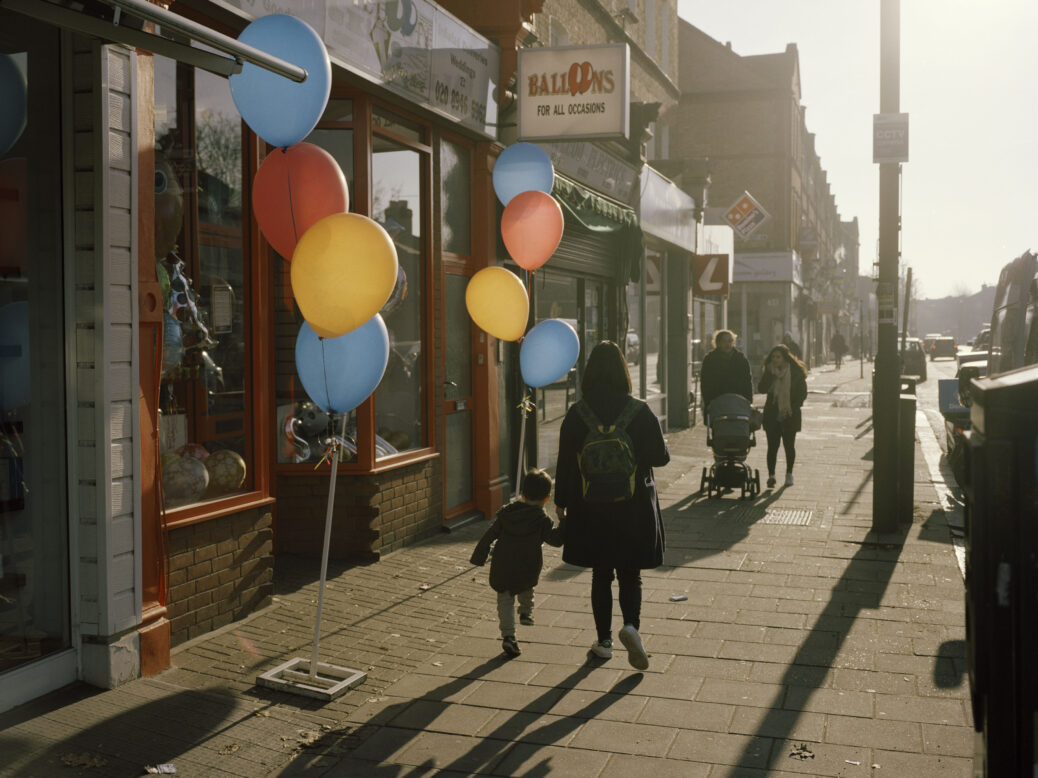
With some surprise, I recently discovered that I have acquired something quite remarkable: status. How did this happy development come about, I hear you ask? Through wealth or fame, professional achievement or acts of charity? No, of course not. I acquired this magical virtue simply by entering a new aspirational class of people: those with more than one child.
As Vicky Spratt documented in her recent New Statesman cover story, in 1997 the average age of a first-time mother was just over 26. Today it is almost 30, and, where I live in London, the number is even higher. Vicky wrote that, “Only my wealthiest friends have more than one child; siblings are becoming the new status symbol.” My two-year-old is chuffed to bits.
A materialist interpretation of those statistics would focus on the economic reality of prospective parents: stagnant real wages, prohibitive housing costs, burgeoning private debt, and the feeling of precarity they induce. And children are expensive. So, downstream of all this is a culture in which procreating on multiple occasions becomes an indicator of wealth and status.
Consider the life of Boris and Carrie Johnson, as told on Instagram at least: four happy children, one happy life. Or take the most high-profile mother in the land with perhaps the most status: the Duchess of Cambridge. Here, perhaps, is the aspirational dream in Britain today: the princess with three adorable heirs (and two cocker spaniels to boot). But even beyond these rarefied examples, back in my own little pocket of south-east London, it is clear that Vicky has a point. Many of the mums and dads carting around multiple children are those who can afford to go part time at work or get a nanny. The rising cost of living – particularly housing – is surely a major factor in this great demographic revolution quietly sweeping through the younger generations.

And yet, on this occasion, I don’t think a straightforward Marxist analysis can explain the trend. A young professional in London earning £60,000 a year is in the top 14 per cent of earners in the country, the wealthiest 1 per cent globally, and the top 0.1 per cent of all humans to have ever lived. Yes, a lot of these people might feel squeezed financially, but it is objectively the case that they could afford to have children if they really wanted to. And yet ever more are choosing not to. Why?
There are many plausible explanations, from the decline of religion, improvements in medicine, female literacy, the availability of contraception and societal progress – different norms around the roles of women. The phenomenon isn’t unique to Britain, either – it’s global, present in countries that have never recovered from the financial crash, like us, and those untouched by it. South Korea, the United Arab Emirates, Russia, Germany, the United States.
Camilla Cavendish, author of Generation Maybe: Why We’re Having Fewer Children, and What It Means for Us All, has argued that as far as global population decreases go, “only the Black Death in the 14th century is comparable to what is happening now”. I interviewed her recently – you can listen to the conversation on our podcast The Exchange – and suggested that, while there may be deep structural changes taking place that contribute to the falling birth rate, there was something less tangible but no less profound also happening: a flirt recession. Men of my generation seem to have lost the ability to ask women out.
It strikes me that this is far more important than we would like to admit. A recent demographic study published in Nature by Stephen Shaw showed that across America and other high-income nations, the number of children mothers give birth to is stable or even rising, but the proportion of women who have children at all is collapsing. And when asked why they don’t have children, the second most common answer provided by women, after “I don’t want any”, is that they can’t find a suitable partner to have them with.
Surely there is a connection here. Men are losing the ability to talk to women, and women are finding it harder to meet a good man. What is it that young men are scared of? Cavendish told me that a fear of rejection lies at the heart of this very modern crisis. “The point about rejection is so profound,” she said. “Certain types of men take a lot longer to recover from rejection, the hurt and the difficulty that ensues… A lot of good men are really striving, and society is not giving them a lot of support”.
While there are plenty of levers that could be pulled to make it more affordable to have children – I think statutory paternity leave should be more than two weeks, and that our social norms around present fathers and men in pink-collar jobs are backward and boring – I am probably at my most Thatcherite when thinking about the great rejection fear for modern men.
If you, the sovereign individual, can’t get a girlfriend, and want one, you need to find the courage to accept rejection. Rejection is part of life. While I am certainly happy to accept the so-called status I have somehow acquired from having children, I recognise that it all stems from one thing I did as a naive young man trying to get a girlfriend – being brave enough to risk rejection by walking up to my future wife and asking for her number.
Listen to Camilla Cavendish in conversation with Oli Dugmore on our interview podcast The Exchange
[Further reading: Tackling the birth rate crisis]
Content from our partners



Related


This article appears in the 01 Oct 2026 issue of the New Statesman, Sunshine and Rain
Join the debate
Subscribe here to comment