
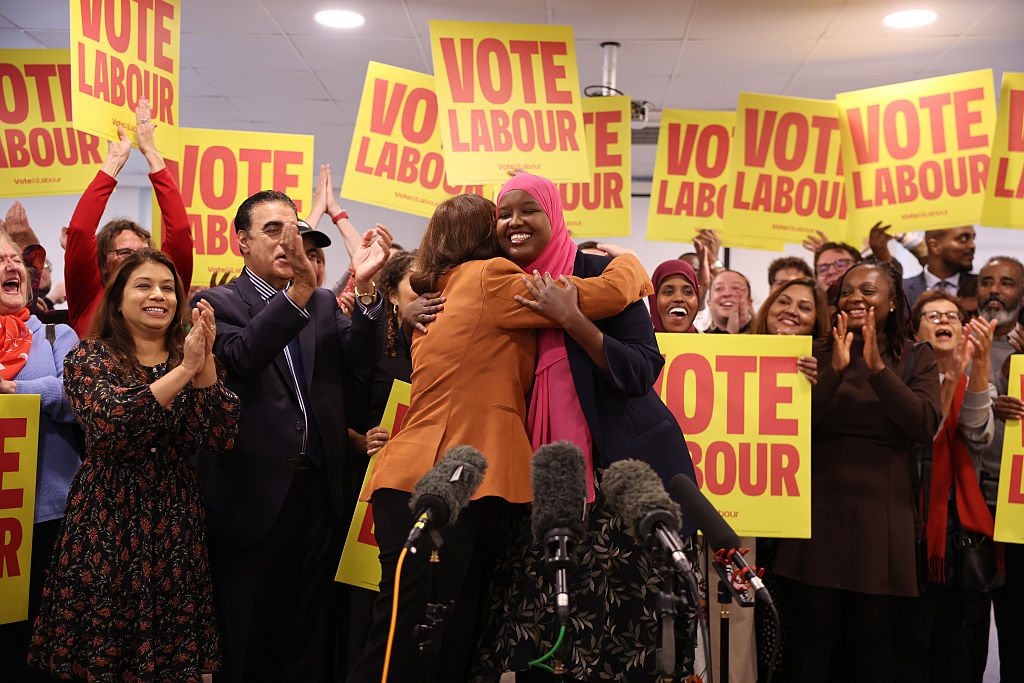
The result of the Holborn and St Pancras by-election is roughly what was expected. A win with local council leader Sagal Abdi Wali is good for Labour, second place for their leader Zack Polanski is not amazing for the Greens – it was ultimately not hugely close, with more than three thousand votes between winner and runner up – but neither is it terrible. At Persuasion UK we polled the constituency, trying to get underneath the headline numbers to the motivations that drive them.
Zack Polanski became leader of the Green Party in September 2025, when Labour was foundering in government but the Starmer administration yet to reach its nadir. His second place finish in a traditionally safe Labour seat would be a very respectable result for a party that wants to win 15-20 seats at the next election (although it is important to bear in mind that Polanski was able to eat the not insignificant vote of Andrew Feinstein, who stood as an independent in 2024). Twenty or so seats would also be impressive growth on their result in 2024. However, it does not indicate that he can, as he said he aimed to do when elected, “replace Labour”. This Holborn result, like Persuasion’s previous work, indicates that the surge of Green support which saw them take Gorton and Denton and overtake Labour in the polls earlier this year was a function of people being concerned by Labour’s direction under Starmer, a concern which is now seemingly somewhat subsiding.
In our poll of the voters of Holborn and St Pancras – a left-wing seat, where Labour got more than 70 per cent of the vote in 2017 – 42.1 per cent viewed Andy Burnham as more left wing on public ownership than Keir Starmer, 31.8 per cent saw him as to the left on Israel and Gaza, 36 per cent as more left wing on the economy and cost of living, and 26.4 per cent on immigration and asylum. Given the seat’s profile and Burnham’s greater popularity, we can assume that this is primarily assessed as a positive shift. In this central London constituency, we also quizzed voters as to whether they were concerned by the Prime Minister’s Manchester focus; in general, the answer was no, with 48 per cent saying they thought Burnham was “seeking to support the whole country, including London”, versus 22.4 per cent who reckoned he “gives too little priority to London in his efforts to support other parts of the country”.
The top reason not to vote Green was “not to undermine the Labour government”; the bottom reason was personal dislike of Zack Polanski. Polanski’s much noted former career as a hypnotist didn’t appear to bother voters much, sitting at fourth from the bottom on the list of reasons to vote against the Greens. Polanski was viewed favourably by 42.6 per cent of respondents, and negatively by 44.7 per cent, the latter number making him slightly more unpopular than his predecessor as Green leader Caroline Lucas (38.9 per cent have a negative view of her). Overall this would seem to back up the merits of an “attract don’t attack” approach for Labour in its efforts to win support from Green or Green-curious voters.

On a similar note, personal dislike of Sagal Abdi-Wali was also the least likely reason to not to vote Labour, with three of the four bottom messages (“I just dislike Sagal Abdi-Wali and do not think she would be a good MP”; “Sagal Abdi-Wali is too right wing”; “Sagal Abdi-Wali does not have real roots in this area”) relating to her (rounding out the bottom four was “The Labour government is doing too much on Net Zero/climate change”). Her overall favourable rating was 47.9 per cent, versus 32.9 per cent unfavourable. The results suggest she was a strong candidate, with “Sagal Abdi-Wali’s background and experience are the kind we need more of in Parliament” being the highest ranked reason to vote Labour. Meanwhile, the top reason not to vote Labour was “the Labour government’s decisions on welfare and benefits”.
Holborn and St Pancras is of course Keir Starmer’s former seat. He was the least popular politician surveyed in polling Persuasion UK conducted before conference, notching in a few points more unpopular than Farage. Burnham in that survey was the most popular party leader; he is also the most popular politician in our Holborn and St Pancras poll, with a 53.7 per cent approval rating (and a 40.7 per cent disapproval). Starmer is a little more popular in his former patch than he was nationally, racking up 42.7 per cent favourable versus 49.5 per cent unfavourable.
Our poll also dug into some of the wider views of Holborn voters. When asked about recent reports on Reform’s funding, 43.8 per cent think “they point to a wider problem with money in politics across parties”, whereas 22.1 per cent reckon “they point mainly to a problem with Reform UK, rather than the wider political system”. They support both the building of new council homes and new homes for private sale in their area. While the dead centre of London is not the average constituency, the largely progressive voters of Holborn and St Pancras have sent a message unlikely to displease a Downing Street keen to bring progressive voters back to Labour.
[Further reading: The Green Party has urgent work to do]
Content from our partners



Related

Join the debate
Subscribe here to comment