
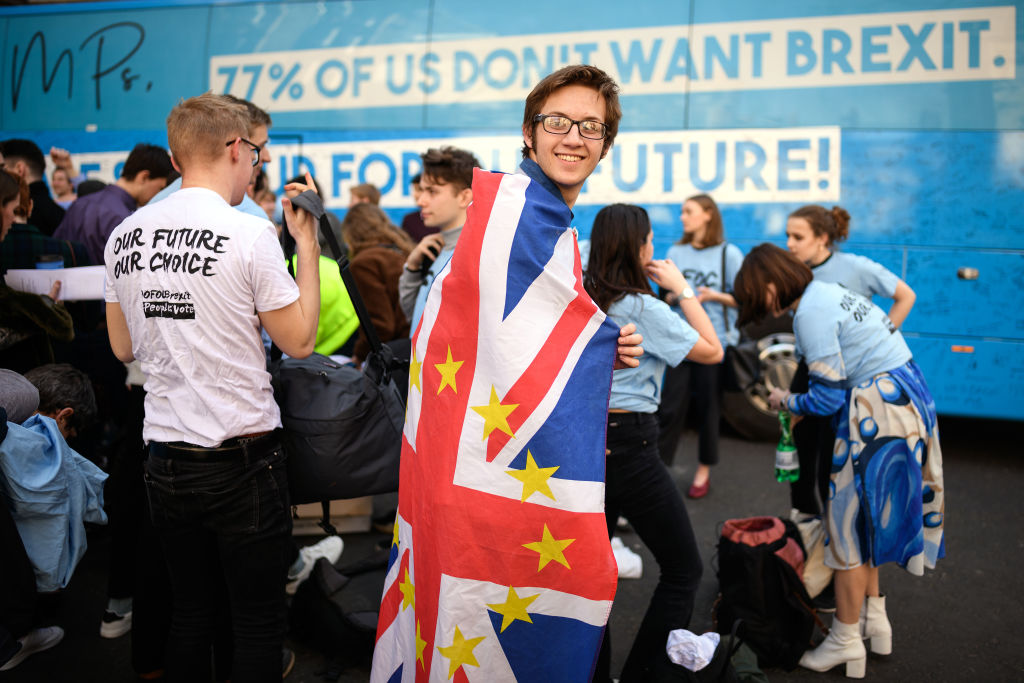
Assuming Andy Burnham does not call a snap election before the Representation of the People Bill makes it through its final stages, the next time British voters head to the polls for a general election they will be joined by 16- and 17-year-olds casting their very first ballots. Despite being a key manifesto pledge in 2024, Labour has gone quite quiet about the topic as the changes have trundled towards legislative completion.
Maybe that’s because these new potential voters make up just 3 per cent of the electorate – hardly enough to swing an election, even if they not only all voted but voted en masse for the same party, which is decidedly unlikely. Or maybe it’s down to the uncomfortable reality for the Labour Party that since it swept into power with a landslide majority, realisation has dawned that the young people about to be freshly enfranchised might not be as full of gratitude as the optimists who drew up the plans anticipated. Support for the party has fallen across all demographics over the past two years, with disillusioned young people looking for more left-wing alternatives – namely the Greens.
Still, you pays your money, you takes your choice – and teenagers are getting the vote. So with Labour Party Conference in full swing, it’s worth considering which way the wind is blowing among young voters.
Two interesting pieces of research, published today by Ipsos, offer some clues. First off, on the eve of Labour conference, Ipsos ran two focus groups of 16-18-olds – one in London, one in Medway in Kent – to get a sense of how they are feeling on the brink of their entry into political maturity. These should be required reading for any politician claiming to care about the interests of younger generations.

On the whole, the mood in both groups was more optimistic than is often the case for focus groups (it’s amazing how hopeful people can be when they’ve just left school). But certain concerns were prominent: the rising cost of everything (public transport, small luxuries like takeaways, and the inflation-busting rise in the price of the humble freddo were all cited), the lack of employment opportunities, and the threat of AI, along with climate change and Israel-Palestine (London), and immigration (Medway).
The prominence of the cost of living is to be expected – it is, after all, the top voter concern (tied with the NHS). But the fact teenagers getting their first part-time job were already feeling the impact, from the cost of getting to work to the increasingly unaffordable price of a night out, shows how far down the problem goes. It’s also an important reality check on priorities: every participant had something to say about everyday life getting more expensive, compared to just two who brought up Gaza.
On job opportunities and AI, the groups provided a useful counterpart to the discussions in Westminster about the crisis of NEETS (young people not in employment, education or training). “I know a lot of people that have finished university and still haven’t got jobs and can’t find them and it’s quite tricky,” one of the said. “It’s been years and they still haven’t got jobs.” Another mentioned seeing frequent posts on LinkedIn about graduates who can’t find work, while a third lamented how difficult it was to get opportunities when you’re starting out as companies all want people who already have experience. All of this, they agreed, was being made even harder by AI. This was the main thing they wanted to see more action on from politicians.
As to how those politicians currently interact with this demographic, the teenagers were not impressed. “We’re not really the priority of the government because we don’t make up the bulk of voters and that’s more sort of the older generation… They don’t rely on us to get back into power,” one suggested, perfectly capturing Westminster maths for the past few decades. Another was fed up with politicians trying to “bring down the level of their ideas to match the Gen Z concept that they’re going for” with gimmicky TikTok videos that patronise the people they’re intended to reach. “It doesn’t make it feel like kind of we as a generation are being taken seriously.”
This was not the most political engaged cohort. Most couldn’t identify any politicians beyond Andy Burnham and Nigel Farage, and even then there was some uncertainty about who they were. (Zack Polanski got a bit of recognition, though the Green leader was dismissed as being “a bit too casual” for one participant.) There was a vague awareness that the voting age was being lowered to 16, but little knowledge of what the various parties represented or consideration of how (or even whether) they would vote.
This suggests that there is significant untapped potential for politicians and parties who want to get serious about representing young people. This cohort might be young, they might get their news from TikTok rather than newspapers, but their assessment of the challenges facing both the country and their own lives were both understandable and accurate. They were more concerned about the cost of housing than social media (several pointed out the unworkability of the social media ban intended to protect them), revealing misaligned Westminster priorities, and seemingly unswayed by the kind of gimmicks deployed to get their attention.
Is there a message here for a Labour Party fighting to win back support on its left flank? It is worth stressing once again that these voters – if they even do vote – will not play a decisive role in who wins the next election. But they are soon to be part of the electoral landscape, and right now, no one is taking them seriously. Who knows what might happen if someone tried.
The second piece of research concerns those members of Gen Z who can already vote, aged 18-29. Gen Z voters are, as expected, far more likely to be considering parties on the left than the right: 72 per cent would consider voting for Labour, the Green Party or the Lib Dems, compared to 16 per cent for the Conservatives or Reform.
Good news, perhaps, for Labour that whatever problems it might have with younger voters, the Tories are suffering far worse. But the trend of the Greens peeling off support on the left over the past two years is impossible to ignore. As of September 2026, 33 per cent of Gen Z would consider voting Green, and 28 per cent Labour. This close fight for dominance compares to 19 per cent Green and 41 per cent Labour support in 2024. Blame Keir Starmer or credit Zack Polanski, the impact is real.
Some of those losses can be won back, and there is good news here for Burnham himself. According to the latest Ipsos headline voting intention poll, support for Labour among 18-34-year-olds is recovering a little: the party is now neck-and-neck with the Greens at 31 per cent, up from 21 per cent (to the Green Party’s 33 per cent) from January-May this year. What could possibly have changed after May? You’ll have to ask Larry the Downing Street cat.
[Further reading: Labourism vs neoliberalism]
Content from our partners



Related


Join the debate
Subscribe here to commentKemi Badenoch’s existence is not recognised, apparently