
Sometimes, it’s the detail that sticks. Jason Quinn had just celebrated his eighth birthday, and his present was new Adidas trainers. He had been showing them off with childish delight, swinging his feet as he asked neighbours to admire them.
A few days later, Jason died with his brothers, Richard, 11, and Mark, 10, in a horrific blaze that engulfed their new home in the early hours in Ballymoney, Co Antrim. Locals who tried to save the boys told me he had screamed: “My feet are burning! My feet are burning!”
Though the boys went to a Protestant school, their mum, Chrissie, 30, was a Catholic, who had just moved into the predominantly Protestant Carnany estate. Back then, it was a dangerous place for her to be, especially at the climax of the Orange marching season.
This was 1998. Though Northern Ireland had just backed the momentous Good Friday Agreement, and a burgeoning sense of a new dispensation was afoot, there was nonetheless a state of fearsome unrest, the backlash from those who feared losing out.

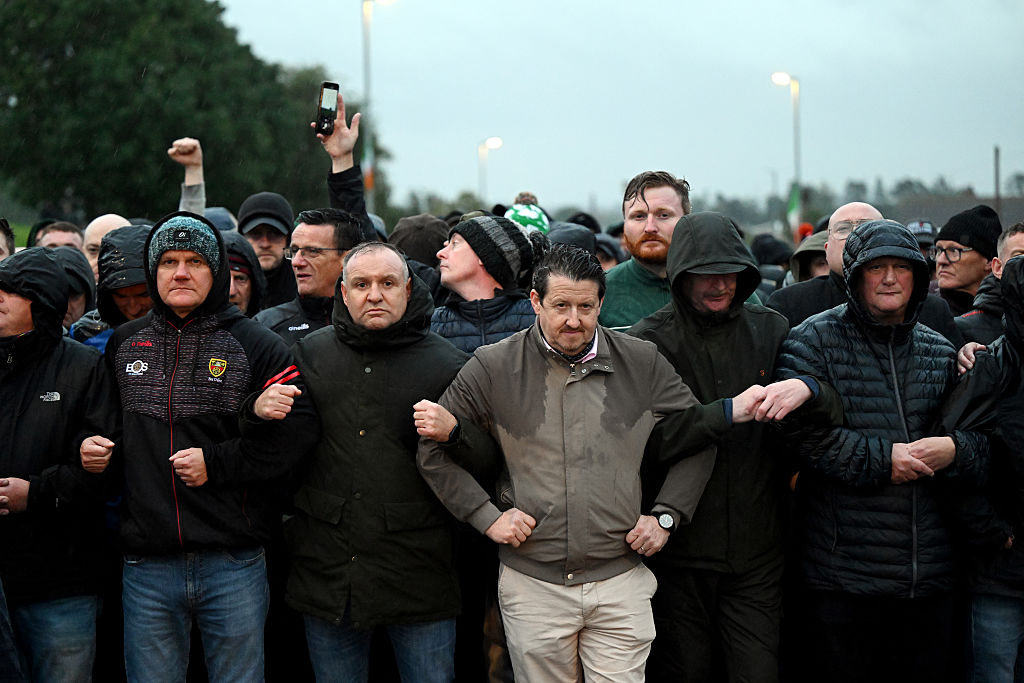
For the newly set-up Parades Commission had banned the Orange Order – for the first time – from taking its traditional route back into Portadown after its annual Somme commemoration at Drumcree Church. That meant it stopped them from marching down the nationalist Garvaghy Road, where the Catholic residents had decided they had quite enough of what they saw as triumphalism. In the mid-Nineties, there had been violent clashes.
After the ban, the Orangeman camped out on the hill at Drumcree, believing the authorities would relent and they would get the go-ahead, as they always had. Numbers swelled, and, with them, loyalist paramilitaries from across the province took their places. There were blast-bomb attacks on the police and a rise in sectarian attacks around Northern Ireland.
The whiskey bottle filled with petrol that was tossed into the Quinns’ home in the early hours of July 12 was a watershed. Even the Orangemen, hitherto spoiling for a fight, recognised the game was up, turned tail and went home when news of the tragedy broke. And that – to the outside world at least – is how it has been for nearly 30 years.
Every year, the Orange Order would apply to march down the Garvaghy Road on the first Sunday in July. Every year, they would be turned down. Until now.
No one appears clear quite why the Parades Commission changed its mind. There was some legal procedural error, opening the way for a renewed application. Perhaps the Orangemen saw their chance, requesting a much smaller march and promising no bands. The Commission surprised everyone when it gave permission, as long as there were no more than 35 marchers and it was all over by 9.30 am. There was legal application and counter-application to the courts late into Saturday, but the go-ahead stood.
Maybe the Parades Commission saw the cross-community inclusion of the Orange tradition at the recent highly successful Fleadh in Belfast, and supposed a new dispensation of respecting the traditions of the other side was taking hold. If so, how wrong they were.
To those of us who spent more time than they care to remember at Drumcree, the nationalist community was never likely to decide to stay in bed a bit longer and let the Orangemen have their fun. Or they weren’t going to let the Orangemen pass with derisive whistles, or to turn their backs on them, or to draw hopscotch patterns on the road.
Irony is about as much an aspect of Northern Ireland’s politics as compromise. Marchers march, residents protest. Everyone is a victim. It’s about human rights, you see. Three decades on, how depressing to be back at this place of impasse.
The one bright spot? Back in 1998, Northern Ireland felt it was teetering that July. Journalists and TV crews from around the globe poured in to join us. Drumcree was headline news around the world. This time, amid all the blustering rhetoric, no one outside the immediate locality seems to care too much. Perhaps something has shifted, after all.
[Further reading: Whatever happened to the Good Friday Agreement?]
Content from our partners



Related


Join the debate
Subscribe here to comment