
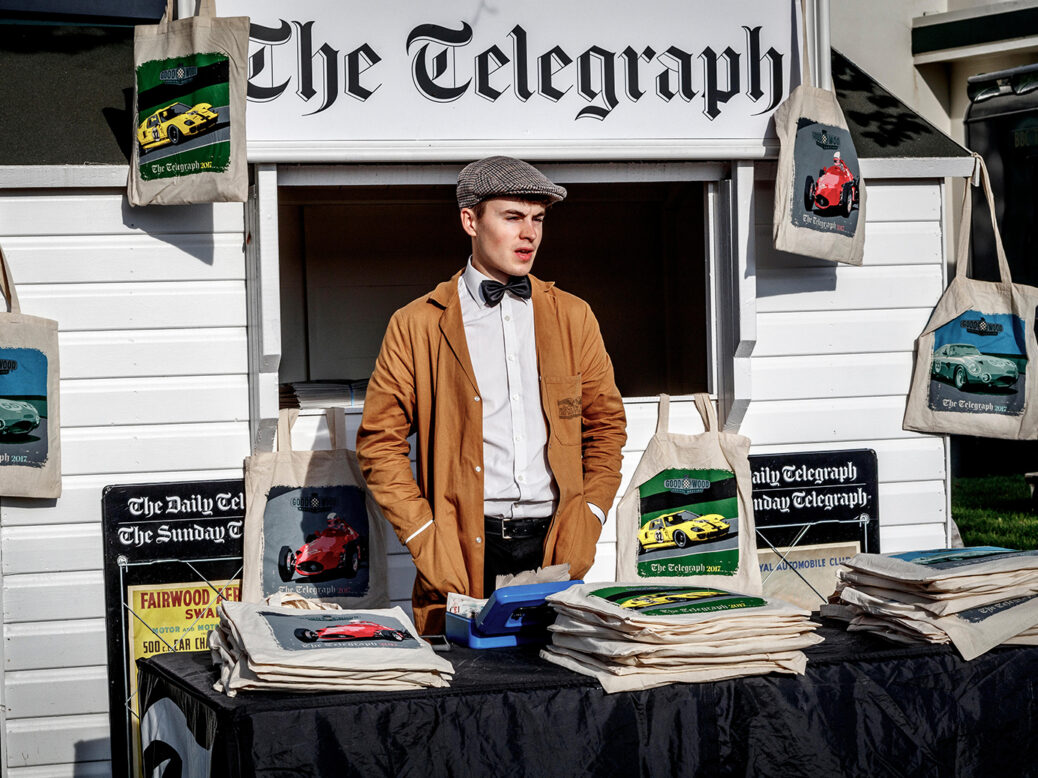
Tele-geddon! Some of the best-known right-wing writers in the UK are among 100-plus journalists being sacked by the Daily Telegraph’s new German owners, Axel Springer. It’s led, perhaps inevitably, to rumours of a conspiracy between Springer and Labour to “take out” a range of the most potent pro-Brexit voices in the country in return for allowing the £575m takeover to go ahead in June.
This doesn’t really work. Any new owner is likely to try to cut the cost base of a traditional newspaper these days, and if the Germans were looking to take out prominent Europhiles on the Telegraph, they’d have a redundancy list of zero because there aren’t any. But senior journalists there are frustrated that the takeover happened without any real sign of a new strategy for the paper, with almost no due diligence, and after paying over the odds. One says that if there isn’t a clear and comprehensible strategy within a few months, the very future of the paper is in doubt.
Another theory popular among sackees and survivors is that the German media giant really wants to expand by taking a stake in TikTok or another social media brand – and took the Telegraph off the hands of RedBird IMI, the Abu Dhabi-based investment group, which had struggled with it, as a favour, in the hope of receiving the necessary enormous investment.
That too is only a theory. But what isn’t is the chaos at the paper. Boston Consulting Group, no particular experts in the British broadsheet market, were brought in to advise on strategy. Old timers remember that when they arrived to “help” the Sun, they were known unaffectionately as the Boston stranglers.

The Springer manifesto says that its ambition is “to transform the Telegraph from a leading British newspaper into a global, AI-powered premium media and intelligence business – built on trusted journalism, direct relationships with our audiences and expertise that sets us apart”. And yet management has taken a chainsaw to the journalists trusted by the current leadership, which had a large growth in subscribers, to more than a million.
Most of the interest in the sackings so far has focused on Allison Pearson, who recently praised the “rough-diamond charisma” of Tommy Robinson, and who had Essex police visit her at home last year following a tweet that a complainant had found racially offensive. Pearson is perhaps the paper’s most controversial provocateur, but she is hugely popular with its audience. In recent days, large numbers of subscribers have been phoning to cancel their subscriptions – one talked of a recorded message saying they were “number 34 in the queue” to cancel.
And yet the far bigger gamble taken by the owners is the removal of the veterans who have been at the heart of the Daily Telegraph’s identity in recent years, as much part of its identity as Bill Deedes, Max Hastings or Peregrine Worsthorne were in the Thatcher years. Philip Johnston, who has been on the paper for more than three decades, had been at the heart of the Telegraph’s news operation. The economics writer Liam Halligan, admired across British journalism, has long been someone to whom its readers turned for advice and wisdom. Con Coughlin, the long-term foreign affairs specialist and Middle East writer nearly kidnapped by Hezbollah, represents its finest, if most curmudgeonly reporting traditions.
There is some doubt about the status of Simon Heffer, its most effective political and cultural essayist. Thus far Charles Moore survives; but then he is a former editor. Dominic Lawson has perhaps been hired too recently to be got rid of.
Some hacks on the paper believe that Mathias Döpfner, the CEO of Axel Springer, is barely aware of what has been going on, having delegated affairs to the London management. But if he intends to return and smooth things out, he’s going to need to move quickly. I don’t mean any of this as a sob story. Most of the above, and many lesser-known editorial names, will pitch up on rival papers or start successful independent online writing of their own.
None of them hold political views with which the current writer agrees. But there is a wider story here about the gutting of distinctively British political culture. The Telegraph once mattered to the wider Conservative family in much the same way that the Guardian did to Labour and Liberal Britain: they, as much as the parliamentary parties, were where ideas were thrashed out and reputations made or destroyed.
Naturally, in a globalised digital media environment, the temptation to go international is a big one. But when the Springer manifesto says it wants to turn the paper into a global business driven by AI and “built on trusted journalism [and] direct relationships with our audiences”, one wonders how this chimes with the mass sackings. Given how many “trusted journalists” with direct relationships with Telegraph audiences are currently being put down, perhaps humanely, in clubs around Piccadilly, it reads rather oddly.
Worse, however, isn’t there something profoundly bloodless about this “global media and intelligence business”? Springer also owns the Politico stable, which is professional and useful, but not exactly brimming with personality. What about a newspaper’s specific culture, its handed-down philosophy and writing style; its unique worldview? What about geography? These are not New Statesman people.
We could just laugh or sneer. But it’s possible to look across the political divide, and see a bad call, being made with cold ignorance of British politics.
[Further reading: Budget debates are a chance for MPs to play to the gallery]
Content from our partners



Related

Join the debate
Subscribe here to commentI first saw a person reading the Daily Telegraph when I was a Bath biochemistry sandwich student at Beecham Pharmaceuticals, Walton Oaks, Surrey in 1977. As a working class lad from Luton this was a major culture shock. After joining the middle class circa 1982 I eventually decided to buy the Daily Telegraph from 1996-2016 to find out what the Tories were up to. In addition I seem to remember lots of photographs of Helen Mirren. Brexit made it unreadable for me but sad to see it slip even further into obscurity as indeed did Beecham Pharmaceuticals. Neoliberalist economics is a wonderful thing.
I’m probably the only Marxist to subscribe to the Torygraph. Well, I was offered an annual sub for £18 and strident rightwing polemic amuses me. The paper’s columnists obviously appeal to the core demographic. But I find none of them as insightful Danny Finkelstein at The Times or Janan Ganesh at the FT when it comes to articulating centre-right perspectives. Pearson is a shock jock and obviously appeals to the base and Deacon can sometimes craft some good lines. But I find Stanley hopelessly overrated.
Not really relevant to the debate, but how wonderful to see a sentence correctly written !
I refer to, “None of them hold political views with which the current writer agrees.”
So often I read in this magazine something like, “None of them hold political views which the current writer agrees with.” or “on”.
If you are paid to write, you might at least write correctly.
Oops! Should the above sentence not read, “None of them ‘holds’ political views with which the current writer agrees.” since ‘none’ is a contraction of ‘not one’ ?