
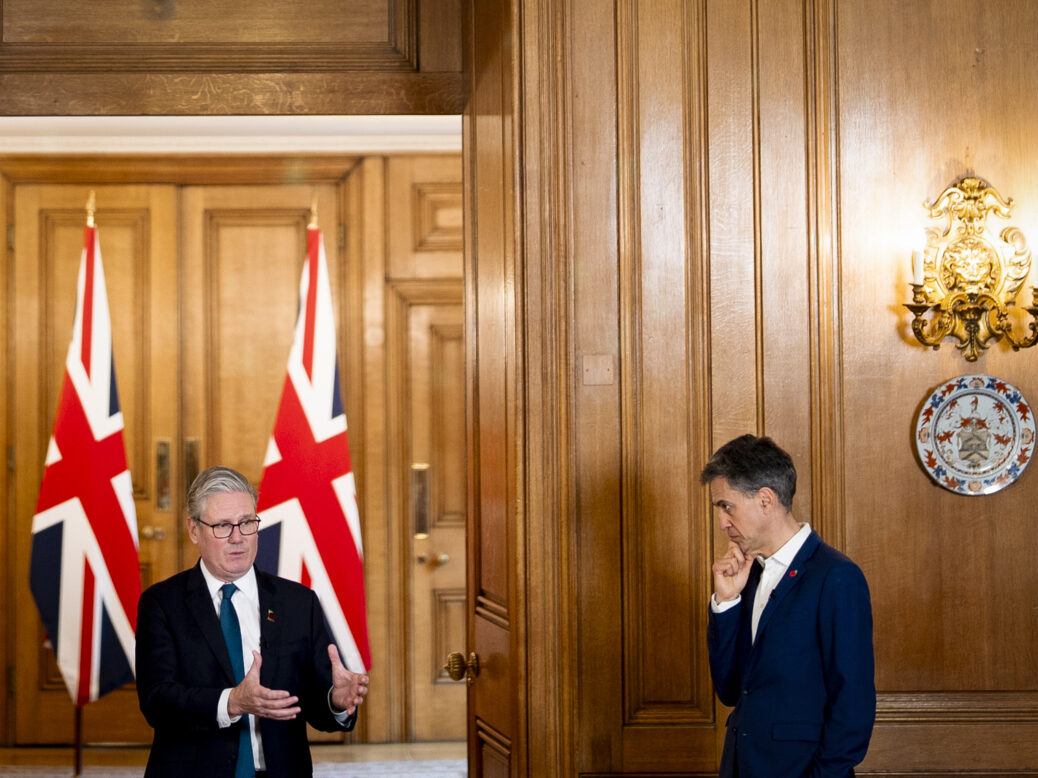
In Power Trip, his incomparable political memoir, Damian McBride includes a chapter on the art of the coup. “Momentum is everything: to succeed, the plotters must keep pushing the leader to the edge of the cliff,” he writes of the 2006 toppling of Tony Blair.
For a transient moment yesterday, Labour’s rebels enjoyed momentum. First, following the resignation of Morgan McSweeney, another senior No 10 aide, Tim Allan, announced his departure. The spectacle of Keir Starmer beginning the search for his fifth director of communications was enough to prompt the thought that bigger change might be needed.
Then it emerged that Scottish Labour leader Anas Sarwar, whose party faces a fifth defeat to the SNP, would be calling for Starmer to resign. A revolt by this wing was always the most likely origin of a coup against the Prime Minister. Welsh First Minister Eluned Morgan, whose once-hegemonic party has fallen into third place, was expected to join the rebellion. Attention turned to whether at least one cabinet minister would (Wes Streeting has denied coordinating with Sarwar).

But then momentum stalled – and badly. Even before Sarwar’s press conference had started, cabinet ministers began to tweet their support for Starmer (with a full house soon reached). Morgan didn’t back Sarwar and nor did any minister. Rather than Tom Watson, who led the coup against Blair (though he prefers to say it was a “riot”), Sarwar came to resemble James Purnell, left isolated on the battlefield after resigning from Brown’s cabinet in 2009.
Starmer went on to the weekly Parliamentary Labour Party meeting where he delivered an uncharacteristically pugnacious speech, declaring that “I have won every fight I’ve ever been in” (his party’s welfare rebels might quibble with that). In the absence of an agreed successor, Starmer remains in the ring. Streeting is fending off attacks over his links to Peter Mandelson – he yesterday released his WhatsApp messages as an act of transparency – and Angela Rayner’s HMRC tax investigation remains unresolved. For fear of something worse, both Labour’s soft left and its liberal right have an incentive to keep the factionless Starmer in place until they can be confident of victory.
But for the Prime Minister this risks proving only a stay of execution. If the Gorton and Denton by-election on 26 February does not finish him, then May’s elections – when Sarwar’s warnings will be remembered – could easily do so.
“There comes a point when you need to sue for peace in order to save yourself,” writes McBride (currently a special adviser to Yvette Cooper). What would that look like in Starmer’s case? The soft-left Tribune group, which numbers more than 100 MPs (enough to trigger a leadership contest), offered an illustration yesterday. Delivering change, it declared, will require “a cabinet and frontbench that reflect the breadth of views across the Parliamentary Labour Party and the diverse traditions that make up our movement”.
Starmer’s best hope of survival might well be a coalition government with the soft left: Rayner, Lucy Powell and Louise Haigh restored to cabinet; former ministers such as Justin Madders and Vicky Foxcroft welcomed back; new MPs such as Miatta Fahnbulleh and Yuan Yang promoted (the most radical version would see Ed Miliband replace Rachel Reeves as Chancellor). To stave off political death, Starmer should break bread with Tribune – and also give Mr McBride a call.
This piece first appeared in the Morning Call newsletter; receive it every morning by subscribing on Substack here
[Further reading: Inside Keir Starmer’s crisis speech to No 10 staff]
Content from our partners

Related


Join the debate
Subscribe here to commentYep, very perceptive – Miliband for Reeves? Nah, joined at the political hip. But others, why not other than pride? How about inviting Sue Gray back with a huge apology? But there is still the very thorny issue of growth. Taxes need to rise, but NI? Surely the mother of all own goals.
Does Eaton really believe that replacing Rachel Reeves as Chancellor with Ed Miliband would help stave off, not just Starmer’s, but the Labour government’s political death?
Rather than being ‘a coalition government with the soft left’, that prospective seems more like being soft in the head…