
Quandary time: should someone with an income of more than, say, £100,000 a year be eligible for taxpayer-funded benefits? As with much in the British state, the answer – at least according to Whitehall – is complicated.
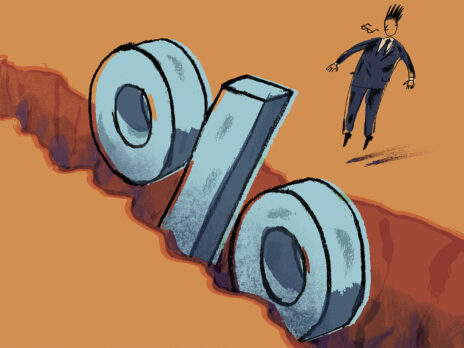
A parent who (or whose partner) earns six figures is barred from accessing free childcare – a “cliff edge” that can perversely leave them worse off than if they’d kept their earnings at £99,999, which many are choosing to do by rejecting promotions or cutting down their hours. And still, in 2025-26, up to 99,000 children missed out on free childcare. The Conservatives have promised to fix this by scrapping the threshold altogether, a move Labour has dismissed as “helping higher earners”.
So far, so political. But what if you’re a pensioner with an income of more than £100,000 a year – as over 77,000 people are? Rejoice! You are still entitled to the state pension (whether triple or double-plus locked) and to other benefits such as free bus travel. Similarly, Andy Burnham wants his new National Care Service to be free at the point of use, regardless of income or assets. Have a generous private pension and a house worth millions? Don’t worry, the government will still pay for your care.
In terms of generational dynamics, I find this discrepancy fascinating. The way we view wealth and determine who is or isn’t deserving is a source of constant contradictions. There’s a similar sense of cognitive dissonance at the other end of the income scale: child poverty is almost twice the rate of pensioner poverty, yet the latter is prioritised cross-party while the former becomes a morality battleground, as we saw with the lifting of the two-child benefit cap.

This also raises the question of when benefits and services should be universal – to which the answer from our cash-strapped state tends to be “rarely”. Access to healthcare and schools is income-blind (though those with means can pay to go private), but elsewhere for the working-age population, it’s a different story. Households in which one adult earns more than £80,000 no longer receive child benefit (and it is tapered down for those earning above £60,000). Legal aid is income-dependent. If you lose your job and have more than £16,000 in savings, you won’t get Universal Credit, regardless of how much you paid in to the social safety net.
You could argue that those with resources don’t need such perks from the state. The issue is that they’re the ones paying for other people to have them: the top 10 per cent of UK income taxpayers contribute around 60 per cent of all income tax. A high-tax, high-spend state is workable only when everyone feels they are paying something in and taking something out. I was recently at a dinner party at which a high-earner joked that all he got for his taxes was BBC Radio 3. He’s wrong, of course – he gets to live in a mostly healthy society in which children are educated, roads are maintained and, if you’re burgled, the police will at least pretend to look into it. But you can see his point.
This isn’t a specifically British problem. Ulrike Franke from the European Council on Foreign Relations noted that all European states are struggling with tightened budgets and what that means for universal services. In France, she said, wealthy parents often can’t get their children into state nurseries, despite the high taxes imposed on them, and essentially pay twice for childcare. This is placing the social contract under strain: “If you want a strong social state, you need to make sure it does not feel completely lopsided where one group pays for the other – and only for the other.”
The right’s answer is to strip back the state’s responsibilities, cut taxes and leave it to individuals to pay for themselves. The left has a different – and more popular – vision of mass contribution and universality. But that takes us back to parents earning £100k. They might not get much sympathy outside the Tory party. But if I were a Labour PM dedicated to good public services for all, I wouldn’t be so quick to dismiss them.
[Further reading: Inside the Green Party’s identity crisis]
Content from our partners



Related

This article appears in the 14 Oct 2026 issue of the New Statesman, Fool Britannia
Join the debate
Subscribe here to comment