
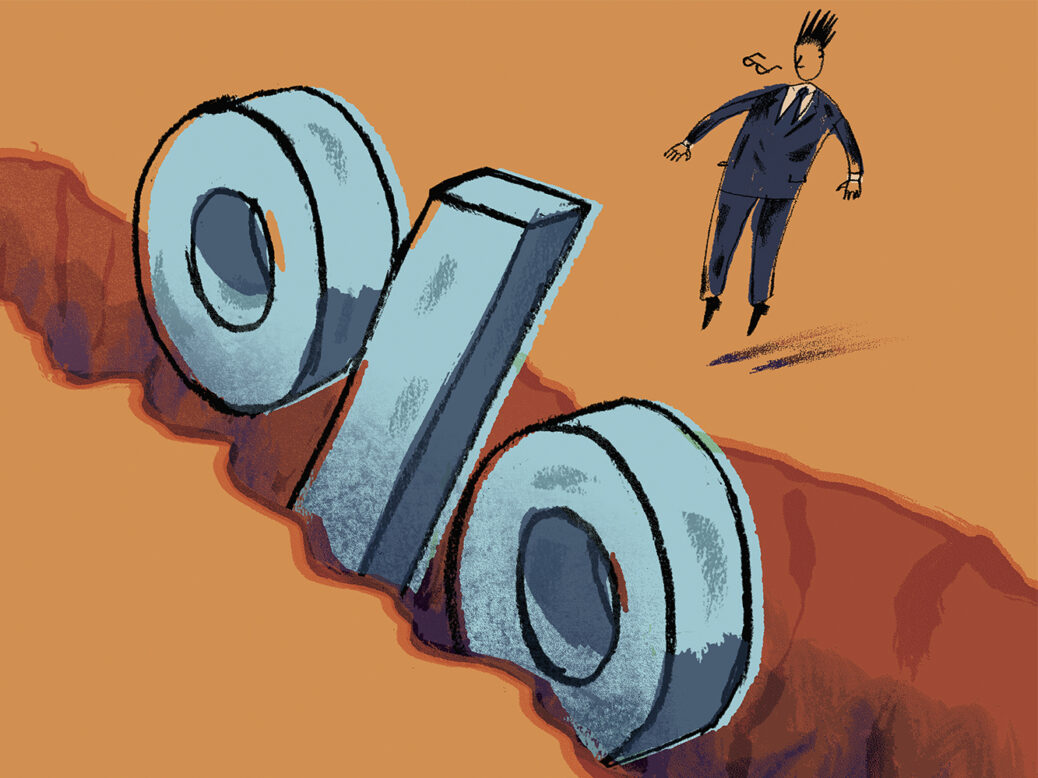
The Bank of England’s Monetary Policy Committee has today voted to raise interest rates for the first time in three years, taking the Bank’s base rate from 3.75 per cent to 4 per cent. Why? Yesterday’s headlines said Trump was over; oil prices have been falling for four days. Last month the International Monetary Fund upgraded its growth forecast for the UK. Why is the Bank raining on the parade?
This isn’t just a naive argument. Think tanks which take more of an interest in people on lower incomes, such as the New Economics Foundation, tend to see interest rate rises as a blunt instrument in the battle against inflation. The textbook explanation for higher rates is that they control prices by reducing demand and promoting saving, but when people have relatively little money to spend and nothing to save anyway, this doesn’t seem particularly useful – and clearly, the real driver of the price of energy in recent years has been whether Vladimir Putin or Donald Trump fancied starting a war.
But this was also true in, for example, the 1970s, when the exogenic shock to energy prices was also created by decisions made in countries far away. The British consumer couldn’t pop over to the Opec summit and ask oil-producing nations to lower the oil price, nor was the government able to control inflation, so the UK’s central bank had to use interest rates (which peaked at 17 per cent in 1979) to prevent prices from spiralling further upwards.
Inflation rose in the year to September 2026 from 3.1 to 3.5 per cent, as measured by the Consumer Prices Index, and economists expect it will rise above 4 per cent early next year. The price cap on energy used by households has just risen by 4 per cent and is forecast to rise by 29 per cent in January 2027. This is why the recent Budget’s most adventurous measures were on standing charges and relief payments against the cost of energy: whatever is happening in the US – or, indeed, the Strait of Hormuz – today, and however quickly the prices of oil contracts in financial markets change in response, the effects in real economies are much longer and more variable.

We can also see signs of further inflation in the most recent purchasing managers’ index figures for the UK, which show input costs (the energy and raw materials manufacturers buy to make into other things) rising at their fastest rate for several months.
The same is true of food, where inflation is often most visible (and most upsetting to voters). Speaking to grain analysts recently, I was told that today’s prices reflect the cost of farming and the difficulty of shipping (a lot of grain is shipped across the Baltic), which means farmers themselves aren’t getting much for their crops, which means they will plant less for next year. This is especially likely given that fertiliser shipments have been particularly constrained through the Strait of Hormuz.
It is also, regrettably, true that we have become used to debt being artificially cheap; this is perhaps only the beginning of the long hangover from the heady days of near-zero rates and quantitative easing. And it could be argued that historically “normal” interest rates are still a fair bit higher than they are after today’s hike; in the 15 years prior to the 1973 oil crisis they averaged six per cent. In the 15 years prior to the 2008 crash they averaged 5.5 per cent. The glum take on today’s hike is that this is not a temporary measure to deal with a period of inflation but a return to normal.
[Further reading: Abolish the Budget]
Content from our partners


Related
Join the debate
Subscribe here to comment