
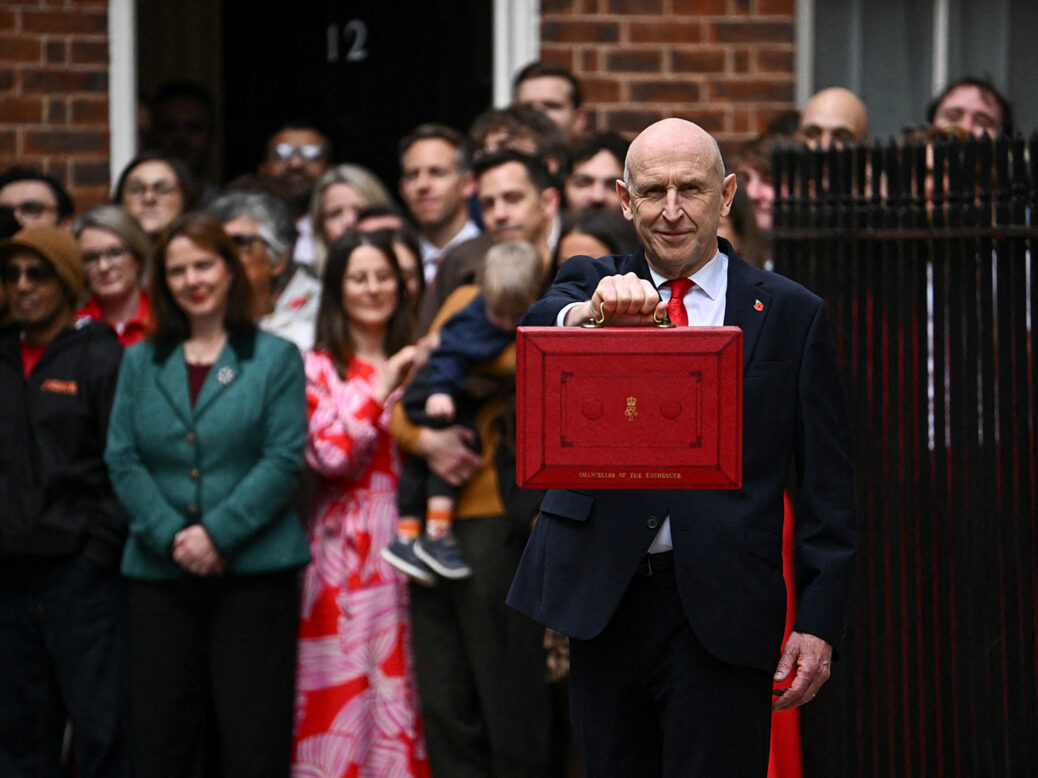
The most significant big-picture take on this year’s Budget came before it was delivered, from the New Statesman’s Will Dunn: we would be a better-run, less hysterical political economy without Budgets at all – without the whole pompous, theatrical palaver, with its implausible, not-worth-the-paper predictions and shrill, mean-minded playground politics.
Will’s right. When you need to introduce a new tax, bring forward the legislation. When you need to rethink some aspect of public spending, do it in your own time at the appropriate moment. But let’s stop pretending the economic course of the nation is usefully set by a single charabanc trip to the circus.
Chuck the Budget. Except, of course, we haven’t, and so here we are.
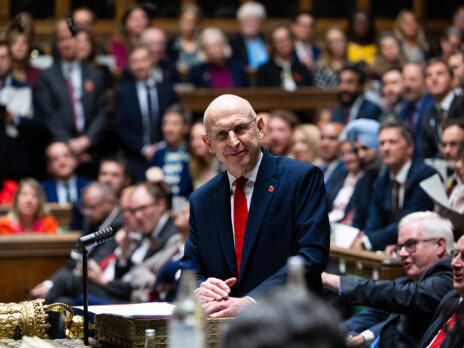
The most significant sentence John Healey said came towards the beginning of his Budget speech, when he said: “Analysts like to speak of economic headwinds, but what we face today are global economic storms”.

Yes indeed: with oil up from around $70 a barrel to more than $100 and gas prices up by a third thanks to the Middle East conflict, there is very little economic ministers in an open, relatively struggling economy can do to protect people from a stormy world.
The plethora of modest measures to help consumers through the winter, paid for by the banks, are welcome and well structured but comparatively tiny compared to the surrounding political-economic hellscape.
How Donald Trump reacts to defeat in the midterm US elections, in terms of reigniting the Middle East war, is thousands of times bigger and more important than anything that could be announced from the despatch box.
Or is that right? Because there are at least two alternative Budgets Mr Healey could have decided to give. From the left, he could have sharply raised wealth taxes and business taxes and stretched the fiscal rules to breaking point to borrow more money for uplift in welfare spending and public sector wages.
This would have resulted in an immediate Truss-scale bond market meltdown, a general financial crisis and perhaps the collapse of the government, pitching us into a general election. Hard left critics of Burnham gave up on him long ago and wouldn’t mind: but let’s remember this is a thoroughly bad-faith recommendation, in terms of ordinary political life, .
The second Budget that Mr Healey could have given and decided not to is the recipe from the opposition: taking a chainsaw to welfare and slashing taxes, while giving defence a big uplift. Again, even for those who, from the secure vantage point of think tanks and opposition politics, hold this as the right way forward for a struggling country, as a serious recommendation, it is given in bad faith.
That is, it would produce the mother and father of all back bench labour revolts, cabinet resignations and, in a different way, pitch us into an emergency general election. It isn’t very hard to see why Kemi Badenoch and Nigel Farage would like that; they are effectively saying that Labour MPs ought to be, and behave, as a sod-welfare-claimants right-wing party.
Thanks, but they ain’t.
So we come to the fundamental landscape in which this Budget occurred: deep economic pressures, particularly on energy, driven from outside. These are the cliffs and precipices surrounding the event. There are no “bolder” or “more decisive” directions Healey could have taken without risking almost immediate disaster.
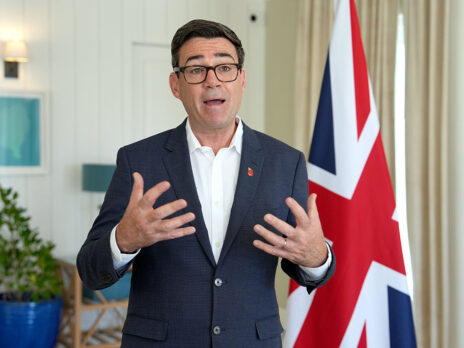
The landscape, I suggest, explains the combination of relatively micro-measures, including strikingly pro-business and pro-entrepreneurial measures, and the vaguer, woollier aspirations for a radical national reset. It seems that a great gap has opened up between the kind of Prime Minister Andy Burnham dreamed of being as he paced his Manchester office and still wants to be – the radical, Thatcher-scale leader wrenching the country towards renationalisation, mass council housebuilding and the demolition of neoliberal economics – and the kind of Prime Minister he is currently able to be.
Kemi Badenoch put her finger on the difference between a “getting on” Budget moving the country forward, and a merely “getting by” Budget. This was, sensibly if unheroically, the latter. It is not, obviously, the end of the story.
Next year’s spending review, more than the Burnham ten-year-plan, will be eye-wateringly difficult. Even if, as I expect, Alan Milburn and Burnham himself are able to sell MPs on a big change in the welfare attitude to younger people, there will still need to be painful spending cuts right across the piece to pay for better defence.
But that’s for another day. Going back to Healey’s framing, during a winter of “global economic storms”, the most important thing for any captain is not to capsize.
[Further reading: Andy Burnham’s honeymoon period is over]
Content from our partners



Related
Join the debate
Subscribe here to comment