
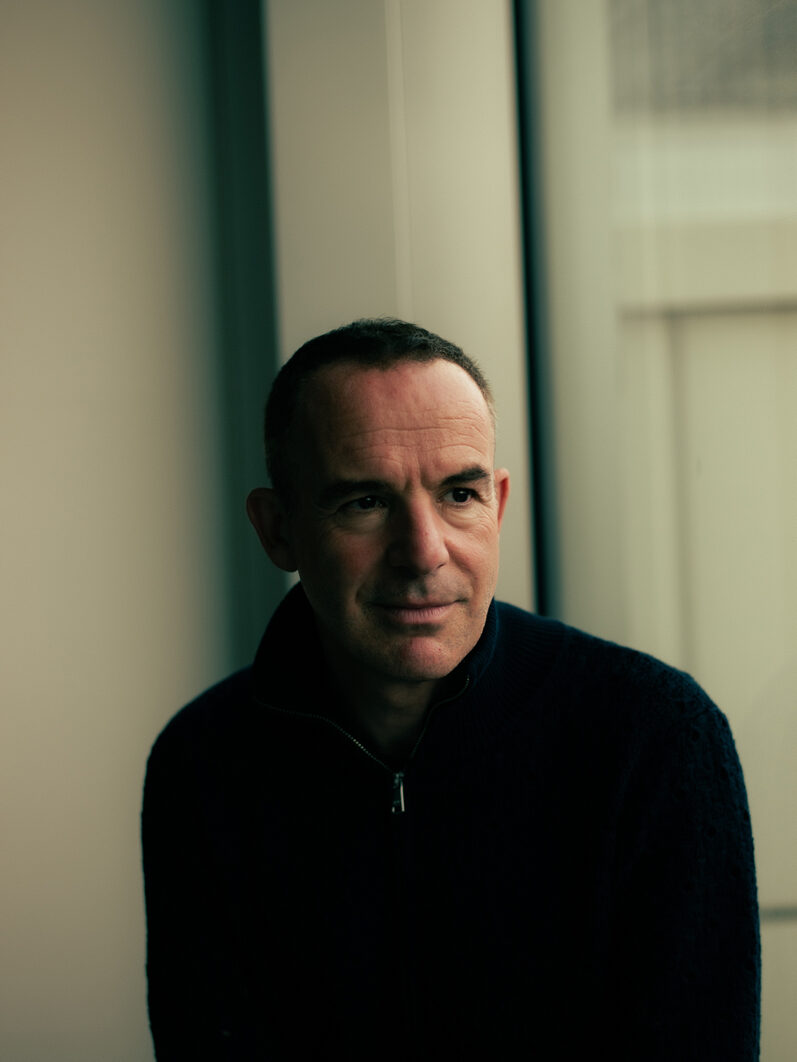
Every morning, Martin Lewis reads his emails and the papers while kicking off the first 7,000 of his daily 23,000 steps on his cross-trainer. And every morning, he makes sure to check one thing in particular: the UK natural gas price. He shows me this on his phone screen when we meet, two weeks before the Budget. It’s £2.14 a therm. We watch as the number, atop a jagged Alpine peak, blinks upwards.
“I’m in hyper mode,” Lewis apologised, having rushed back from recording his twice-weekly podcast, which he fits in alongside his BBC 5 Live radio phone-in, constantly updating his nine million social media followers, breakfast TV and a frenetic live evening show. Think televangelism but for very precise, very comprehensive detail about mortgages, pensions and the rest of life’s wretched small print – delivered by a preacher so frantic for you to see the light that he would grab your phone and switch providers for you if he could.
Known as the “MoneySavingExpert”, the financial journalist and consumer rights campaigner founded and sold his site MoneySavingExpert.com in 2012 for £87m. But the 54-year-old kept editorial control and still works 60-hour weeks, “which feels part-time”. Rich enough never to work again, he won’t quit. He sees it as his “duty”, and can’t see anyone who would replace him. “I built this and it’s based on me. The industry didn’t exist, right? Money-saving as a discipline did not exist.”
He still writes the legendary Weekly Money Tips email, dense with deals and explainers for the ten million grateful Brits who subscribe. The latest covers credit card balance transfers, the intricacies of pension credit, and a £10 deal for two pizzas, a side and a four-pack of Peroni at Co-op. A neat summary of Britain’s economy.

We settled into a sparse meeting room in the MoneySavingExpert offices, which sit above Money Supermarket HQ – the price comparison giant that bought his site. There is free pick’n’mix, over-engineered coffee machinery and all manner of milks: far from the realm of someone once characterised by the tabloids as “The Tightest Man in Britain”.
Dressed exactly as you’d imagine a finance nerd with a step-count problem – zip-up jacket, smart trousers, springy trainers, in various shades of bar-chart blue – he was desperate for me not to notice any brands. “Don’t mention my phone, that’s just between us!” he yelped. He whisked his canned drink off the table on to the floor. Lewis doesn’t do brands. Even ahead of Elon Musk and Taylor Swift, his is the most frequently used famous face in scam adverts in the UK. He settled a defamation case against Facebook for a £3m donation to Citizens Advice after fraudulent ads that stole his image were published on its platform. People have lost their life savings from these frauds.
At least twice, he has been the most-googled man in the UK, and often tops polls of the most-trusted person in Britain – tussling with David Attenborough for the number-one spot (“It’s always me and David Attenborough; it’s a competition!”). Focus groups of voters have mistaken him for the leader of the opposition, so prominent is he in unpicking policies that touch our day-to-day lives.
His brand is precision-designed to appeal to the British psyche. Non-partisan, with a sheen of anti-system cheek (“A company’s job is to screw you for cash, our job is to screw ’em back,” was his original motto), but an almost Victorian morality beneath it all. Fewer than five minutes into our interview, he was telling me it’s my “fault” if I don’t fix my energy tariff before next year’s big rise – but, crucially, “it’s your fault, but it isn’t everybody’s fault”. Half his job, he said, is helping people to help themselves, and the other half is campaigning to improve the lives of the “illegitimate victims” of the market.
Taking on unfair bank overdraft charges, mis-sold PPI, flaws in emergency Covid-19 schemes and student loan scandals over recent years, Lewis is as much an economic justice campaigner as a go-to guru for the best ISAs on the high street or McDonald’s freebie hacks. And he rejects the bootstraps worldview: “Luck is what gives you success. Anybody who’s really wealthy and successful who doesn’t believe it’s luck, I have a problem with, because they’re wrong.”
But while he may be a workaholic – as intense in person as his Gatling-gun-down-the-lens persona on screen – his real work has just begun. He now plays a quasi-official role in British public life. Welcome to Britain under Late-Stage Martin Lewisism.
This is a country where politicians are so bereft of ideas, the economy is so exposed and whose citizens are so impatient for relief that the consumer champion’s philosophy shapes our politics. We are living in the “MoneySavingExpert economy”, as the Sky News economics editor Ed Conway wrote in last week’s New Statesman. Or, as the Economist concluded earlier this year, “Martin Lewis now has nukes.”
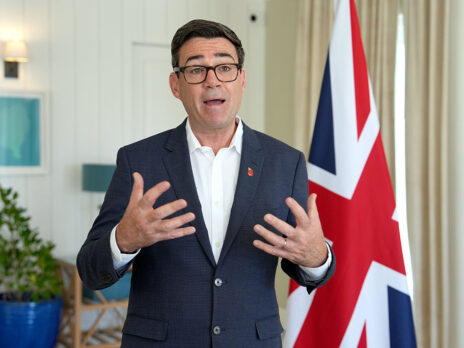
This was demonstrated by the Prime Minister Andy Burnham’s first summer in the job, when he appeared to announce a new policy each day during his first few weeks to help voters find some “breathing space”. Cheaper bus tickets, VAT off electricity bills, lower taxes for pubs and venues, ending rip-off subscription traps.
This all reminded Lewis of a speech he made last year at Labour’s conference. If he had been advising the Labour government when it was elected, he told the party faithful, he would have said: “Pick a hundred things that piss people off and fix them at one a day for the first hundred days.” Burnham’s first days in office “felt very much like pretty much exactly what I’d said”.
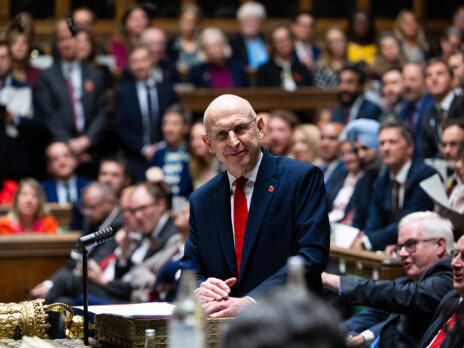
Lewis has just set up a programme called the Small Ideas Initiative for the public to submit their own policy niggles, 50 of which he will work up into a manifesto. Four days after the launch, there were 28,500 submissions. Even a minister submitted one. He has had “warm feelings of interest coming through” about this idea from government, where phone-in politics is in vogue. After Prime Minister’s Questions each week, Burnham holds his own “People’s Major Questions” on Instagram to answer the public’s questions. And as he prepared for the Budget, the Chancellor John Healey asked for pitches from everyone in the Treasury, including junior staff on the IT helpdesk and in admin.
When the Iran war began to unfold, the then energy secretary Ed Miliband messaged Lewis on a Saturday, asking to talk. They discussed the price of heating oil – an under-regulated market that now has stronger protections coming in after their hour-long chat. Angela Rayner, the Housing Secretary, has just ended aggressive council tax debt collection practices – after a consultation she launched following a meeting with Lewis (he cried when he heard this campaign had been successful).
And after apologising for interrupting her during a live interview about student loan reform, he and Conservative leader Kemi Badenoch now message each other.
Over the past decade, Lewis has become part of the ritual of Budget day. “Ten years ago, Budgets were not a big thing for me, because very little was retail. As governments’ finances have got worse, for all governments, they tend to have to find more retail offers,” he observed, regarding quick-win transactional policies that affect day-to-day life. “The list seemed to get bigger each year, and so now they’ve got to the point when the Budget got bigger [for me], and I think this will be a Budget where there’s a lot for me to talk about.”
He has already met the Chancellor. All I’m told is that he took a long list of points and read them out as Healey “listened and took notes and didn’t give much away”. Yet Lewis was “confident” of an “intervention package” for the worst-off to help them through the 25 per cent predicted energy price rise in January. “Based on nothing else other than instinct, it would be unthinkable that a Labour government did not put that package in.”
He guessed this could come in the form of “doubling the warm home discount to cover the difference”. He also “wouldn’t be surprised” if standing charges – the fixed daily fee even if you use no energy at all – will be scrapped. This “would be the most popular thing they could do; I have said that to them until I’m blue in the face”.
Lewis himself has three asks: scrapping the standing charge, reversing the plan to freeze the student loan repayment threshold (“a fundamental breach of natural justice”), and ensuring any small earnings above the state pension won’t push pensioners off a cliff-edge into paying tax.
The Martin Lewis verdict can “make or break a Budget”, one former close colleague of his told me. He is like a one-man Office for Budget Responsibility or gilt market, but for cash-strapped middle England. “Every chancellor wants to meet him and he’s always got a shopping list of asks. As far as I know they’ve all met him, sometimes several times, and it’s a back-and-forth, and he’s had some of them on WhatsApp terms.”
Inside government, his take on Budgets and big economic interventions “matter a lot” and “trying to make sure you get a good response from him is important”, according to a former senior adviser to a chancellor. “The two things governments are looking for is trust and reach, and he has the perfect Venn diagram of both.” He is listened to: “He’ll have the numbers of senior comms people at No 10.”
Lewis didn’t reveal whether he messages the current Chancellor, but told me: “I have many ministers’ and shadow ministers’ WhatsApps, like most journalists do, right? I use them very sparingly, but I do get messages.”
He knew in advance, for example, that Keir Starmer and Rachel Reeves were planning to cut winter fuel payments – a now notorious early announcement that sunk them in the public’s estimation. He warned them against it. “It was a bloody disaster. To do an announcement in your first two months that set you up against me and Citizens Advice and Which? – I mean, what are you doing?”
Those who have been party to his meetings with politicians speak of an “aura of reverence” around him; at one recent event, so many MPs wanted a photo with him that he had to announce that he would set aside ten minutes at the end, with “MPs lining up left, right and centre to take pictures”. Politicians also seem “intimidated by him; they’re quite scared of him sometimes when he goes into those encounters because he really knows his stuff”, said the ex-colleague.
Close observers of Lewis have also noted a shift in his influence. “He might not say this, but he’s part of the political system now. He is one of the voices and pillar stones around Budgets and other moments,” said the ex-Treasury aide. These days, I am told Lewis “sets a bit of a premium” for his dealings with government, and only “meets the real power brokers – people at ministerial level or the chancellor”.
He reflected to me that he has been meeting more cabinet ministers since we last spoke five years ago, when he lamented “quite how little politicians know on most subjects once you get in-depth – it is quite staggering”, and boggled at the “complete ignorance and showboating” of MPs in parliament.
Now, having encountered bigger economic brains such as Rishi Sunak, Jeremy Hunt and Rachel Reeves, Lewis is less scathing. He described the new Prime Minister’s early cost-of-living announcements as “totemic as opposed to practical” (the electricity VAT cut, for example, will hardly be noticed as bills rise), but nonetheless praised the strategy.
Drawing from his previous experience working with a complaints firm, Lewis learned some old customer service wisdom that he applies to Burnham’s Britain. Data showed him that the people who delivered poor customer service but a good outcome to the customer were given a worse reputational score than those who handled the customer well, but did not give them the desired outcome. “I think that’s something that goes into government: can you handle it well, treat people with respect, tell them the truth?” To Lewis, Burnham’s “good communication skills” are being channelled into “good expectations management”.
Still, the Budget cannot be patched together by yellow discount stickers alone. “The problem is, if you’re going to front up that you’re going to do cost-of-living, in a Budget people expect bigger. The totems aren’t enough in a Budget. And there aren’t that many cost-free solutions out there. So I think that is the great difficulty for them.”
In 2022, as the UK staggered between the pandemic hangover and the shock of Russia’s invasion of Ukraine, prices and bills shot upwards. It was then that Lewis announced the unthinkable. “I need to say, as the MoneySavingExpert who’s been known for this, I am out of tools to help people now,” he told a defeated nation. “It’s not something money management can fix, it’s not something that for those on the lowest incomes telling them to cut their belts will work. We need political intervention.”
That was it. The end of the end of history, where solo acts of a very Nineties resistance – compensation claims, checking Ts and Cs, price comparison – whimpered in the post-crash world.
This is perhaps the true nature of Late-Stage Martin Lewisism. As governments have embraced retail policies and suggestion-box-style politics in his image, Lewis has been raising the alarm that there are too many people who can no longer help themselves, and it is time for structural change. “To be plain: for about 25, 30 years, our politicians of all parties have lied to the people that we can increase public services and cut taxes. This has been a lie at every election, it was a lie at the last election,” he thundered. “Look, I’m not a political philosopher, but it seems to me the great threat to liberal democracy is lack of growth.”
And when help for the vulnerable is divvied out, Lewis fears there are too many “just-aboves” who miss out. These are people “just above” the threshold for benefits, pension credit, social tariffs, or who earn a penny over a threshold and lose their carer’s allowance or free childcare hours. “People who just miss out are the ones who get the most angry, and this is one of the great problems in society.” In his view, this formed part of the “abject hatred” of Starmer.
Even Lewis, last man of the monoculture, trusted across the political spectrum, with nationwide reach, feels we now live in a “very angry society” and faces “more anger than I have done before”. When he campaigns for debt and benefit fixes to eradicate false economies, he is accused of “helping those feckless bastards”. He’s noticed a growing “fuck them all, fuck the rest, fuck everyone” attitude – along with “fuck the rich”.
Still, he is a rare unifying figure in a polarised world, a position he finds “petrifying”. “I don’t want to lose it, partly because I like it as a human being, but also because it’s very difficult for people not to answer the phone.”
Like our increasingly cost-of-living-conscious governments, perhaps, Martin Lewis is beginning to encounter the desperation in Britain for deeper change. “The public sometimes expect I can do more than I can,” he told me. “I get criticised that I’m a sticking plaster, but I just feel like people don’t understand. There’s only so much you can do.”
[Further reading: Why Reform needs a good Labour Budget]
Content from our partners



Related
This article appears in the 21 Oct 2026 issue of the New Statesman, Sally Rooney is a writer, not a terrorist
Join the debate
Subscribe here to commentMost people in the UK need Martin Lewis to navigate our crazy free market household budgets that have been foisted on us all. AI could never replace him because he is a humanitarian at heart. His attitude to financial complexity is exemplary because he can explain virtually everything so we all get to understand. That is why politicians are wary of him – he sees through their expedient decisions. Martin Lewis is to finance and household budgets what John Gray is to political philosophy. They would make a formidable double act!