
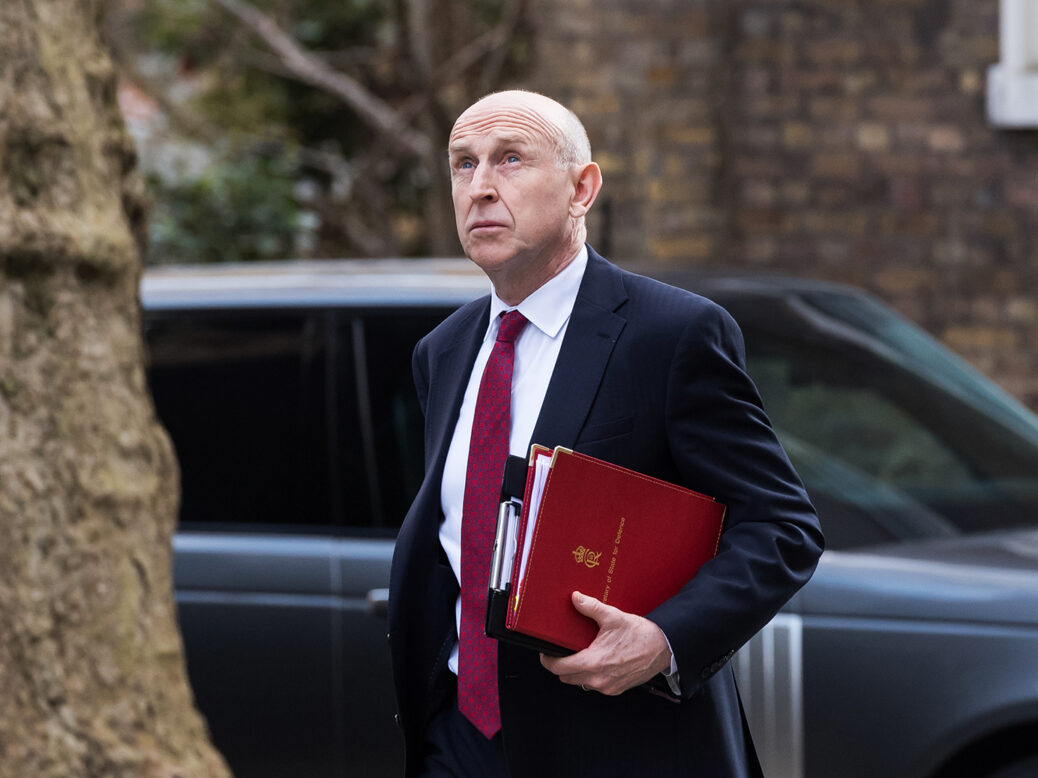
John Healey is short of money. As the Chancellor gears up for his first Budget on Wednesday 28 October, the bindings constricting his choices are many and varied: don’t spook the bond markets by announcing more borrowing after the IMF’s warning; maintain the Labour manifesto promise to avoid raising the three main tax levers of income tax, national insurance and VAT; don’t make spending cuts that will send newly buoyant Labour MPs into meltdown – but still find the cash for Andy Burnham’s cost-of-living giveaways and (ideally, given Healey’s former job) for defence. In short, he is in almost exactly the same position as Rachel Reeves was for her two Budgets.
So why has the Chancellor reportedly chosen to reject a pot of money worth up to almost £20bn a year?
We are talking, of course, about capital gains tax (CGT). Or rather, we’re no longer talking about it, because Healey has apparently resisted calls to equalise the rate at which people disposing of assets – shares, businesses, cryptocurrency, second homes – pay tax on the profits with the rate at which the rest of us pay tax on our earnings.
The top rate of CGT is 24 per cent – thanks to Reeves, who increased it from 20 per cent in 2024 (while raising the lower rate from 10 to 18 per cent). The top rate of income tax (for those earning more than £125,140) is 45 per cent, while the next rate down (for those earning between £50,271 and £125,140) is 40 per cent. CGT overwhelmingly affects the very wealthy: three in every seven pounds of gains in the UK go to people earning more than £150,000 (compared to one in every seven pounds of income), while nearly half of CGT receipts in 2024-25 came from those who made gains of £5m or more. It’s also very geographically concentrated: the smart London neighbourhood of Notting Hill enjoyed more gains than the people of Manchester, Liverpool and Newcastle combined.

The notion of people earning millions from selling assets enjoying a tax rate that is essentially half of what they’d pay if they were working a normal job seems bizarre, not to mention absurdly unfair. As magic money pots go, you don’t get more appealing than that.
How we came to be in this situation looks even stranger when we consider that it was not always thus. Nearly 40 years ago a tax-reforming chancellor made the bold decision to match CGT with income tax, indexing it against inflation to avoid taxing fictional gains. The year was 1988, Margaret Thatcher was prime minister, and that chancellor was Nigel Lawson. It was Gordon Brown and his successors who decided capital gains should be given preferential treatment over earnings, in an attempt to encourage entrepreneurship and risk-taking in investment. The extent to which the lower CGT rate actually does that is a matter of fierce debate among economists.
What economists generally do agree on is that the status quo is a mess and is desperately in need of reform. Which is where we get to the figure of nearly £20bn: it comes from researchers at the Centre for Analysis of Taxation (CenTax), who have crunched the tax data from HMRC and the OBR and come up with a package of reforms including equalising CGT and income tax they say would raise an extra £19.7bn a year by 2030.
There are a couple of caveats. The biggest one is about inflation. The current CGT regime doesn’t care when you made your gains or what the inflation landscape has been like in the since, meaning you can be taxed on “profits” that are in real terms much lower than they appear or don’t actually exist.
To understand why, I defer to Dan Neidle, tax expert and founder of Tax Policy Associates, who provides the following illustrative example:
“Carter invested £4m in a company ten years ago and sells his stake for £6m. He has a £2m gain and pays CGT of just under £500k… But £1.6m of Carter’s ‘gain’ was just inflation. His real gain is £400,000. That £500k of CGT represented an effective rate of 120 per cent.”
This isn’t an insurmountable issue, but it is an important consideration when looking at the headline numbers. Most campaigners for CGT reform agree that equalising rates would have to go hand-in-hand with an allowance for either inflation or a risk-free “normal” return on savings. In other words, you should only be taxed on gains that are above what you would have made by sticking that money in a savings product. Nigel Lawson’s reforms back in 1988 were indexed to inflation. Campaigners also recommend an investment allowance to encourage actual risk-taking in investing and relief for entrepreneurs.
All of that is included in the package of CenTax reforms – the ones that came with the appealing £19.7bn bonus for the Treasury. What is much harder to model is the impact on behaviour. This is where we get some unwelcome news from none other than HMRC itself. HMRC estimates that raising the top rate of CGT by ten percentage points (taking it to 34 per cent rather than anywhere near the income tax rate) would in fact cost the Treasury £3.6bn in 2028-29.
Why? Because taxes distort behaviour – as proven by the plastic bag tax (plastic bag use at supermarkets dropped by 98 per cent after the levy was introduced in 2015) and the stamp duty holiday (property transactions increased by 19 per cent compared to the year before it was introduced). As a general rule, when you tax something you get less of it. The risk is that people might delay selling assets or make different investment decisions to reduce their tax bill. Some might even leave the country – although fears of a billionaire exodus are somewhat exaggerated.
Determining precisely how much behaviour would change with various degrees of CGT rates is fiendishly difficult. CenTax is sceptical of HMRC’s cautionary analysis, while research from the trading and investing provider IG suggests the shortfall would be even higher. Trying to find patterns in charts of previous CGT changes and their impact on revenue might seem appealing but the data is inconclusive.
But while the exact figures may vary, the fundamental point that people will change their behaviour based on real or perceived CGT changes in unarguable. In fact, they already have.
As Dan Neidle points out, the uncertainty over what Labour would do on CGT since it won the election in 2024 has already had an impact. “People have responded to the last two and a half years of uncertainty by selling investments, so they’d lock in the current CGT rate,” he tells me. “Disposals went up 80 per cent year-on-year in the run-up to the 2024 budget alone.” The current figures being bandied about on how much a change could raise ignore this, he says. “They’re a fantasy.”
Neidle believes there is a strong case for reforming CGT (though he recommends equalising it with the tax on dividends rather than income) and putting in place measures that would actually incentivise investment. The time to do that, however, was in 2024 – before Reeves raised CGT, and before budget leaks and rumours of possible tax raids distorted behaviour. Attempting reform now would almost certainly cost the Treasury money. “In isolation, equalising rates and introducing an investment allowance would, in my view, have been the right thing to do, but we’re a prisoner of the history,” he says.
None of this is very satisfying. The tax system is still convoluted and distortive. The very wealthiest are still paying a much lower tax rate than mid- and high-earning workers. Healey is still short of money. But you can see why the new Chancellor, even in his impossible position, chose to sit this one out rather than reach for the CGT lever. An increase now would not have raised revenue ahead of the next election, and could have made business sentiment even worse for the Labour government than it already is. If there’s a lesson from all this, perhaps it’s that pre-Budget rumours have a cost.
[Further reading: Just raise tax]
Content from our partners



Related

Join the debate
Subscribe here to comment