
“My family used food banks my entire life,” Tessa, 22, told me. “I’ve always had everything on the table, everything I need, and that’s often been because my parents have gone without. I know it doesn’t have to be like this, and I know who’s responsible for that, and that is corporations.”
Tessa, who would only provide her first name, is part of We’re Not Buying It, a new activist campaign group in Britain. She is one of 10,000 people the group claims have pledged to take part in a one-day boycott of British supermarkets on Budget Day.
We’re Not Buying It follows other groups that have engaged in direct action in recent years, including Take Back Power, which describes itself as a “non-violent resistance group” campaigning to raise taxes on the rich. Earlier this year, 15 of Take Back Power’s activists were arrested on suspicion of conspiracy to commit theft. Tessa denied that the groups were linked. “We are not an iteration of [Take Back Power],” she insisted. “We are people who have met through organising in various different campaigns, both from the climate space and also the wealth and ecology space.”
Supermarkets have become a symbol of the cost of living crisis, but their margins are incredibly tight. A study by the Competition and Market Authority (CMA) found operating margins across Tesco, Morrisons and Sainsbury’s were 3 per cent in 2023-24. Aldi and Lidl scored 0.7 per cent.

Yet food prices continue to rise. This month, retail analysts World Panel by Numerator found supermarket prices were 2.5 per cent higher than last year in the four weeks to 4 October, up from 2.3 per cent last month.
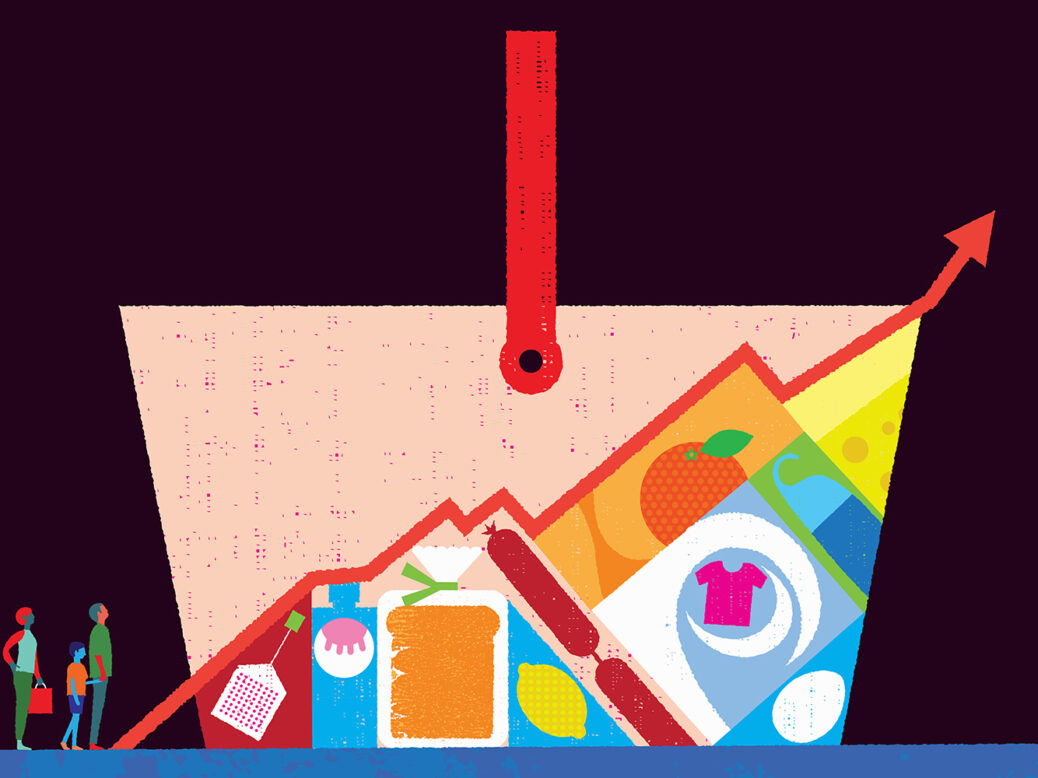
While policymakers agree food inflation has slowed, the cumulative impact has been severe. Food prices are likely to be 50 per cent higher by November 2026 than at the start of the cost-of-living crisis, according to the Energy and Climate Intelligence Unit. That means British people – squeezed by the blockade of the Strait of Hormuz, Brexit, climate change, fuel prices or whatever else you want to blame it on – may feel more mutinous towards supermarkets, and, ultimately, the government.
In response, We’re Not Buying It has demanded that the government enact an “mandatory price cap on essential food items”. “Andy Burnham needs to take his promise of focusing on the cost of living seriously and do something,” Tessa told me. She hopes the boycott will empower and support people to start their own “alternative food infrastructures” against claims of profiteering by supermarkets during the cost-of-living crisis.
The idea is gaining ground. John Swinney has declared a food price cap in exchange for votes to seal a fifth term in Holyrood for the SNP. The party has started a formal consultation to introduce a “legal price ceiling”. Labour also mooted a voluntary price cap to criticism that the move was a “knee-jerk reaction to the SNP”. The proposals were dropped a day later after a backlash from supermarkets.
Timothy Lang, professor emeritus of food policy at City St George’s, University of London, previously told a public accounts committee that the cheapness of food means policymakers “do not have to think about it”. Yet in the same hearing, he warned of the hidden cost of food production: “Do you include in that price of food the cost to the environment, public health from diet, the atmosphere and all sorts of other things?,” he added.
Speaking to the New Statesman, he said the government is “terrified” of getting involved in dealing with Britain’s creaking food system. “They’re frightened,” he said. “They say: ‘Well, just leave it to Tesco’.
“[Food price caps] are a very blunt instrument… I can pretty much guarantee that in the government there is now thinking about the imminence of food crises. There will be people looking at that and probably recoiling in the Treasury in horror. But it will have to be looked at.”
[Further reading: What will the budget do to brand Burnham?]
Content from our partners



Related

Join the debate
Subscribe here to comment