
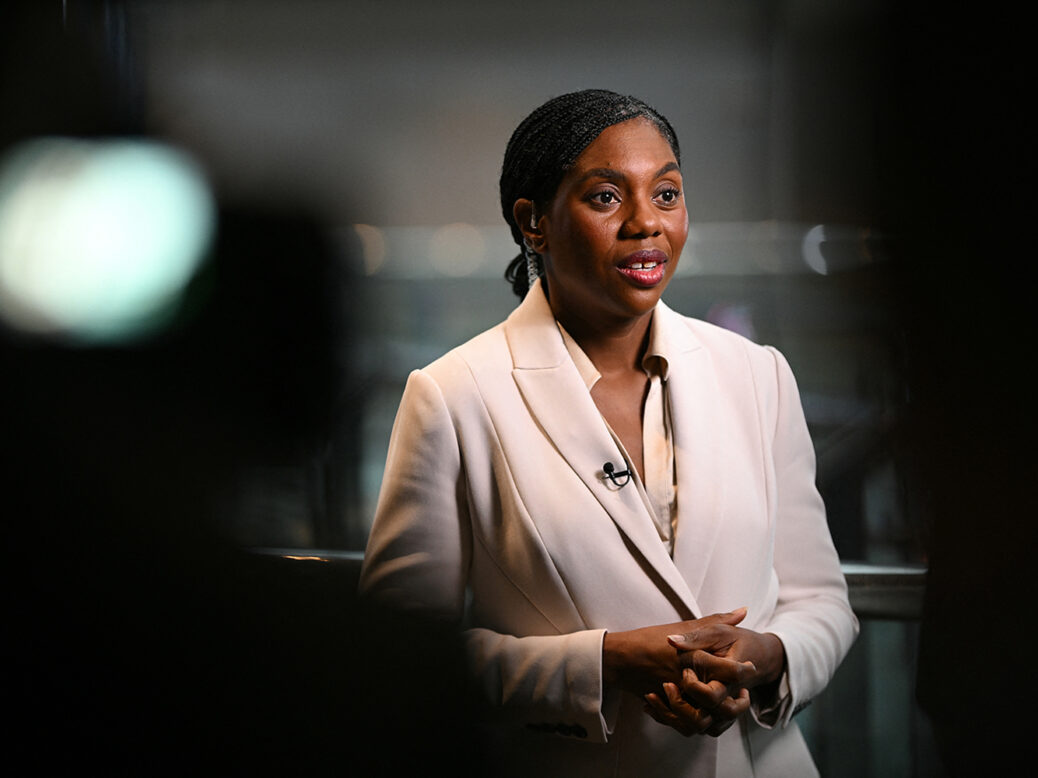
An internal Conservative Party guide to campaigning produced before this year’s local elections instructed: “Go duck hunting where the ducks are.” The motto was coined by Lynton Crosby, the strategist credited with winning David Cameron his surprise parliamentary majority at the 2015 general election. At this year’s Conservative Party Conference in Birmingham, the Tories knew they must adopt his approach and go hunting again.
And they reckon they have found one promising electoral honey hole in young and affluent – or soon-to-be-affluent – voters, hence the latest promises on reducing childcare costs for those on six-figure salaries, getting rid of stamp duty, a move on inheritance tax and halving national insurance for young workers. Those who have benefited from the Bank of Mum and Dad will soon, Conservatives hope, return to the Party of Mum and Dad.
“The focus of this conference is that we are determined to end Burnham’s honeymoon period. The last conference was about getting a fair hearing from the lobby, and it worked. Now we’re going for something more ambitious,” a senior Tory source told the New Statesman.
One Tory argument, as the party lingers on 20 per cent, is that it is running to stand still. Reform’s rise may be splitting the right, but the Conservatives are also losing support as their voters from the 2024 general election die off at a faster rate than those of any other party. (So, too, are Tory party members, with tales of Conservative Campaign Headquarters staff ringing up to secure subscription renewals, and ending up consoling the bereaved spouses of party stalwarts.) Is the Tories’ pitch to new, younger voters a shrewd move, as the party slowly but surely build back from its historic 2024 defeat, or one of desperation, as it looks around and sees fewer and fewer ducks?

It is said that Kemi Badenoch is a steadfast leader of iron principle who cannot be buffeted by the Westminster drama, a leader who said she would not announce new policies until after a period of intellectual renewal. But she is far more ready to shift policy than that narrative would suggest, announcing a roster of pledges that would cost around £30bn per year, and all because of a panic about Reform UK dominating the news agenda. She also said she wouldn’t reshuffle her shadow cabinet until the next election, but then made sweeping changes after the summer recess, replacing the shadow chancellor and shadow foreign secretary.
She watched as the last Tory government’s energies were drained by attempts to fix the post-Brexit settlement in Northern Ireland, yet has committed to unilateral withdrawal from the European Convention on Human Rights – matching Reform – aware that this could wreck the Good Friday Agreement. And she has taken a deeply conventional approach as leader of the opposition: she is an eager participant in the weekly theatrics of Prime Minister’s Questions, reflexively deriding each government move, even those that could make her task easier in the long run (see the Tories’ defence of the triple lock despite rumblings about the cost).
But tough questions about Badenoch’s leadership were scarce in Birmingham. As one party strategist put it: “Last year there was still a lot of ‘she’s abrasive, she’s late to meetings’. There’s none of that any more. MPs have realised that Kemi is the only option and the Conservative brand is knackered, so she lifts us all up.” In polling terms, this seems to be correct. There are also no obvious challengers to Badenoch. Robert Jenrick has left the stage. “Penny [Mordaunt, former defence secretary] is the only one who could cause trouble,” says a Conservative source. Mordaunt has been cleared to stand as a Conservative candidate at the next election, but will probably be out of front-line politics for the rest of this parliament.
The conference fringe feels diminished – the entertaining headbangers have mostly gone to Reform – and disconnected from the party’s rightward shift. Tory environmentalists are still defending the Renewables Obligation and the Climate Change Act, which the party now wants to abolish. And the biggest draws for activists are two TV celebrities: Jeremy Clarkson and Jacob Rees-Mogg.
So where are the Tories now? The leader is more popular than the party; the people who disagree with the leadership have left or disappeared from view; the public’s attitude is, at best, indifferent and, at worst, actively hostile; and everyone is waiting for the incumbent government to trip up. It’s like the early days of Keir Starmer in opposition. We lobby journalists have been writing about a “Kemi bounce” – just as we had Starmer briefly transubstantiated into a model of statesmanship. If it all falls apart in government, we will no doubt be called out as “client journalists” who preferred source cultivation to scrutiny.
The Birmingham Tapestry – a clever parody of the Bayeux, telling the story of the Labour government, and praised by one CCHQ hand as “a reminder of what the research department can do” – was an entertaining sideshow at conference. It also betrayed the enduring Tory faith that two-party politics will return. The tapestry laid out a litany of reasons not to vote for Labour. The underlying assumption was that voters will switch to the Tories because the pendulum must always swing one way or the other. Unfortunately for Badenoch, Nigel Farage still expects to have something to say about that.
[Further reading: The Tory war on Neets will punish parents instead]
Content from our partners



Related
This article appears in the 07 Oct 2026 issue of the New Statesman, The Suspicious Relationship
Join the debate
Subscribe here to commentI guess the Conservatives would have been at home in the eleventh century.