
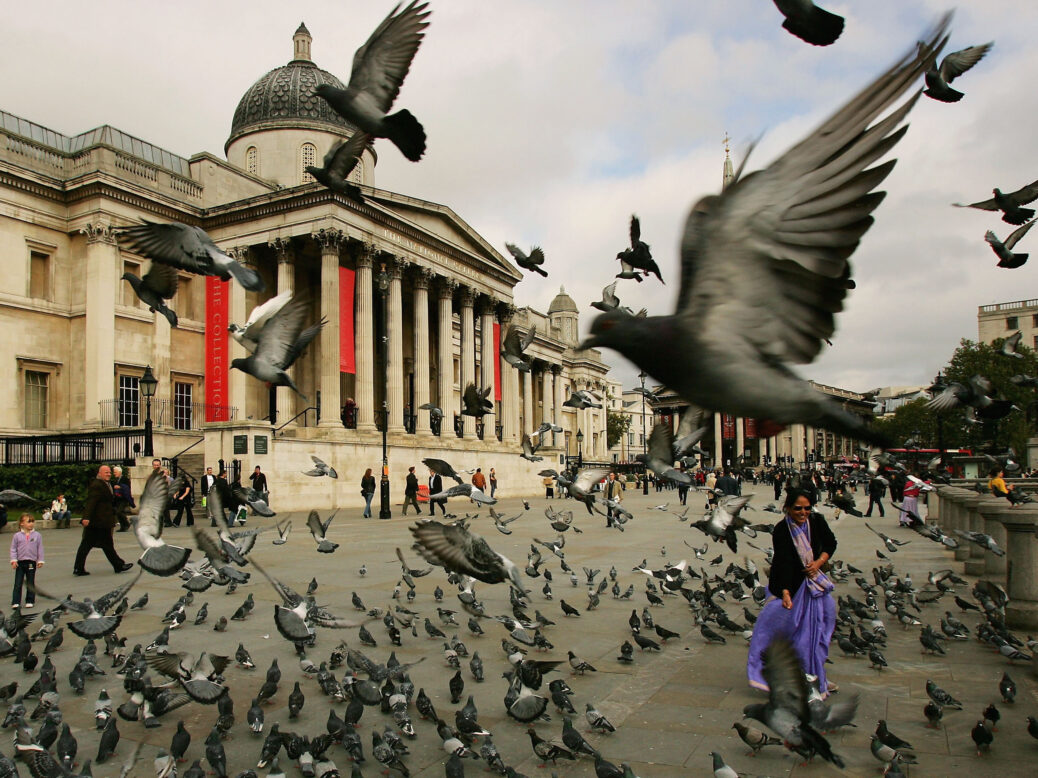
The first time I was eligible to vote was in the 2008 London mayoral election. Instead of using the wisdom of my politics AS-level to inform my choice, another urge took over. I couldn’t forget that Ken Livingstone, the incumbent mayor and Labour candidate, was responsible for ridding Trafalgar Square of its pigeons and seed sellers. One of my favourite childhood pastimes had been my parents taking me there to feed the pigeons, and them landing on my arms and head – the London kid equivalent of going pony-riding, I guess. I’ve been fond of pigeons ever since. I refused to put a cross in the box for Ken.
This might sound like the idiocy of a teenager abusing her democratic rights, but I’m not alone. Brits are funny about animals, and this feeds into our politics – something Labour’s rural minister, Jenny Riddell-Carpenter, seemed to have forgotten when she said she fears the “far right” co-opting a “nostalgic vision of Britain that never really existed. It’ll be that warm ale, a black Labrador by your feet, in a pub that doesn’t exist.” GB News concluded that “Labour HATES Britain”. The Sun uncovered photos that showed her “pictured with own pooch… in PUB”.For all the earnest laments about vanishing pubs and the struggles of rural life that followed, what clearly scandalised everyone about Riddell-Carpenter’s words was that she had dragged our dopey old black Labs into it.
It is a point of pride that we’re the world’s most ardent animal lovers: the first country in the world to pass animal protection laws, and establish an animal cruelty prevention charity.
Over 60 per cent of households own at least one pet, and we spend £8bn a year on them. By popular demand, our banknotes are about to lose Winston Churchill and Jane Austen for puffins, barn owls, bumblebees and the European (urgh) hedgehog.

Far from making us a nation of cuddly eccentrics, though, this obsession can warp our priorities. We built a monument to the animals of the Second World War (“They had no choice”) before one for women. The same month that more than 150,000 signed a petition to prosecute a footballer filmed kicking his cat, fewer than 6,000 called on a different club to drop a player who’d lost a rape case in a civil court. The RSPCA arrived 60 years before the NSPCC, and, according to each charity’s most recent accounts, the former received around a quarter more donations than the latter.
Animal welfare is on an equal footing with support for children and young people as the second most popular charitable cause for British donors, behind health charities. Look at High Court claim listings on any given day, and you will often find an animal charity vs a list of litigants with the same surname: family members desperate to rescue their inheritance from a deceased relative’s cause.
And it’s not just relatives riven by animal mania. Neighbours, too, are never more rageful on local online forums than when arguing about dogs vs fireworks (there are constant petitions to parliament to ban or quieten fireworks for animals’ sake; a February one this year amassed 195,930 signatures, only to be followed by another in March with 184,376).
It can warp public life, too. Stella Creasy, the Labour MP for Walthamstow, was recently hounded online for misidentifying a parakeet as a parrot in a well-meaning social media post. Wall-to-wall headlines about Suella Braverman accidentally standing on a guide dog’s tail led to the then home secretary issuing an “apology to all dogs”. When XL Bullies were banned in 2023 after fatal attacks, a British culture war broke out, with protesters in London waving banners showing Rishi Sunak muzzled. As I write, the British media is frenziedly debating whether a tiger that killed a man who walked into its enclosure should be shot.
Even Reform-minded survey participants are particularly put off by the party’s policy to bring back fox hunting, finds message-testing by the research firm Persuasion UK. When the Tories under Theresa May had the same stance, it contributed to her majority plummeting at the 2017 election. This is a land where we have a network of “fox ambulances” driving around Kent, Sussex and London treating foxes in distress 365 days a year. I don’t dare find out their response rates.
“On migration, Reform’s brand and messaging to core supporters is consistently strong,” says Steve Akehurst, Persuasion UK’s director. “But… the party’s commitment on fox hunting falls foul of the British public’s love of animals, and messages around this significantly sink its vote share in tests we’ve conducted.”
The apparent electoral power of animal welfare can make politicians lose their minds. I remember one exasperated Cabinet Office official telling me they were put on “Geronimo duty” for a whole summer in 2021 (a pandemic year) as demonstrators picketed Downing Street to save an alpaca with tuberculosis from being put down. He had already survived four years of legal wrangling and celeb backing – including from the then prime minister’s own father, Stanley Johnson. That same summer, hundreds of dogs and cats were evacuated to Britain from Kabul as it fell to the Taliban, initially leaving the charity’s Afghan staff behind.
So whether it is public pronouncements involving our animal overlords, or ensuring policy decisions aren’t distorted by them, British politicians should take a lesson from the postman: beware of the dog.
[Further reading: In praise of Winnie-the-Pooh’s idleness]
Content from our partners



Related

This article appears in the 14 Oct 2026 issue of the New Statesman, Fool Britannia
Join the debate
Subscribe here to comment