
Dressed all in black, a boy of around five hovers in the entrance of a corner shop, reaches up to grab a wedge of watermelon and runs down the street, cradling it in his arms. Another little boy, a similar age, makes off with what looks like a single satsuma. The shopkeeper, who has run the Premier in the Bournemouth village of Charminster for 19 years, released the CCTV footage in an attempt to “shame” their parents, who he believes were encouraging them.
The footage of the theft, committed last year, featured in a recent regional BBC news report about retailers using social media to deter shoplifters. This particular incident has touched a national nerve – and has been covered by most major newspapers, with the CCTV clips racing around newsfeeds. The detail that seems most shocking is the fact that the two little boys were wearing balaclavas. While in a relief for the nanny state they’re only nicking fresh fruit, there is something jarring about watching little kids in military-style gear, Dorset’s answer to child soldiers.
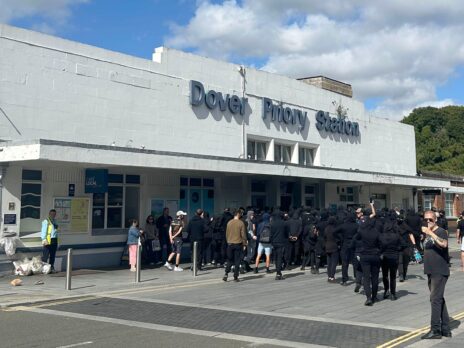
The footage emerged amid an existing debate about whether to ban face coverings in public places – a recently announced Reform UK policy proposal, which would include balaclavas and burqas, and has become a talking point particularly on the right of British politics. Nigel Farage described face coverings as “not the British way”, following the direct action disrupting Dover’s port by balaclava-clad anti-migrant activists in early September.
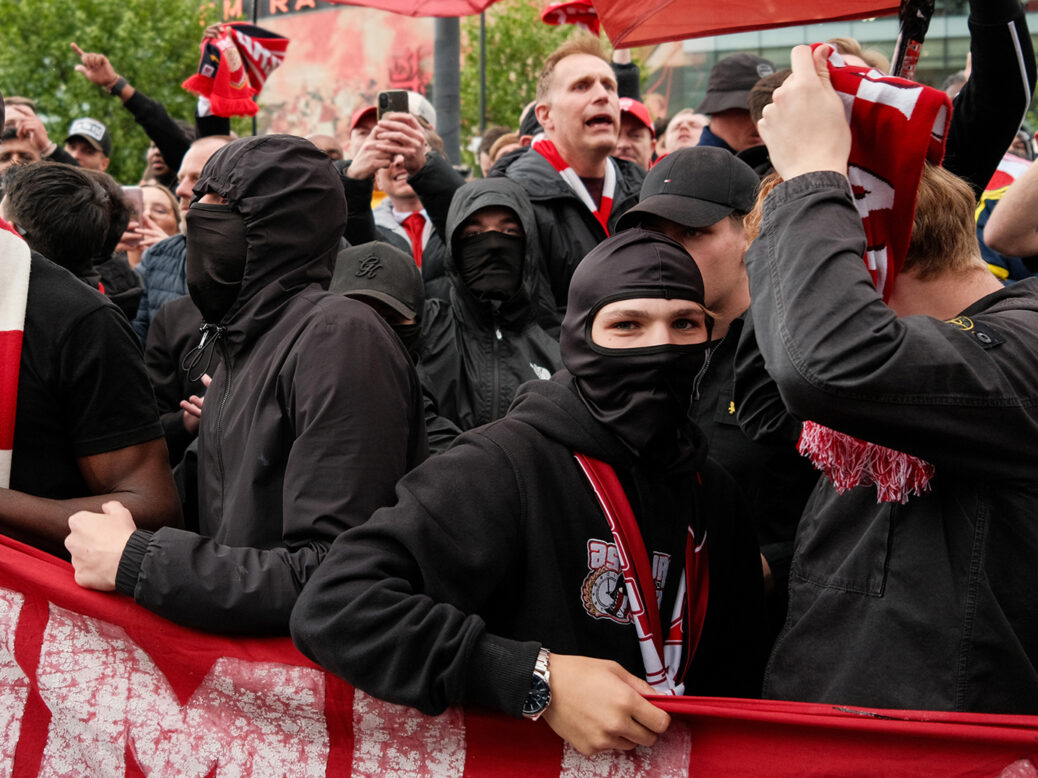
Balaclavas, ski masks, face-covering hoodies and snoods are a common sight on the streets of modern Britain. From muggers and shoplifters to protesters and rappers, we are increasingly likely to see people with their faces covered. Football ultras have been swapping the usual terrace gear for a ballied-up look imported from continental Europe, such as Crystal Palace’s recently disbanded Holmesdale Fanatics.

The shopping site Lyst reports searches for “balaclava” rose 344 per cent between 2021 and 2022, and Google searches for “balaclava” have risen 60 per cent in a decade in the UK. (Of the four nations, the lowest number of searches were in Northern Ireland – the place most associated in the British psyche with the balaclava, as the favoured headgear of paramilitary groups.)
Four years ago, GQ declared the balaclava 2022’s “must-have item”, the same year the Observer reported that women’s safety groups opposed the “extremely triggering” trend. Justin Bieber, A$AP Rocky and Gunna were all pictured wearing balaclavas; Bieber wore his to church. British rappers like EsDeeKid, M Huncho and LD – since receiving an Asbo in 2014 that would have stopped him performing – are known for wearing masks.
But there is more to it than aesthetics. We live in a society of far greater ambient surveillance than even a few years ago, with everything from doorbell cameras to smartphones to facial recognition technology making it more likely that criminals will be caught on camera. “Back in the day when I was working, you didn’t see so many commit offences with balaclavas on,” says Graham Wettone, a policing commentator and former Met sergeant at Scotland Yard’s Public Order Branch who left the force in 2010. “Nowadays, because of the security systems, it’s almost like a uniform for criminals to wear balaclavas or hide their identity while they’re out.”
The pandemic, too, made mask-wearing mainstream and less suspicious to the authorities. A prescient 2020 study by academics at the University of Leeds, “Covid Facemasks as Crime Facilitators”, hypothesised that widespread mask use could “facilitate street robberies, shoplifting, assaults and public disorder, offenders blending in more easily at places where a face mask would previously raise suspicion”.
Laws on public anonymity are changing, in a classic English, hotchpotch way. The Crime and Policing Act, which came into effect this year, introduces a new measure drawn up two years ago by the last Tory government to allow high-ranking police officers to impose a temporary ban on people concealing their identity in a specific locality during a protest.
Although it appears as if Labour is responding to the recent actions of far-right agitators, this legislation was actually a Conservative proposal in the midst of pro-Palestinian marches, which included some masked demonstrators. Wettone also suggests that left groups such as Antifa and black bloc protesters would dress all in black wearing balaclavas, and police had been highlighting how difficult this was to manage “for years”.
Separately, local authorities – including in Nottingham, Wolverhampton and Stafford – have begun using the existing mechanism of Public Spaces Protection Orders to allow police to demand the removal of face coverings in particular locales (for limited periods). In order to enforce both laws, police need to reasonably suspect offences or antisocial behaviour, and there are exemptions on health and faith grounds. Discretion still lies with officers, who are vulnerable to accusations of bias from both right and left.
When Bluewater shopping centre in Kent banned hoodies and baseball caps more than two decades ago, backed by Tony Blair, it was a point of intense national debate and made international headlines. This now seems quaint, as legislation on face coverings – and political discourse on both balaclavas and burqas – take an increasingly authoritarian turn, and police lose trust.
[Further reading: Andy Burnham seizes control]
Content from our partners



Related
This article appears in the 24 Sep 2026 issue of the New Statesman, A Sense of Power
Join the debate
Subscribe here to comment