
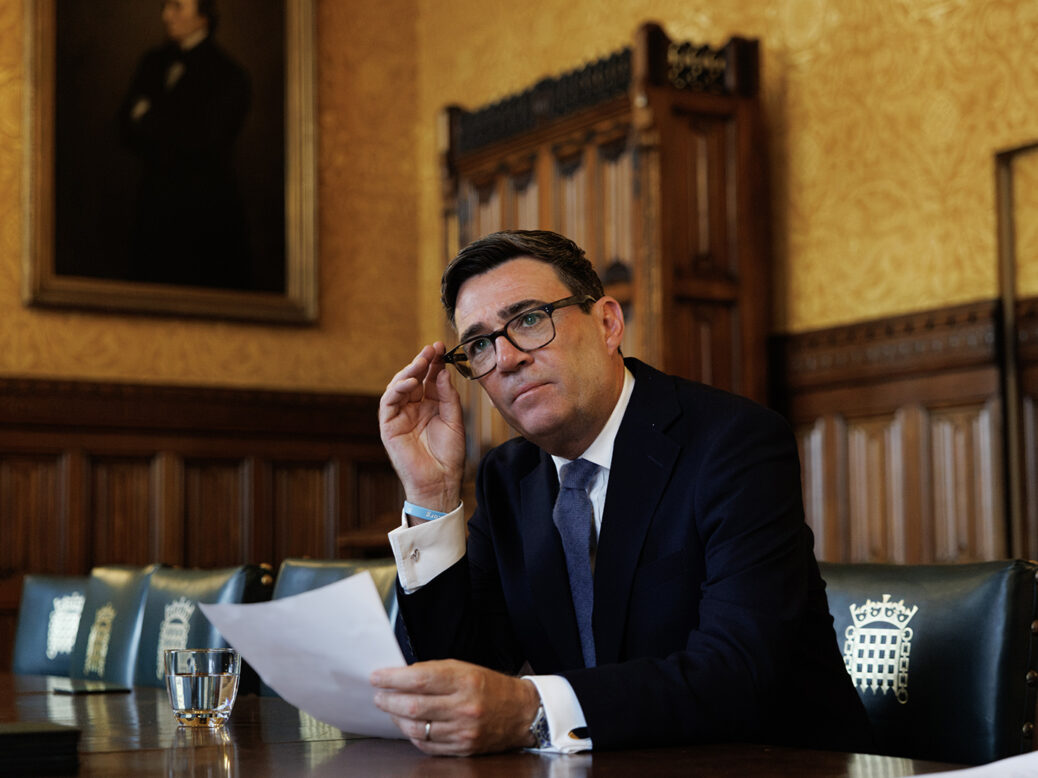
Out of the Prime Minister’s office, past his officials, down a dozen steps. This was where you could find me in Downing Street. My office – roughly the size of a single bedroom – was all flaking paint and scuffed plaster. A two-person desk filled the space. Seating appeared to have been an afterthought, so getting in and out required dexterity and some surrender of dignity.
It was not entirely unhandsome. An enormous sash window let in what light it could, cowed as we were before the grey brick of the main building. The little TV mounted on the wall caught a weak Sky Sports signal from somewhere else. The air conditioning worked. Nevertheless, when visitors eventually found me – “Oh, this is where you are!” – they would adopt a look of polite dismay: the sort with which an elderly relative might regard a shared university house. To spare them the effort, I took to introducing it as Slough House.
I was briefly taken back to that room when I read in late October of the calls from Richard Walker – the Labour peer and head of Iceland Foods – for the government to move to somewhere more conducive to “collaborative working”. When the head of a successful supermarket chain offers advice on how to adapt in a changing world, politicians should pay attention.
Perhaps it is unsurprising that I didn’t like to sit at my desk too much. Politics is – to my mind – the art of listening to others’ views and testing your own instincts against them. So while some people could stare at a Word document for hours and find, somewhere within themselves, something worth putting into it, I went off to bother my colleagues. The long walk round to see the comms team, in their nicely decorated rooms that stunk of cat piss; up to the policy unit, banished like Mrs Rochester to the attic; back down to the political team, their office chiming to the sound of “Baby Shark” played through the tractor horns of angry, protesting farmers.

It was impossible to walk those corridors without brushing against absurd, spectacular, tragic history. Here stood Nelson with Wellington and here is Harold Wilson getting drunk and suspicious; here is the Somme and here is Churchill announcing peace; here is the garden where IRA mortars landed as John Major held his cabinet next door. As you round the corner and climb the staircase, the previous inhabitants stare down upon you.
Ghosts live in Downing Street. But it isn’t those old or dead men. Instead, it is something more modern. In recent decades, a black steel perimeter has been erected around the street itself, shielding its residents from the outside world. And as premierships collapse and other parts of Whitehall stop replying and the noise from the street gets louder and people whisper in corridors, so the building itself seems to close in around you. Before long, there is another portrait on the wall, gazing wordlessly: the latest principal ground into dust by the contradictions of our collapsing economic and political settlement. We aren’t haunted by the past so much as we are by today and tomorrow.
No 10 reflects Britain in a manner that is so clichéd, so on the nose, that you would be embarrassed to use it as a metaphor. The shabbiness and the grandeur, the gentleman amateurism of a G7 economy being run from an old house, the elegance of the rose garden, the tweeness of Brand Larry. But there is something deeper behind the famous door. Decline, parochialism, learned helplessness, politics as a gilded cage – sometimes unwilling to listen, sometimes unable to find the words to respond.
Two things stick out when I think about No 10. One was the unfussy work and diligence of the house staff. The doorkeepers, always happy to share the latest weather conditions with those cooped up inside; the friendly face who updated me every week with her latest discoveries about London; the banter between the women in the basement café. They had seen governments come and go – one of them told me she had worked there since Wilson. I came to regard their good humour as a display of sincere pity for the latest generation of know-it-all special advisers whom they would easily outlast.
The other thing I remember was the quiet. You might imagine No 10 as all hustle and bustle. But it wasn’t. It was often eerie. The peculiarity of the place – the empty hallways, echoing staircases and locked doors – makes interaction difficult; the fact that it serves as a home for the Prime Minister’s and the Chancellor’s families, as well as a place to host events, delegations, worthies and dignitaries leaves you constantly apologising for getting in the way while you go about your job. On more than one occasion, the Starmer government discussed moving out of the place altogether (something we eventually managed, albeit in different circumstances).
Walker is right that it would be better for the practicalities of governing to be somewhere more modern, open plan, functional. But doesn’t that, in its own way, feel like a parable of modern Britain? Our glamour and glory officially cordoned off as history, to be ticketed and gawped at. Our future a glass-fronted, minimalist, eco-caféd monument to productivity gains. Downing Street may be no place to run the UK from, but it is not in itself the excuse for failing governments. It will take more than an office move to outrun our ghosts.
[Further reading: Shabana Mahmood’s new immigration rules]
Content from our partners



Related

This article appears in the 05 Nov 2026 issue of the New Statesman, Nigel Farage's bastards
Join the debate
Subscribe here to comment