
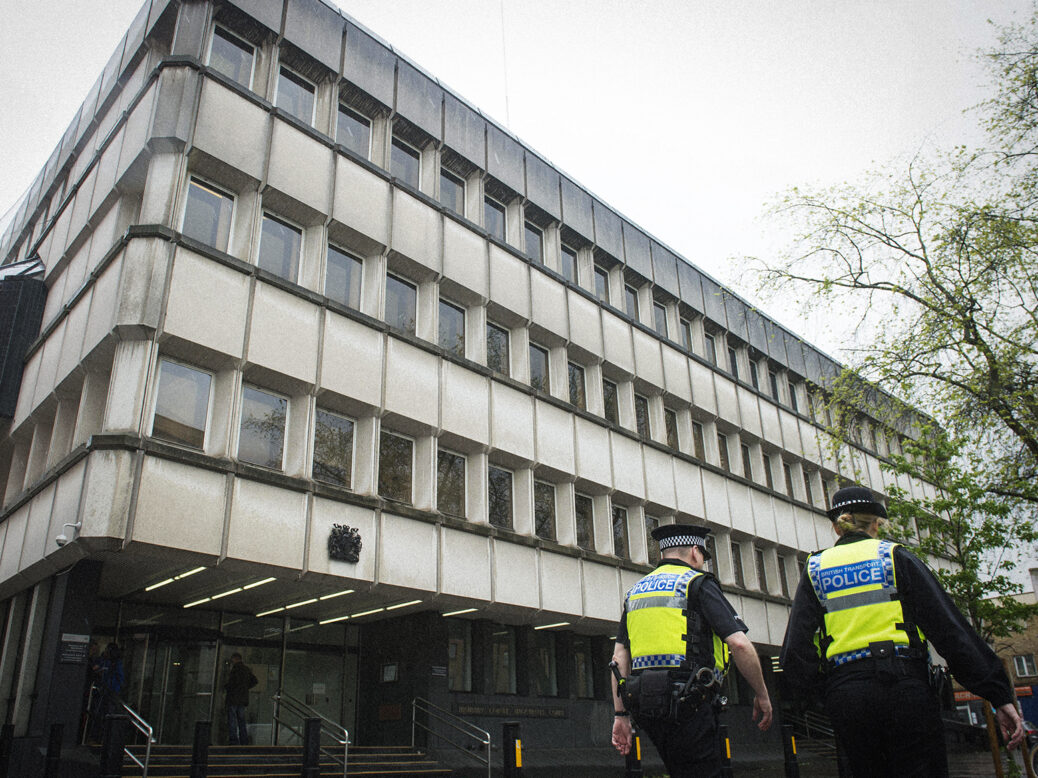
Over the summer I spent a day at Highbury Magistrates’ Court, a looming brutalist structure on the A1 where smart Islington starts to bleed into the scruffier postcodes of north London. For seven hours in a series of stiflingly overheated courtrooms I watched the wheels of justice in action – or, as one hard-bitten defence solicitor put it, “the meatgrinder”.
I was there to try to get a sense of how the government’s proposed reforms to justice system – namely, moving thousands of cases from crown courts into magistrates’ courts in an attempt to deal with a spiralling backlog and unconscionable waiting times – might play out in practice. Since then, the reforms to curtail the right to a jury trial spear-headed by David Lammy under Keir Starmer have been watered down by Andy Burnham, who was a vocal critic of the plans at the time. The concept of judge-only trials has now been scrapped.
But the Courts and Tribunals Bill back in the Commons today (13 October) still contains the provision removing the right of many defendants in either-way offences (excluding the most serious offences like murder and rape, but assault, domestic violence, drug offences and burglary) to opt for a trial by jury and empowers the courts to send their case to the magistrates instead. It also increases magistrates’ sentencing powers, from 12 months (up from six months in 2024) to 18 or even 24 months, and could potentially enable them to hear cases where the sentence is up to three years.
This means that, despite the fanfare about Burnham and Justice Secretary Alex Norris saving jury trials, the core of Starmer and Lammy’s proposals remain. Under these plans, 25-30,000 cases, some incredibly serious, would move out of crown courts. Government figures suggest this would increase magistrates’ sitting days by 8,500 – 7.5 per cent a year – although experts warn this is an underestimate. To meet the demand, the government would need to increase the number of volunteer magistrates by 10 per cent a year.

So what does life currently look like inside a magistrates’ court? Two things stood out to me.
The first was that what I mostly watched looked less like justice and more like logistics. In one courtroom, no trials were taking place all day. Instead, I witnessed a conveyor belt of admin: charges read out, bail agreed, licence terms negotiated, pleas entered, future court days scheduled, and sentences decided.
The mercury in the thermometer on the wall was creeping up as patience deteriorated with the non-stop stream of dysfunction. One defendant appearing from prison via video link had his microphone so low it was utterly inaudible in the court room. Another caused consternation when no one could say for certain where the nearest police station in home was for reporting requirements.
The next hearing was delayed because the defence solicitor hadn’t had a chance to speak to his client, who had been in the cells overnight, and had no idea what he was even being charged with. The one after that had been rescheduled weeks after it was meant to have taken place. “Why was she not in court for her previously scheduled hearing?” a magistrate wanted to know. “She went to the wrong address,” came the unsatisfactory reply. The same question was asked of another defendant in a completely different case. This time, the issue was that “a Brazilian-Portuguese interpreter had not been booked.”
All cases no matter their severity begin in the magistrates’ court, meaning bottlenecks here spill over into the rest of the system. While most of the attention on our broken justice system has focused on the more than 80,000 crown court cases awaiting trial, the magistrates’ courts are facing their own backlog of nearly 380,000. (The magistrates’ court backlog is not even mentioned in the government’s response to the Independent Review of the Criminal Courts, published 12 October).
Cassia Rowland, associate director at the Institute for Government, has been tracking the Ministry of Justice’s progress. She has found that since the election in 2024, the crown court backlog has risen by 15 per cent – undoubtedly cause for alarm. But the magistrates’ court backlog has increased even faster, and is now 30 per cent bigger than it was before Labour took office, rising to 43 per cent for the most serious offences (the kind that would be added to the system under the current plans).
When I asked her about how the different systems were faring when it came to offering prompt justice, she pointed out that the median time form charge to case completion in the magistrates’ courts is now almost six months – still quicker than the 11 months in the crown court, but creeping upwards. I think back to Highbury, watching the sentencing of a man convicted of sexually assaulting a woman on a bus. The offence took place in May 2025.
Rowland also notes that the government’s estimates for how much extra pressure will be put on magistrates’ courts and how much time this will save assume that the trials being moved there will only take four hours. That’s less than half the time of a median either-way trial. While much of the workload dealt with by magistrates’ courts is relatively quick, the whole point of these plans is to move more serious cases at the top end of their sentencing capacity into their remit.
Which brings me to the second thing I was struck by at Highbury. Exhausted by conveyer belt justice, I moved to a different room. A man was on trial for sexual assault on a series of charges not quite serious enough to entitle him to a jury trial but sufficiently extreme to have left the complainant deeply traumatised – as the court heard. The technical point on which the case hinged was when the touching of certain body parts should be considered sexual in nature and when it should not. The volunteer magistrates, while sympathetic to the complainant, were not across the case law relating to this point and needed frequent clarification from the court legal advisor on what the law actually said. It was also this legal advisor rather than the magistrates who intervened when the defence lawyer began badgering the complainant with inappropriate and irrelevant questions about her romantic life.
It is cases like this and more serious that would be moved en masse into the magistrates’ courts under the government’s plans, however “watered down” from Starmer’s version they are. The victim in this case (for the defendant was convicted) had only had to wait six months for her day in court – the government and victims’ rights advocates point out that the waiting time for a rape trial in the crown court can be up to four years in some parts of the country, devastating lives and causing witnesses to drop out and cases to collapse. But watching from the gallery, I couldn’t help wondering what tens of thousands of extra cases of this level of complexity would do to a system already so over-burdened.
Attempts to improve efficiency are underway. “Virtual courts” where cases are heard digitally are being piloted in London and Sheffield in an attempt to cut waiting times in the worst affected areas. (That said, virtual hearings were already a standard feature of the justice system – remember the defendant dialling in via zoom with an inaudible microphone – so it is unclear how much difference this will make, not least as the technology in many court rooms leaves much to be desired. There is a £1.3bn maintenance backlog in the courts.) On 12 October the government also announced the nationwide rollout of “short trial courts”, whereby cases of a similar nature are grouped together to increase efficiency. All of this, along with the rethinking of which cases should be heard by a jury, are part of the “modernisation” justice minister Sarah Sackman told me was necessary to make our courts fit for purpose in the 21st century.
The biggest barriers to speedy justice, however, are structural: staff shortages across the system, from court advisers to prosecutors and defence lawyers to judges; dysfunctional scheduling; Kafka-esque issues with prison transport; and a cap on sitting court days. The government promised an additional £450m a year for the courts system in the 2025 Spending Review, to open new courts and increase sitting days, and has also increased investment in court estate repairs. But the Ministry of Justice saw its funding cut by a quarter during austerity. Without confronting the deeper root causes of the current crisis, reallocating cases from one court system to another is simply moving the queue rather than tackling it.
Back at Highbury Magistrates’ Court, I saw the messy muddling along of one of the less beloved branches of the state. No one extolls the justice system in breathy, grateful terms the way people frequently gush about “our NHS”; there are no pushy parents demanding better the way they pressure is piled on substandard schools. The justice system is invisible to most people most of the time, and thus can be conveniently ignored by politicians with more glamorous things on their minds. And justice was being done: in a single day, in non-descript beige rooms that felt like a time warp back to the seventies, I saw dozens of decisions get made that shunted cases one step further towards their conclusion.
But what I didn’t see was a system ready to absorb what the government proposes to impose on it. Maybe MPs today will feel differently. In the meantime, the meatgrinder grinds on.
[Further reading: The end of Andy Burnham’s beginning]
Content from our partners



Related



Join the debate
Subscribe here to comment“The volunteer magistrates, while sympathetic to the complainant, were not across the case law relating to this point and needed frequent clarification from the court legal advisor on what the law actually said.”
That’s how Magistrates Courts have always worked. Magistrates are not legally trained—they are presented with the details of the case plus the relevant law, precedents, sentencing guidelines, etc. by the clerk of the court. They then hear the evidence and make a judgement.