
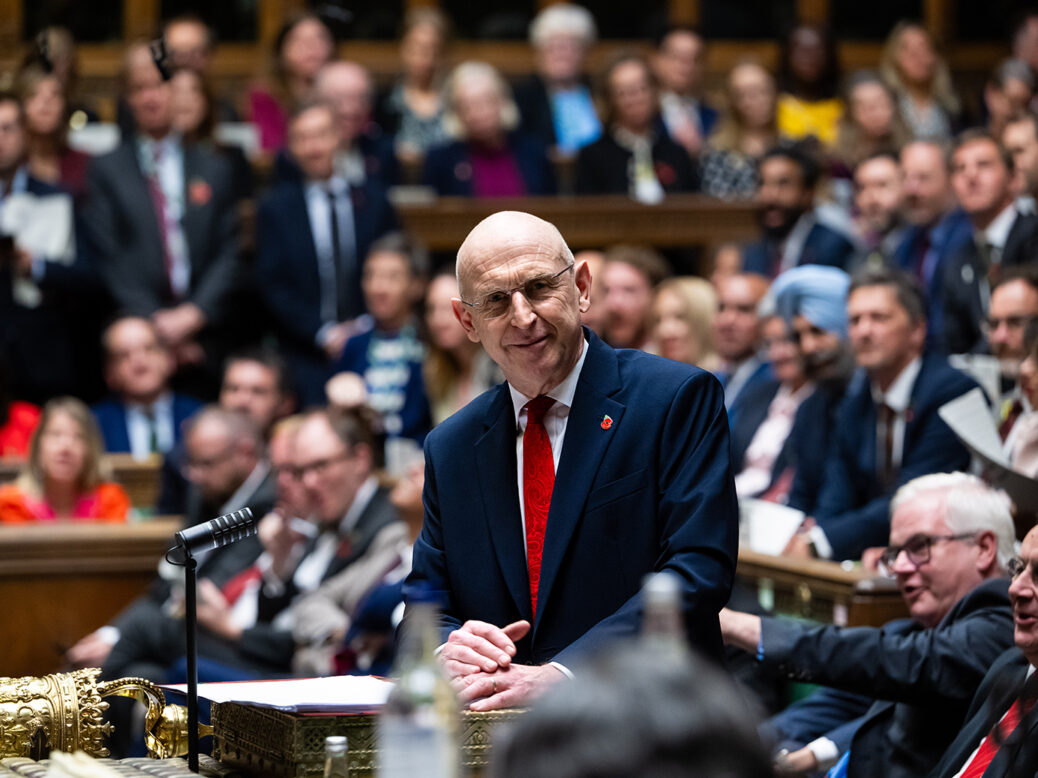
When John Healey strode up Downing Street on the day Andy Burnham became prime minister, he looked like the cat that had got the cream. He was the first to be called into No 10, and outsiders knew it could mean only one thing: Healey, to the surprise of everyone in Westminster, was to be Chancellor.
These were strange circumstances in which to take control. After weeks of bitter briefings and internal debate over whether Ed Miliband or Shabana Mahmood would make a better Chancellor, Andy Burnham ultimately chose neither. He went for someone the Labour Party could unite around, but also someone seen as less likely than either Miliband or Mahmood to build up his own power base or initiate a power struggle. All the signs were that, as Chancellors go, Healey was to be disempowered.
But things came full circle in yesterday’s Budget. He joked that Budget forecasts were as accurate as predictions about who would become Chancellor – a comment that made Miliband laugh and blush before saluting Healey as the laughter grew. But there was a riposte to Miliband on substance, too. Quietly, and certainly without naming him, Healey and Burnham used yesterday’s Budget to break away from Ed Miliband.
“We’re not sprinting headlong towards net zero any more at the short-term expense of bills,” one government insider says. “That’s not a repudiation of the past two years, but the circumstances have changed. So this is a clear shift.”

Healey announced a new energy pathway that insiders say effectively ends the approach Miliband championed in opposition and pursued as energy secretary: a “sprint” towards net zero that his critics in government believe is no longer appropriate given the current economic context. Miliband wasn’t wrong to fight for green investment under Starmer, but, with the economic circumstances changing in the wake of the war in Iran and the resulting energy price shock, Burnham and Healey now believe greater emphasis needs to be placed on security and affordability.
The Burnham government still believes in the climate agenda and remains committed to reaching net zero, but “there’s a question of how quickly you can afford to invest in renewables and the grid” when the short-term costs to the public are taken into account, the government insider adds. Miliband was right that clean power would bring bills down in the long term, they say, but the short-term costs are no longer affordable.
The green levies that Miliband slapped on energy bills, for example, are now a thing of the past. Auction rounds for clean power have also been tweaked to prioritise affordability over green power at all costs. More broadly, I’m told to expect some targets and milestones to take longer to reach as the new administration shifts decisively towards tackling the cost of living. “It’s a priorities thing. Andy said on day one we were going to be a cost of living government.”
But those close to Miliband see this as a change of tone rather than a genuine policy shift. They argue that the now-Foreign Secretary always favoured a cost-first approach, and that, as energy secretary, he repeatedly made clear the government would buy renewables only at the right price.
“The Chancellor should be applauded for driving clean, cheap power, just as the Starmer government did,” one of Miliband’s allies said, noting that think tanks such as TBI have also called for a shift away from Miliband’s agenda. They see the briefings as an attempt to bank a political “win” by presenting Healey as breaking with Miliband without any substantive policy change to back it up.
The war of words is bubbling away as the government prepares to make another delicate climate-related decision: whether to approve the Rosebank oilfield in the North Sea. The rhetoric around North Sea oil has certainly changed. The question now is whether that change in tone translates into a change in policy.
[Further reading: Abolish the Budget]
Content from our partners



Related


Join the debate
Subscribe here to comment