
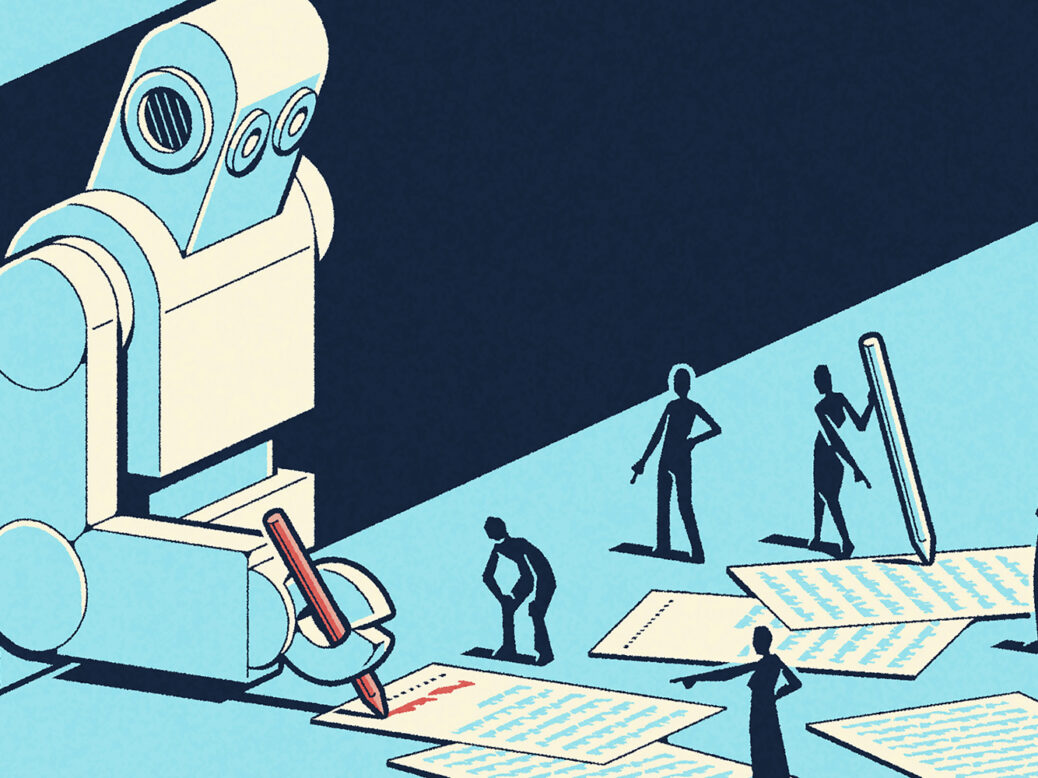
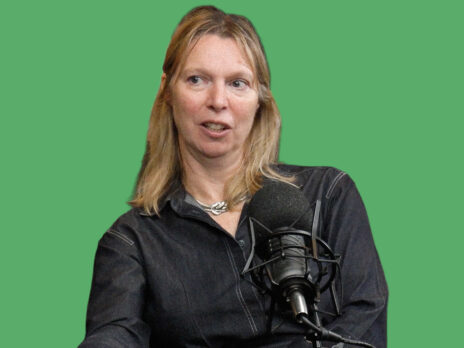
This week, the author and academic Katherine Rundell was interviewed by our culture editor Tanjil Rashid on the New Statesman‘s weekly culture podcast The New Society. In comments that have generated wide-ranging discussion online, Rundell discussed her fears about AI “pillaging” writers’ work as well as destroying children’s ability to learn. Here is a taste of their conversation:
“I am worried about the idea that the AI that we mostly engage with, large language models, are built on an illegal pillage of human labour. Almost all of my books were stolen to teach AI how to create its voice – which I find on a purely personal level deeply greasy and unpleasant, a little sycophantic, vile little voice of AI. But most of all I am worried about AI’s impact on learning, on the learning that needs to take place throughout childhood in order for a young person to have a sense of their own mind as belonging to them and as being a robust and extraordinary tool for their freedom.
“I am worried by the sense that learning is difficult and painful. I find learning a joy, but I am 39 – and learning is unpleasant before it is joyful. It is bewildering, it is opaque, it is a struggle, it is often a process of self disappointments. I am profoundly worried about the idea that large language models in particular allow young people to bypass that process to leap to what will seem both to those assessing their work – but also more dangerously to themselves to be understanding. And I worry that in a world in which sentences no longer need to have humans behind them, the ways in which we have constructed the process of learning is suddenly imperilled.

“We live in this extraordinary moment of extraordinary wealth inequality and all of the violences that come from that inequality and my feeling is that, faced with extraordinary wealth inequality, we need extraordinary intellectual wealth to fight those with extraordinary physical wealth. How do we build that? We build it with shared ideas between humans and we build it by being able to process dense long nuanced arguments. We need people who are tough enough intellectually to fight in the arena of the mind and to understand in real time what is being done to us, what freedoms are being encroached upon. And so the fact that this threat of AI has come at the same time as the most urgent crux of our ecological threats has created a perfect storm that I am very troubled by. I think it is on every single one of us to rise to this moment.”
Listen to the full New Society podcast here, also available on Spotify and Apple.
[Further reading: Will AI kill us all?]
Content from our partners



Related

Join the debate
Subscribe here to comment