
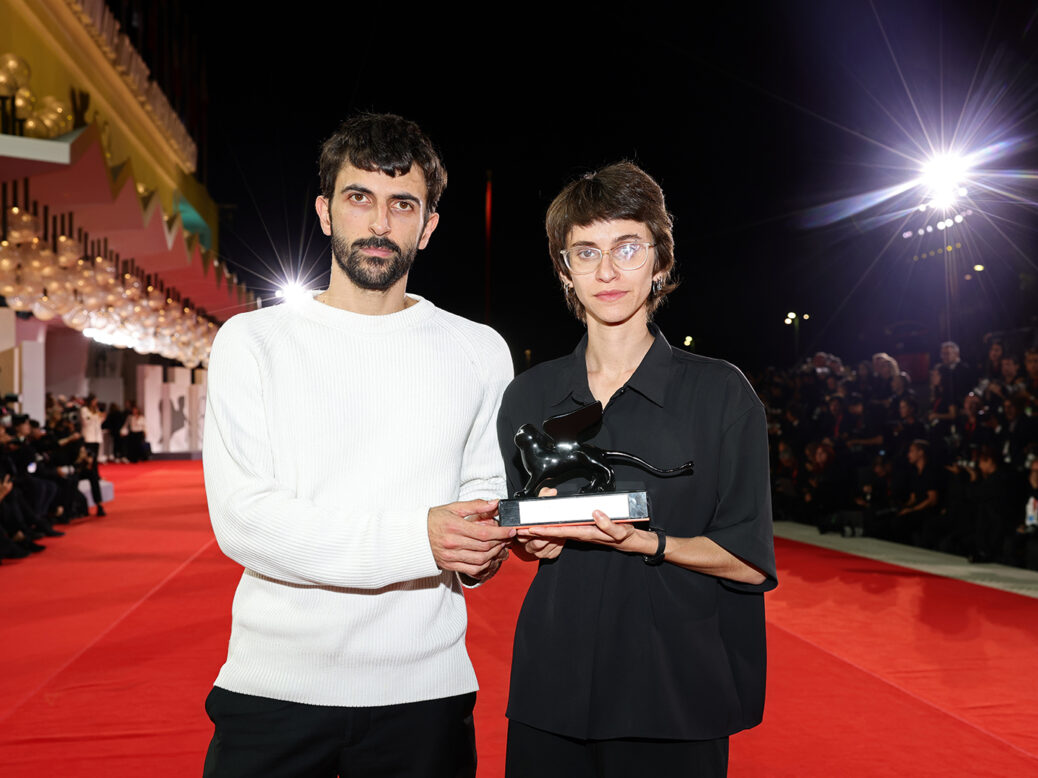
In the midst of the furious controversy surrounding Naza, a new documentary by Israeli co-directors Yuval Abraham and Rachel Szor, the film has drawn largely predictable reactions within Israel. The film features accounts by Israeli soldiers and military insiders, who describe the mass killing of civilians in Gaza. It premiered earlier this month at the Venice International Film Festival, and, while it has not been seen by most of its detractors, it has been criticised for spreading lies and leaking legitimate classified information.
The same Israelis whose threats and violence make it nigh-on impossible to screen documentaries critical of the state publicly are indignantly asking why this film was premiered abroad, while also demanding that the Israeli filmmakers be imprisoned or exiled. The same people who post laughing emojis under images of dead Palestinian children, demolished apartment buildings and blown-out hospitals are aghast that anyone would allege Israel kills children, flattens apartment buildings or blows up hospitals. A minority of public figures have, to no avail, stepped forward in support of the filmmakers, or at least tried to refocus the conversation on the substance of the film’s allegations rather than the propriety of making them on camera.
This being an election season, Israeli politicians have piled in. Benjamin Netanyahu has condemned the film, while the culture minister, Miki Zohar, has formally requested that the filmmakers’ citizenship is withdrawn. This measure would be extraordinary – the entire premise of the state is predicated on citizenship being an inalienable right of every Jewish person – but this level of vitriol against a specific journalist has not been seen in Israel since the 2012 prosecution of the Haaretz investigative reporter Uri Blau, who exposed IDF commanders operating in contravention of Israel’s supreme court rulings, and ended up being hounded out of the country. His source, Anat Kamm, was convicted of espionage. It’s not inconceivable that such a crackdown on press freedom will be attempted again, and yet the silence from most of the Israeli press corps is deafening.
The reaction to the film from the pro-Palestinian side ranged wider. There was appreciation for unequivocal confessions of Israeli soldiers on record, admitting to their role in atrocities against thousands of civilians in Gaza. There was also frustration that it takes such testimony – extracted by Israeli and British filmmakers – to confirm atrocities that have been reported by Palestinian journalists and civilians for years. Confessions might be more persuasive than accusations, but it’s hard to deny that many in the West feel more comfortable applauding Israelis than Palestinians, even when they’re saying the same thing. (Abraham acknowledged this disparity, paying tribute to Palestinian colleagues at every opportunity; the standing ovation at the Venice premiere quite obviously caused him profound discomfort.)

And then there was a different category of reaction altogether, voiced by some prominent Palestinians but perhaps even more vociferously by a certain faction of pro-Palestinian activists, primarily on X. The argument ran something like as follows: would we be applauding Germans interviewing Nazis about atrocities, mid-Holocaust? (Leaving the merits of the comparison aside, the answer that “yes, we would” doesn’t appear to occur to these critics.) Should we be praising Israelis for the “bare minimum” of challenging their society’s narratives and institutions at direct personal risk? (This argument has most often been made by those who don’t have a track record of risking anything.) Should we be applauding Israelis if they don’t renounce Zionism, emigrate to wherever their ancestors came from and give up their citizenship?
The overlap between Israeli government rhetoric and pro-Palestinian X discourse may be accidental, but the zero-sum attitude espoused by the latter serves the former. In the past, in other conflicts, dissidents have been generally lauded by external actors, both for presenting an alternative vision of their society and out of acknowledgement that no society can be changed from external pressure alone. This support rarely protected dissidents, but it provided them the feeling that they were not insane or alone, and that contrary to their society’s anxiety and suspicion, the other side was not pushing for their physical or political elimination.
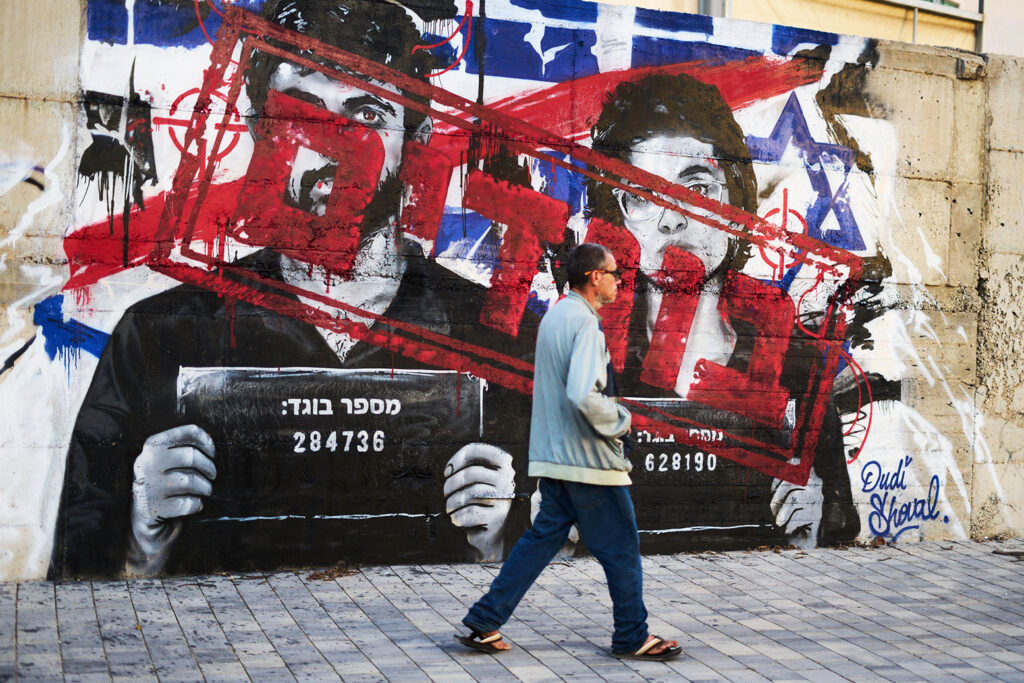
Now, there appears to be a significant faction who, while genuinely concerned by the ever-escalating assault on Palestinians, are set on making Israel as cohesive and unidirectional as possible. Dissident Israelis are therefore attacked with as much contempt from these parts of the left as they are from the right. This only increases the isolation of those speaking out, which is exactly what the Israeli government wants to see.
Meanwhile, Netanyahu appears to be on track to prevail in the upcoming election. If he wins, a crackdown on civil society will surely follow, eliminating any vestige of support for critical filmmaking and shutting down oppositional Israeli press. Such a move will no doubt be satisfying for the ringside observers who like their conflicts neat and simple, and find Israelis not playing to type infuriating.
[Further reading: The great British democracy sell-off]
Content from our partners



Related


This article appears in the 16 Sep 2026 issue of the New Statesman, Will AI kill us all?
Join the debate
Subscribe here to comment