
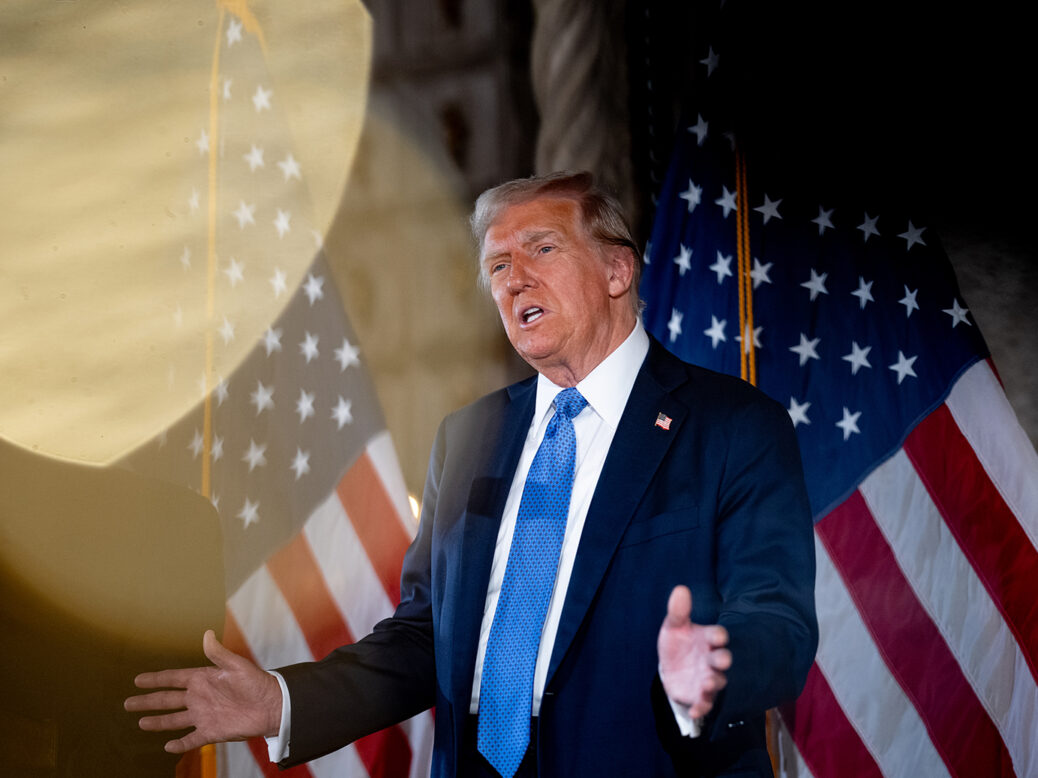
Republicans in Washington often speak with a wistful air about Donald Trump’s first term. The reminisces are simple: a decent economy, strong borders and no new foreign wars. Of course, there was the bombast and craziness that upended the usual way that presidents composed themselves, as well as weekly scandals, and the two impeachments. But some consider that a necessary jolt to establishment malaise, a defibrillation of the American political system.
Others wish there was more disruption. These types think that Trump was not hard line enough in certain areas, such as in overturning the woke grip on the administrative state. But, generally, to Trump’s loyalists, he did the most he could. The siege of the Capitol on 6 January 2021 is remembered with a regretful shrug, as if it were an unfortunate happenstance in which tempers ran too high and the FBI then went on a wild witch hunt. To them, given the restraints, the core priorities of their political movement were respected as much as they could have been.
Even accounting for his habitual verbal incontinence, Trump was uncharacteristically disciplined during the 2024 election campaign. He kept a relatively strict focus on making stuff cheaper, excising the woke craze and calling out the Democrats’ incredible denial of Joe Biden’s senility. It was vague in details and clear in purpose. Essentially, the promise was that Trump would be a strongman cultural reactionary who would also make life more affordable.
But, putting the strongman stuff to one side, he has not done that. Fuel prices are now so high that Trump is considering a ban on shipping American diesel overseas. Hence, his approval ratings have fallen to an all-time low.

This belief that the American public can or would tolerate craziness in the pursuit of nationalist values is no longer widespread. The current view among some Republicans is that, even amid the liberal outrage, Trump has missed the mark. The war in Iran is a betrayal of principle: he reneged on a key promise. In his first term, Trump certainly killed a lot of Islamic State militants. But, unlike his predecessors, he didn’t wage a fresh war in the Middle East.
Today, some of his lieutenants can’t help but notice that he has sacrificed not only his promise to avoid fresh conflicts, but also his promise to lower prices. Higher petrol prices have become an undeniable consequence of the war in the Persian Gulf. You can hear the desperation in JD Vance’s voice when he pleads with voters via podcast appearances: “Give us another chance. Give us another couple of years.”
Vance’s mentor, the tech mogul and Palantir chairman Peter Thiel, gave a good appraisal of what has gone wrong: “The first administration brought in all these people who couldn’t agree, and it was just all this internal fighting,” he said. Whereas in the second term Trump “overcorrected for the mistake of the first term with all these loyalty tests”.
In other words, the perception is that Trump has traded competence for loyalty. Tariff day, for instance, unfurled like some geopolitical edition of The Price Is Right, in which foreign officials fretted in their DC embassies and tried to guess what their tariff would be: “And Algeria gets 30 per cent!” Even protectionists speak with regret about the farce – they regard it as a lost opportunity, sullying protectionist arguments for an entire political cycle.
Trump’s lack of interest in politics is also becoming more obvious. The man who used to delight in crafting new nicknames for his opponents is now characterised by his open affection for his political foes. He recently said that the socialist mayor of New York, Zohran Mamdani, who is a key bogeyman in the Republicans’ midterms strategy to scare voters about a communist takeover, has “great potential”.
All administration staffers try to give the executive what he wants because, by the very nature of the American system, the president holds their careers in his hands. It’s not as if no other American bureaucrat has ever bowed their head to execute a nonsensical war. The difference here is that Trump has departed so far from the bounds of presidential decorum. By decorum, I mean something as basic as publicly taking an interest in the job he was elected for.
The most revealing thing Trump has said this year is that he is tired of politics. This is an astonishing thing for a sitting president to admit: surely, if you’re tired of politics, you’re tired of life? In Trump’s case this certainly seems to be true. He is preoccupied with what comes after. His legacy dominates his mind, as seen in his attempts to imprint himself on history through architecture and monuments. As Trump zooms in on trying to control how we remember him through gilding statues in Washington and plastering his name around town, his party is moving on to new debates. He is still writing his will as his heirs are fighting over the spoils.
If you aren’t interested in politics, you normally aren’t very good at it. This is the conundrum Republicans face: a leader who no longer cares about anything as unimportant as the midterm elections. Trump is the ghost haunting the Republicans as they face their electoral reckoning this November. And he does not care.
[Further reading: Bernie Sanders and Steve Bannon: America’s new anti-AI vanguard]
Content from our partners



Related

This article appears in the 01 Oct 2026 issue of the New Statesman, Sunshine and Rain
Join the debate
Subscribe here to commentBored? He sleeps through most of his oval office press gatherings, surrounded by his sycophants and wannabees. His only interest is grifting. He’s head of a crime family. That’s the only business of interest to him.
A dynasty like the Bushes or Kennedys seems to be his desire though neither Eric nor Baron show any talents other than nastiness inherited from Trump senior.