
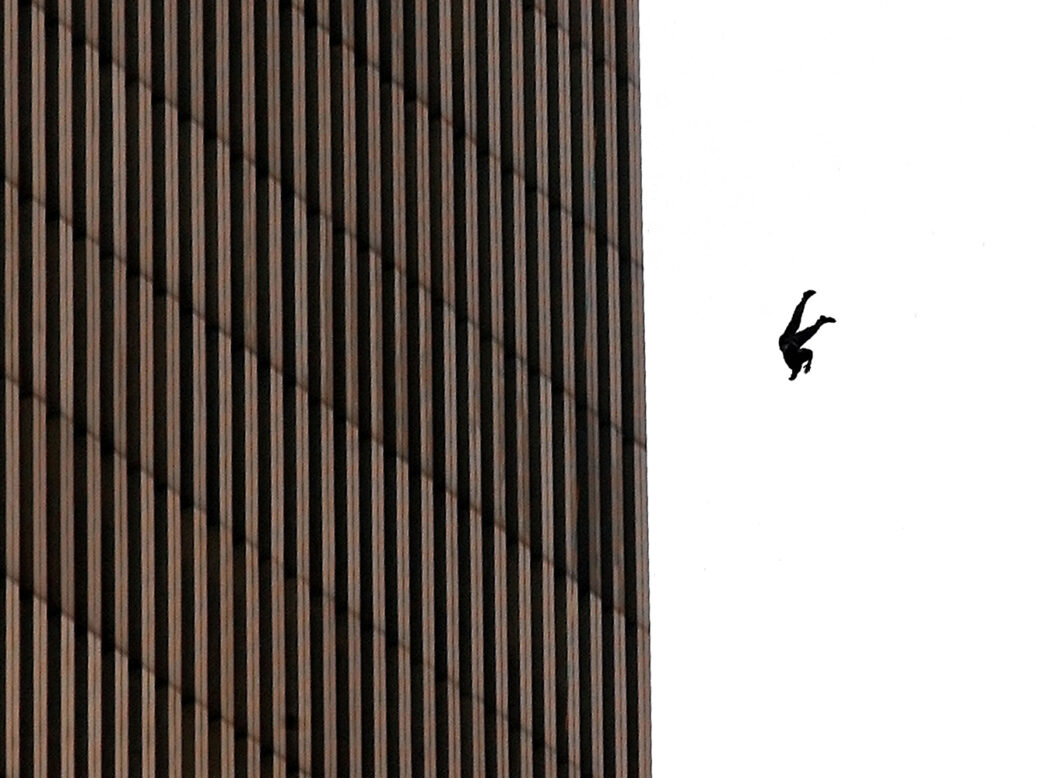
In Don DeLillo’s 2007 novel Falling Man, after escaping the North Tower on 11 September 2001, his face covered in ash and glass splinters, Keith Neudecker returns to his estranged wife, Lianne, to find that they were “ready to sink into [their] little lives”. Keith becomes a somnolent poker player; Lianne sits in an empty church. But their son starts using binoculars to look for planes in the sky. Despite his parents’ corrections, he refuses to accept that the towers ever came down. The kid believes a man called Bill Lawton – the name he hears when adults say “bin Laden” – will soon come back and bring them down for good.
In the boy’s response, we see three post-catastrophe instincts: psychological postponement of atrocity; the impulse to turn the foreign into the familiar; and the distorting effect of hearsay. All of which underlines a warning: that America will face a failure of memory in the aftermath of 11 September. How would future generations remember – or, when that becomes impossible, understand – the day that jolted America out of its illusion of innocence?
“What happened today was not credible,” were the stiff words of Tom Clancy. If the moral abyss that Americans saw was not credible, then they soon tried to make it at least legible, something sufficiently understandable to be remembered. The footprint of the Towers was turned into two vast, black holes. Artefacts from the event became tokens of proof and remembrance: the National Museum of American History exhibits seat belts from Flight 93 and the scuffed briefcases of the workers going to work that day. And each year, America’s leaders gather in lower Manhattan and at the Pentagon in Arlington, Virginia, to commemorate the event that inaugurated the 21st century.
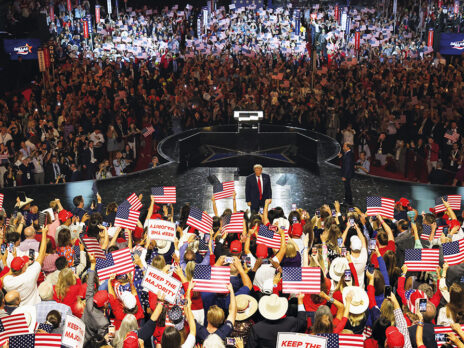
Commemorations are usually times in which decorum serves to salvage some dignity from horror. Decorum is not really possible in Donald Trump’s America. Rudy Giuliani, who was mayor of New York during the attack, has compared his Muslim successor, Zohran Mamdani, to the hijackers, and said he should not attend the memorial. Laura Loomer, Trump’s human earpiece, said during Mamdani’s mayoral race that “NYC is about to see 9/11 2.0.”

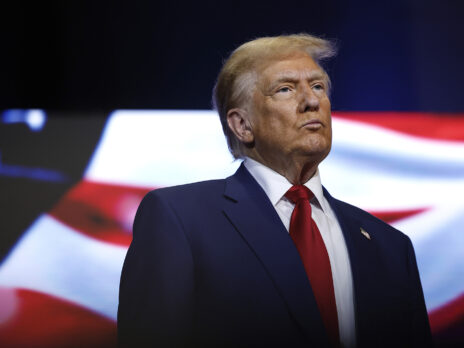
Trump’s acolytes take their rhetorical cues from the man himself. Even when given a plum opportunity for statesmanship after the killing of the self-anointed caliph of Islamic State in 2019, Trump could not muster a modicum of decorum: he boasted that “Abooo BakAAR al-Bagdaddy… died like a dog.” Whatever residual moral advantage America still has post-Iraq is frequently spoiled by Trump’s cadence, which only proves how precarious it is. Today, Trump’s misadventure in the Persian Gulf – though only Ford Transit-sized missiles, not troops, have so far entered Iran itself – has extended a nightmare that he promised to end. The one reliable riposte his defenders have had was that Trump kept America out of protracted conflicts. That defence is no longer tenable. This is relevant because his critics think that, while the location of the “forever war” might change, the nightmare shows no sign of ending. Abdul El-Sayed, Democratic senatorial candidate in Michigan, draws a direct line between the wars in Iraq and Afghanistan and in Iran today. When he expresses regret for 11 September, he quickly follows up with condemnation of the retaliation wars, laying claim to America First for his own.
America’s moral accounting of 11 September is not permanent. It changes with the passing of each year. For how much longer will columnists begin their remembrances every autumn by telling us where they were when the second plane hit? Those anecdotes once formed a frail web of collective experience on which Americans could disagree. The core memory for a new generation of politicians is not the towers coming down, but the blind revenge that followed.
There is another side to how the memory of 11 September is evolving. Americans sometimes see their indulgence in conspiracy theories as an innocuous national pastime, similar to watching sports. It’s not uncommon for them to view foreigners who look down on the conspiracy theorist as pedants, even killjoys. That might be fair if the topic is who killed JFK. But the conspiracy theorist often alters reality in order to fit their ideology. They are especially prone to finding a Jewish person behind every phenomenon, for instance.
Distorted theories about what actually happened on 11 September now clog up the nation’s newsfeed. Was there a secret American force behind Bin Laden, one comprised of men with names like Bill Lawton? Loomer herself has said that 11 September was an “inside job”. Tucker Carlson’s media network has produced a five-part documentary series to prod holes in the official narrative. Questions remain unresolved and are still unfolding: the BBC recently found the FBI didn’t share crucial evidence about an alleged plotter, Omar al-Bayoumi, with the Justice Department.
There is still no settled agreement on why those artefacts are in a museum. How 11 September is remembered runs parallel to national discourse. (Currently: Maga’s panic at the ascendance of Muslim politicians, a belief in America First on the right and left, and the suspicion that forces at home were treasonous enough to attack their own.) This axial historical event may never be past. By the 50th anniversary, the reality of what happened will probably remain submerged under the fears and neuroses of 2051.
[Further reading: The other big story of Reform conference]
Content from our partners



Related

This article appears in the 10 Sep 2026 issue of the New Statesman, The World According To Ed
Join the debate
Subscribe here to commentMost British adults remember 9/11 as the time when a male executive whispered into George W Bush’s ear that something important was happening and watching the impossibly incoherent reaction. The FBI had arrested one of the twenty terrorists and were required by American law to ask his permission to read the files on his laptop computer. He refused. Imagine capturing a bank robber and requiring his permission to recover the stolen money. Someone just needed to swop out the laptop with another of the same make while they deciphered the files, discovered the plot, arrested all remaining 19 participants in the plot and 9/11 would not have happened. Not only that failure must be regretted. Ralph Reader, a civil rights activist insisted on becoming a candidate in the 2000 Presidential election and took 2 million votes from Al Gore, the Democrat Candidate, who would have won the Presidency if Reader had not competed. Al Gore would not have initiated the invasions of Afghanistan and Iraq and America would be a safer, richer country as a result.
I think you may be referring to Ralph Nader the American environmentalist. Ralph Reader was a British impresario who produced the ‘Gang Show’ , a 1960s tv entertainment act that featured boy scouts. Yes, really.
I’m pretty sure that Laura Loomer and Tucker Carlson were the real perpetrators of 9/11. I read it on the Internet, so it must be true.