
Greetings from Armenia, where my friends and I have come for what is turning into a quadrennial foreign get-together. Eight years ago we visited Ghana and Togo, and Kyrgyzstan four years after that. The rules of our overseas trips are simple. We cannot visit anywhere that we might have chosen as a family holiday, and we will not go anywhere where there is an unacceptable risk of getting arrested or killed. With these two rules, a startling amount of the globe seems to disappear as an option. So here we are.
For those who haven’t been, Armenia is a glorious place, vaguely European yet distinctly not. We arrived in Yerevan, its capital, a thriving modern city spread out across the rolling hills of a valley, shadowed by Mount Ararat. The mountain dominates the horizon from just across the border in modern Turkey – a cruel geological reminder of Armenia’s Ottoman tragedy. It is one of many reasons that being in Armenia has felt as though I am in some kind of mournful Joseph Roth novel: snow-capped mountains, gleaming Russian churches, Persian mosques, Georgian restaurants, Soviet architecture, Orthodox monasteries, all side by side. In Gyumri, Armenia’s second-largest city, we visited a bar owned by a Syrian Armenian who has fled Aleppo. Here is a country of old scars and modern tragedies, lost settlements and returning diasporas.
Up to the mountains, we are taken to one of the strangest places I’ve ever been: an abandoned Soviet telescope, once the biggest in the world, buried into the volcanic rock, 50m wide, its great antenna pointing up to the stars like the instrument of a Bond villain’s lair. Left untouched since the Soviet Union collapsed, it now lies rusting, a relic from a forgotten empire, filled with all the old instruments of the space race. We each take turns sitting in the old Soviet chairs, with the control panels in front of us, the Cyrillic signs displaying the time in Moscow and London (or Greenwich, actually).
Across the mountain valley, meanwhile, the mournful sound of monastic prayer wafted over from the Armenian church on the ridge of the hill, its spire looking almost like a minaret. Inside the monastery, the sight was extraordinary: its walls were decorated gold, the priest dressed in a great pink robe as the congregation crowded around him, women in headscarves, children running between the aisles. For a brief period, the Soviet empire determined life here. But as soon as it cracked and fell, the old ways returned: nation and religion.

During my short time here, I’ve been struck by this curious mix of both fragility and strength. In so many ways, Armenia shouldn’t be able to function anywhere near as well as it does. The country’s borders are closed to Turkey and Azerbaijan, while trade to the south with Iran is difficult. Its relationship with Russia is strained, and yet the EU and America feel a long way away. Perhaps all of this explains why, according to our guide, the average salary is something like €300-€500 a month, a fraction of the basic wage in Britain. And yet, walking around Yerevan, it seems no poorer than much of Britain, and in some ways more alive. Outside the cities, granted, the farms and villages are almost peasant-like. But I increasingly find a cognitive dissonance between our official GDP and the feel of life.
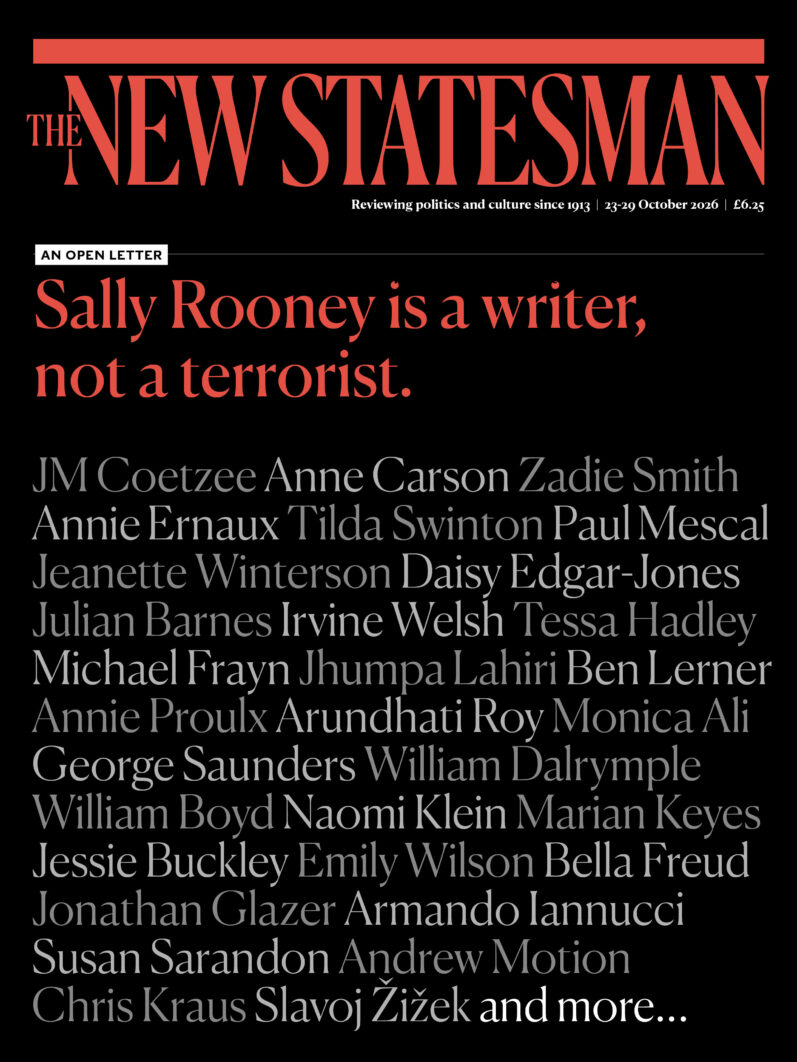
This is not a neat segue, but I noticed a similar feeling expressed by our culture editor, Tanjil Rashid, in his essay marking the open letter, which condemns the reality of Britain today. Peaceable pensioners are arrested for opposing the government’s definition of terrorism, police knock on people’s doors for tweets, and novels are withdrawn for the political activism of an author. As Tanjil writes, whatever the motivations of successive governments over the past few decades, the reality is a slow but now clearly noticeable erosion of free speech.
We are therefore proud to publish the open letter in protest at this unhealthy drift, and hope it goes some way to helping us change course as a country. Perhaps I am being naive, but I like the idea that in Britain, Milton’s “known rules of ancient liberty” will reassert themselves over time, consuming the clumsy and ill-conceived attempts to curtail them. Those, regardless, remain the principles of this magazine.
[Further reading: Sally Rooney is a writer, not a terrorist]
Content from our partners


Related

This article appears in the 21 Oct 2026 issue of the New Statesman, Sally Rooney is a writer, not a terrorist
Join the debate
Subscribe here to comment