
“What is the point of controlling the world if you cannot control your own body,” the emperor Augustus complains in Robert Harris’s latest (and rather brilliant) novel, Agrippa. As I lay in bed, still feeling the conference bug I had picked up in Liverpool, I laughed grimly at Harris’s observation. I’ve no desire to control the world – or even Lewisham – but hearing Harris’s account of Augustus’s travails, all I can say is thank heavens I live now rather during that time of glorious intrigue but primitive healthcare. Harris’s vision of Augustus wrapped in oil-soaked blankets being slowly heated (cooked?) next to a fire was enough to make me be thankful for the decrepit waiting room of my local GP surgery. And that is saying something.
I don’t know why I haven’t read more Robert Harris. Every time I pick up one of his novels, I thoroughly enjoy it. As for most people, Fatherland (1992) was my way in. An Officer and a Spy (2013) came next, before Archangel (1998)and finally, Agrippa, the imagined lost memoir of Augustus’s right-hand man. There’s something unsettling about Harris’s latest book. It lacks the cinematic drama of Fatherland or the moral clarity of An Officer and A Spy. Instead, Agrippa tells the story of a republic being slowly extinguished, though its citizens do not seem to notice or care. It features no great heroes: they are all selfish, ambiguous characters operating in a world in which power and money are all that matters. Perhaps Harris is trying to tell us something.
I listened to this book on Audible, narrated by the remarkable Simon Russell Beale (he is my new obsession, ever since I saw his Churchill in the new film De Gaulle: Resistance). Anyone who uses Audible today will be offered an extraordinary array of star actors reading new novels, from Stephen Fry reading the Harry Potter books to Toby Jones reading Sebastian Faulks’s new Farewell to Eden. While we appear to be reading a lot less than we used to, there is clearly no shortage of demand for a good story.
Still, I find myself feeling a little uneasy about the audiobook habit I have developed in recent years. Perhaps the rise of Audible is part of the trend James Marriott (among others) has observed, by which we are slowly becoming more of an oral culture than a written one. As much as I enjoy listening to novels, and see no real downside to swapping an hour in front of the TV for an hour with an audiobook in bed, I do think I lose something by not physically reading. There’s nothing quite like the attention required to become properly lost in a book; lost, almost in a literal sense, because of the concentration involved in staring solely at the words on a page in front of you.

The other source of my unease, though, is something harder to put my finger on, but I think somehow quite revealing of our politics today. Scanning my bookshelf, I randomly pull out a book to compare: A Gentleman in Moscow by Amor Towles (oddly, once recommended to me by Boris Johnson), which was published by Penguin and printed in Britain by a company called Clays. Though neither of these companies is any longer “British”, in the sense that they have long since been bought by foreign enterprises, they remain based here, publishing and printing millions of real books that can then be bought and sold, traded and loaned. Audible, meanwhile, is based in Newark, New Jersey, and owned by Amazon – money slowly seeping out of the country. Like the Roman republic, is this how our economy dies: slowly, without anyone noticing?
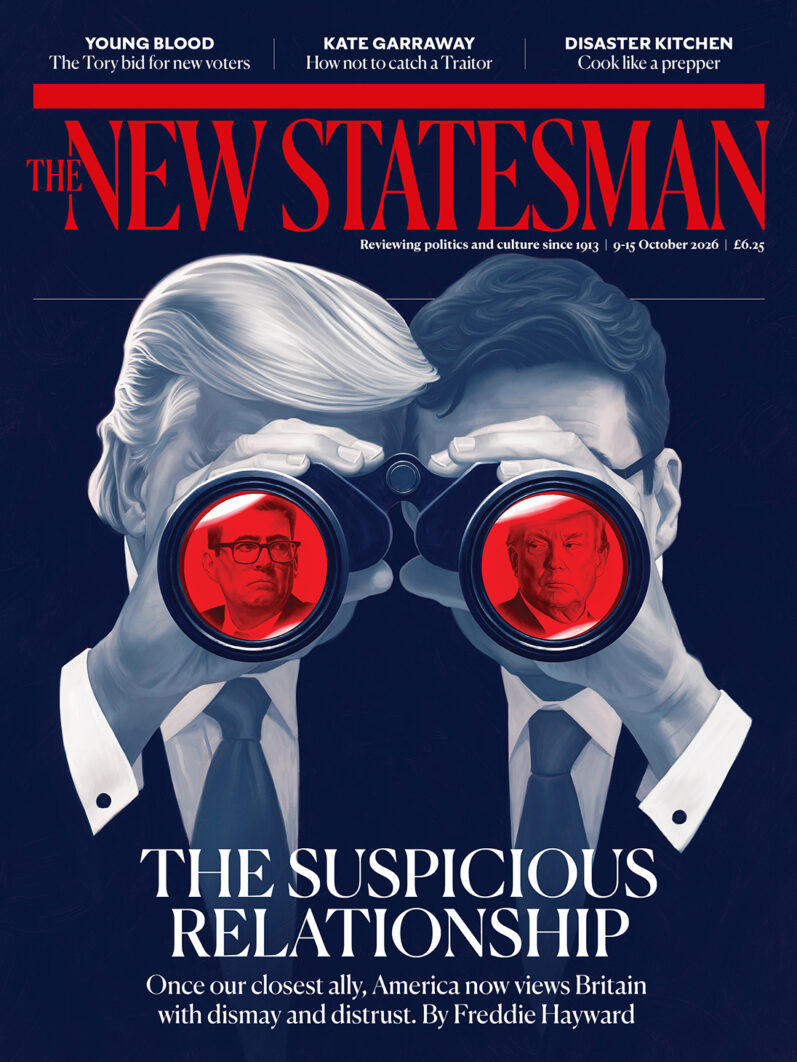
It certainly feels that way. Across our economy, physical products once made in Britain have been replaced by services provided by apps made in America. Instead of buying a Raleigh bike made in Nottingham, we rent a Peloton exercise bike we cannot afford and pay for classes broadcast from California. I realise this is just the reality of modern life, but it is also part of the reality of modern politics – part of the reason our politicians now demand, one after the other, to take back control. It is also because of this national weakness, as Freddie Hayward writes in our cover story this week, that Britain is now treated with such suspicious disdain in Washington.
We don’t have to go back to a world in which we make everything in our home, but surely we have to make more than we do today – even if that means just making more of these darned apps that drain all our money. But perhaps this is just the influence of Simon Russell Beale, Augustus, Agrippa, De Gaulle and all that. Maybe I just need to pick up a real book.
[Further reading: The suspicious relationship]
Content from our partners


Related
This article appears in the 07 Oct 2026 issue of the New Statesman, The Suspicious Relationship
Join the debate
Subscribe here to commentYes, pick up a real book. That way, the creator gets a better deal instead of being ripped off by the streamers who get fat on your monthly subscriptions.