
To the Royal Opera House to test the limits of my burgeoning interest in the works of Richard Wagner. Until last week, all I had seen was the first part of Wagner’s Ring cycle, Das Rheingold, a relatively easy (it turns out) three-hour romp through the mists of Rhinish Valhalla. Parsifal, in contrast, was my first five-hour endurance test: a daunting prospect.
I knew the music would be great. Of all the Wagner operas, Parsifal is the “easiest” listen – the most immediately pleasant and accessible. But the story itself? All I knew was that it was Wagner’s final opera, vaguely Christian in some way – and, as our culture editor, Tanjil Rashid, pointed out to me, loathed by Friedrich Nietzsche as “an apostasy and reversion to sickly Christian and obscurantist ideals”. I had, then, expected a rather high-minded affair; beautiful, surely, but probably a little boring, perhaps even a little worthy. Instead, I was served up five hours of gore, sex, death and horror. The first act finished with the Grail King, Amfortas – a prostrate messiah figure – strapped to an electric-chair style contraption while his cultish followers fill their cups with the blood flowing from the wound in his side. Grisly. The second act then features the eponymous simpleton of the opera, Parsifal, being seduced by dozens of busty flower maidens. In the third act, he realises the error of his ways, and returns to Amfortas to put him out of his misery.
Though the audience loved it, I must admit I came away slightly baffled. At one point I couldn’t get away from the thought that it was like watching The Matrix,albeit set to beautiful music: Parsifal as Neo, the “pure fool” destined to save the world by avoiding sensual temptation and gaining true knowledge. I think this was the kind of thing that drove Nietzsche to despair. But it did make me think how familiar so many of the great stories really are. Is there anything new under the sun?
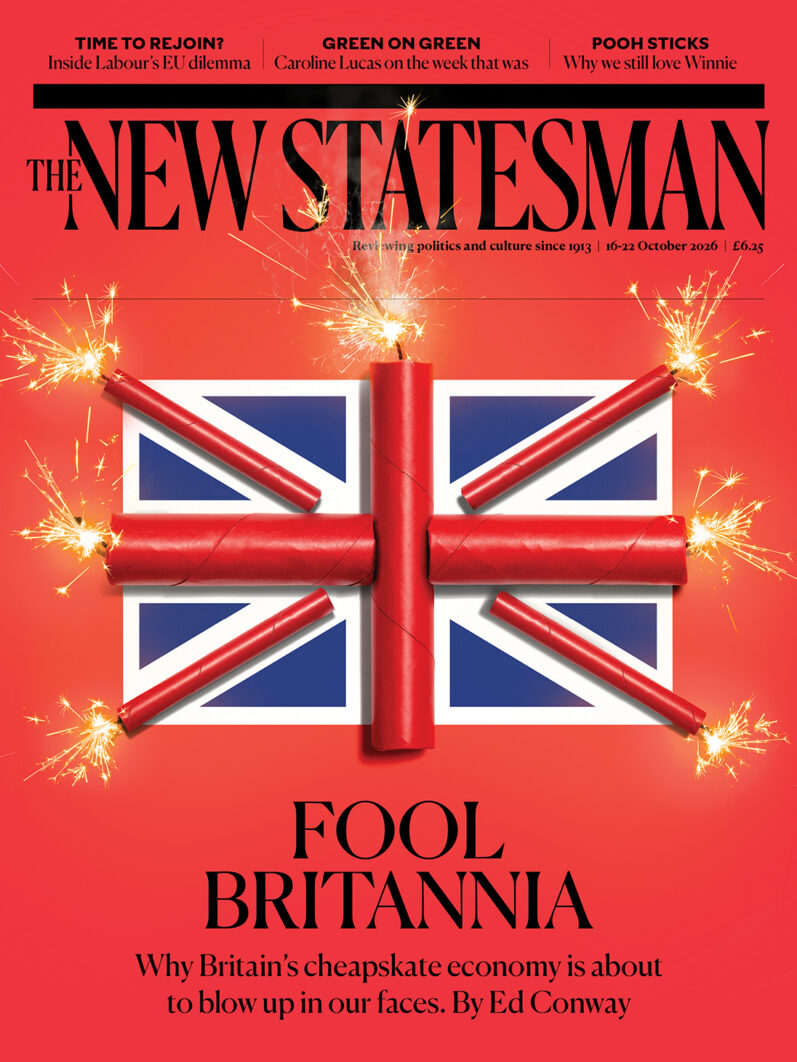
That was certainly my thought reading Ed Conway’s cover story in this week’s magazine – a tour de force exposing the precarious position in which Britain now finds itself – especially when sat alongside Ethan Croft’s column on the latest Labour Party machinations over Europe. How many times have we been here before? In Ed’s telling, Britain has muddled along for so long without a plan, other than reducing consumer prices, that it now faces a reckoning with history. In our past, Britain has tended to turn to Europe as an easy answer – either as saviour or culprit. In the 1960s, as our global position began to deteriorate, Europe became the answer to our decline, with Harold Macmillan, Harold Wilson and Ted Heath pushing for entry.

By the early 1990s, of course, Europe was no longer held up by Westminster as the solution to Britain’s economic problems, but as one of the reasons for our economic instability. If only we hadn’t joined the European Exchange Rate Mechanism, or the “Eternal Recession Mechanism” as Norman Tebbit put it. Such arguments intensified after the 2008 financial crisis. Then, of course, came Brexit, and Europe returned to what it was in the 1960s and 1970s – not the cause but the cure for our malaise. Perhaps it is, but, as Ed points out, the world of even a few years ago no longer exists. The China shock currently ripping through the Continent has the power to revolutionise the politics of Europe. As one astute observer put it to me, “the most underpriced event in global politics” is the prospect of a Madame Le Pen presidency.
It is this chance – alongside the threat of the AfD in Germany – which helps to explain the urgency with which Europe is seeking to protect its economy from the Chinese car threat. But as Europe seeks to defend itself, the choice Britain faces becomes stark: to align, or to make our own rules, diverging and paying an ever higher price as we drift from our closest trading partners? And if we do choose to drift, where is that we intend to drift to?
Andy Burnham has opened a discussion on Europe, but Westminster has barely even begun to grapple with the trade-offs involved. As ever, like the fool Parsifal, Britain is wandering in a daze, seeking to avoid the difficult decisions for as long as possible. I fear a grisly denouement is in wait for us too.
[Further reading: Britain’s economy is ready to blow]
Content from our partners



Related
This article appears in the 14 Oct 2026 issue of the New Statesman, Fool Britannia
Join the debate
Subscribe here to comment