
“He was the future once,” David Cameron observed, mockingly, during his first exchange with Tony Blair at Prime Minister’s Questions back in 2005. The remark was cutting because it poked fun at one of Blairism’s most fundamental conceits: that it (and perhaps he) represented modernity. To be a Blairite was almost a belief in divination, a declaration about the future. To stand in opposition to Blairism, in contrast – either from the left or the right – was anachronistic: old Labour, old Tory.
At the turn of the century, such notions of historic inevitability were very much in vogue. The future would be global, tolerant, liberal, nice. It would also be both European and American – the two great beacons of modernity lighting the way forward for backwards old Britain. In Hugo Young’s 1998 account of Britain’s long, difficult relationship with Europe, This Blessed Plot, the journalist declared that Britain’s future was tied to the European Union – something he said was an “incontestable fact” proven by Britain eventually joining after all its neurotic hand-wringing. The same year, Young’s Guardian colleague Jonathan Freedland’s book, Bring Home the Revolution, was published, in which he called on Britain to implement its own American-style constitutional order.
Today, such accounts seem almost otherworldly in their optimism. In 1998, Young thought it was only a matter of time before Blair led Britain into the euro. He died in 2003, long before he could see his dreams turn to dust. Few progressives, meanwhile, now look to the US for constitutional inspiration. The future we were once promised, it is fair to say, has not come to pass.
Across Europe and the US a far more ominous future looms into view. Here in Britain, we are having to accept the normalisation of masked gangs roaming through port towns protesting against the latest “small boat” arrivals from France. In Germany, the völkisch anti-immigration AfD stands on the cusp of becoming the first far-right party to enter power in the country since 1945. In France, Marine Le Pen is favourite to become president in next year’s elections while her right-hand man, Jordan Bardella, is giving speeches alongside Nigel Farage in Britain.

Discussing all this with European politicians and diplomats over the past couple of weeks, I have been struck by the growing sense of emergency. I spoke to one figure close to Emmanuel Macron who declared that unless Europe immediately adopts emergency protectionist measures to save its industrial base from Chinese imports, factory closures across the continent will guarantee the far right power – and with it the end of the European project. Even in Germany, once fiercely free-trade Christian Democrats are now nodding along in agreement at such a diagnosis. Some are going further still and calling for the AfD to be banned.
Back in Britain, a combination of Andy Burnham’s early momentum and Farage’s troubles with a new donation scandal have reduced the sense of crisis in Westminster, but underneath there is still real concern. One close ally of Keir Starmer said to me that he was worried the public would not wear the tax rises or spending cuts required to get Labour out of the fiscal trap it finds itself in unless there was an end to small-boat crossings.
A friend of mine in the publishing industry told me recently that almost every non-fiction book proposal these days tries to make sense of this chaos with some version of the Gramscian observation about the old world dying but the new one struggling to be born. “In this interregnum,” Gramsci warned, “a great variety of morbid symptoms appear.” At the heart of this idea, though, is an idea of historic progress – of different “ages” giving way to other distinct and definable alternatives. But isn’t the point that all history is interregnum; that there is no destiny?
In one sense, such an observation might seem troubling. If history is mere chaos and contingency, then how are we to understand it, let alone order it? Perhaps it is my naivety, but I take the opposite view. That history is not ordered gives us at least a fleeting chance to change its course. This is the point of politics – and journalism. The future that was supposed to come to pass has not. But that does not mean the alternative is inevitable. At least that is what I tell myself. Otherwise, what is the point?
[Further reading: Is Reform waving or drowning?]
Content from our partners



Related
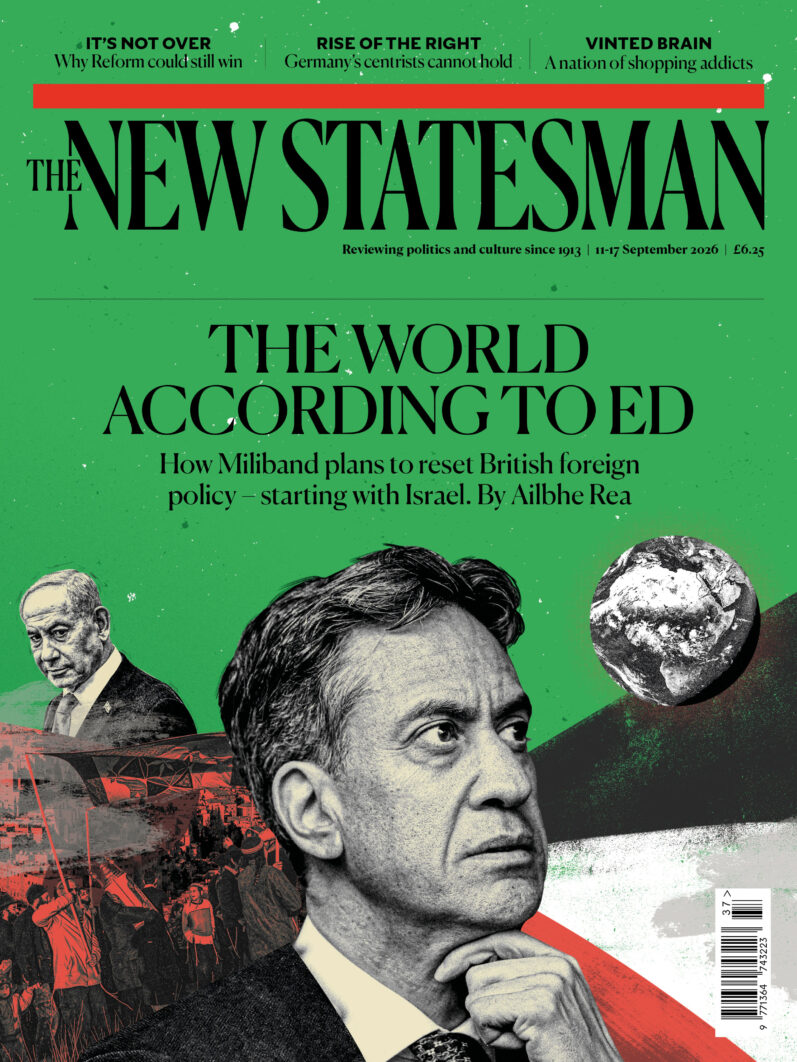
This article appears in the 10 Sep 2026 issue of the New Statesman, The World According To Ed
Join the debate
Subscribe here to comment