
I write this on the train home from the Labour Party Conference in Liverpool, riddled with whatever bug it is that has ripped through the halls and fringe events like one of those cabin coughs that manage to bring down whole cruise liners. Everywhere I looked, another poor soul had fallen to the dreaded conference lurgy. Urgh.
This year’s conference was a strange affair. Andy Burnham was, as you might expect, everywhere: no longer king over the water but now, simply, king. What will Andy say, everyone wanted to know? What will he do, where will he go, what will he commit to? This is a government shaped by the instincts of one man on the roll of his life, and while most Labour members appeared delighted at this sudden change of fortune, there was a certain trepidation in the air as well. Can things really carry on like this?
Already you can see the strains of the job. Burnham was due to take part in the traditional lobby vs politicians football match, this time played at Goodison Park, the former home of his beloved Everton. Before kick-off, however, news of the arrests near RAF Fairford broke, and he pulled out of the game. Running around a pitch while the government was dealing with an ongoing alleged terror incident would not be a very good look, it was decided.
My own conference this year consisted of two New Statesman parties and one onstage interview with Shabana Mahmood, followed by the said bout of sickness. Perhaps it is to my discredit as a journalist, but the part of our discussion I most enjoyed with the Home Secretary was when we managed to drag the conversation away from the news to the real person behind the politician.

Mahmood is one of the most formidable figures in this government: disliked by many members for being too right-wing, but relied upon by successive prime ministers to get control of the Home Office. Tony Blair considers her the most impressive figure in this generation of Labour leaders. Mahmood is very close to her family (her father was watching from the second row) and relies on them for comfort, support, guidance and faith. She is devoutly religious, believing – as she put it to me – that the life she has been given is both a blessing and a test. What she does with it matters.
There is something very upbeat about Mahmood. When you meet her, she’s full of bounce and laughter, always smiling and joking. Backstage she fell into conversation with the woman fitting her with a microphone, joking about her future career as a make-up influencer. On her feet were a pair of bright white trainers. “Casual-chic,” I suggested. “Not sure about the chic!” she replied.
What struck me the most about Mahmood, though, was the darkness of her worldview – beneath the easy manner and light banter were fears about the future of the country and, in particular, people like her, as she put it. In her conference speech a couple of hours before we spoke, she explained why she felt it was necessary to introduce rather harsh-sounding retrospective changes to the visa rules for those who came to Britain in the so-called Boriswave. Mahmood’s argument is that the pace of demographic change brought about by this increase in immigration is undermining the social cohesion of the country. She argued that only when people felt secure about their lives could you expect them to be open-minded and generous. She acknowledged that some believe this argument is merely a sop to racists and Islamophobes, but she insisted that the kind of conversations that were now taking place in Muslim families like hers were lined with such foreboding that something had to change.
Mahmood doesn’t have children, but is close to her nieces and nephews, and told me she worried about their future in an angrier, more divided Britain. She said conversations around the dinner table now involve dark jokes about whether or not they will be in the country in 20 years.
The more I reflected on this, the more sobering it became. In one of those Sliding Doors moments in my life, I briefly considered moving to the US with my family. But the thing I could never quite get over was the school shootings. Down in south London, where my own children go to school, I thought, I did not have to worry about the effects of shooting drills and so on. I realised that this itself was a privilege not extended to all children. Many Jewish schools are now protected by security guards. And for many Muslim families, fears of future conflict cloud their thoughts.
[Further reading: In Liverpool, the Labour Party hopes for hope]
Content from our partners



Related

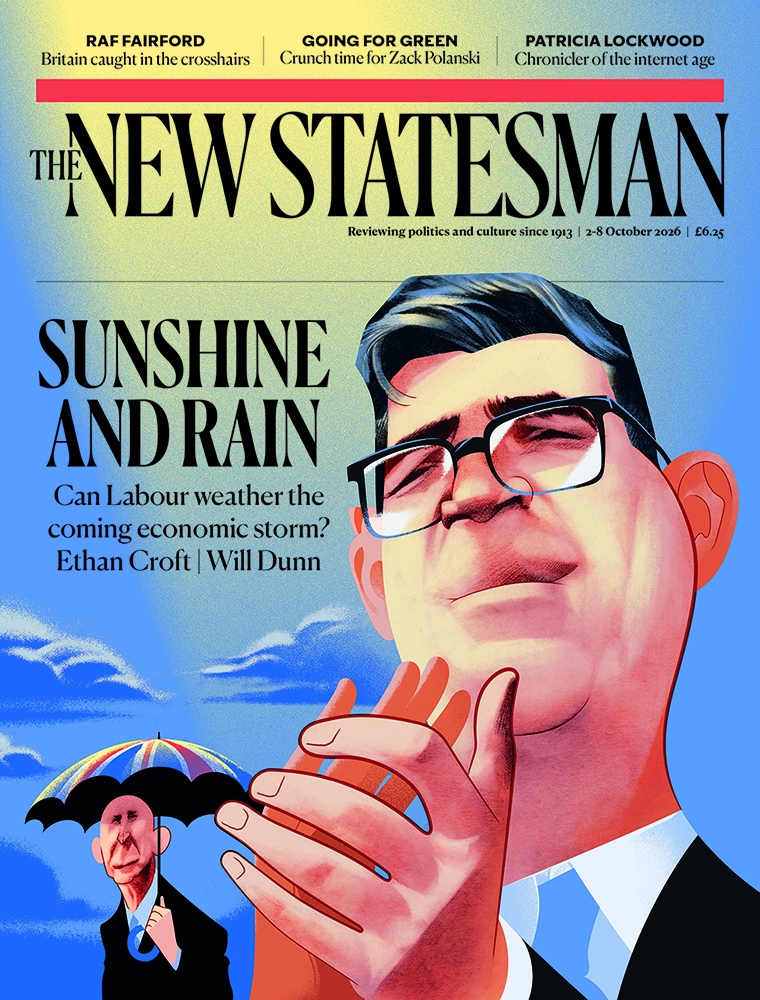
This article appears in the 01 Oct 2026 issue of the New Statesman, Sunshine and Rain
Join the debate
Subscribe here to comment