
And so, to the Labour Conference I trudge. I have been attending these ever-more corporate events for almost 25 years now (ugh, how depressing). My first was in 2002, aged 18, on the “gap year” my parents feared would turn into a gap life. My dad had driven us to Blackpool to see Tony Blair in his prime. This was Blair post-9/11 but pre-Iraq – “the Master”, as George Osborne liked to call him. Looking back now, it was like watching Michael Owen before his injury – a star performer at the height of his powers.
I still remember the occasion: the downtrodden grittiness of Blackpool, the glitz of the Imperial Hotel, Bill Clinton and Kevin Spacey at McDonald’s, the world’s press snapping away. It was all so glamorous and exciting (well, for a political geek like me). I missed the next couple of conferences while at university, but took myself down to Brighton to see Blair once again in 2005. In just three years the mood of politics had changed: the aura of invincibility that Blair once had was no longer. The optimism of Blackpool was gone.
I’m not sure that optimism has ever quite come back. I missed most of the conferences in which Gordon Brown was the Labour leader, but I returned in 2010 during the Ed Miliband years, though this time not merely the curious son of Labour activists, but as a journalist, a paid observer of the drama unfolding. This has been my divine punishment for the career choice I made as a naive 22-year-old doing work experience at the Independent on Sunday.
I seem able to recall only the vaguest, fleeting memories of these events, even though they all seemed so crucial at the time. The policy battles and personalities seem to have faded out of view. In their place, flashing images remain: walking past Tony Benn sitting on the stairs in Brighton; Blair demanding a two-state solution to the Israeli-Palestinian conflict, to which he received a huge applause at some venue I now forget; Andy Burnham and Ed Balls scoring against the combined journalists’ XI that I was playing for, a game in which we suffered an embarrassing 3-0 defeat.

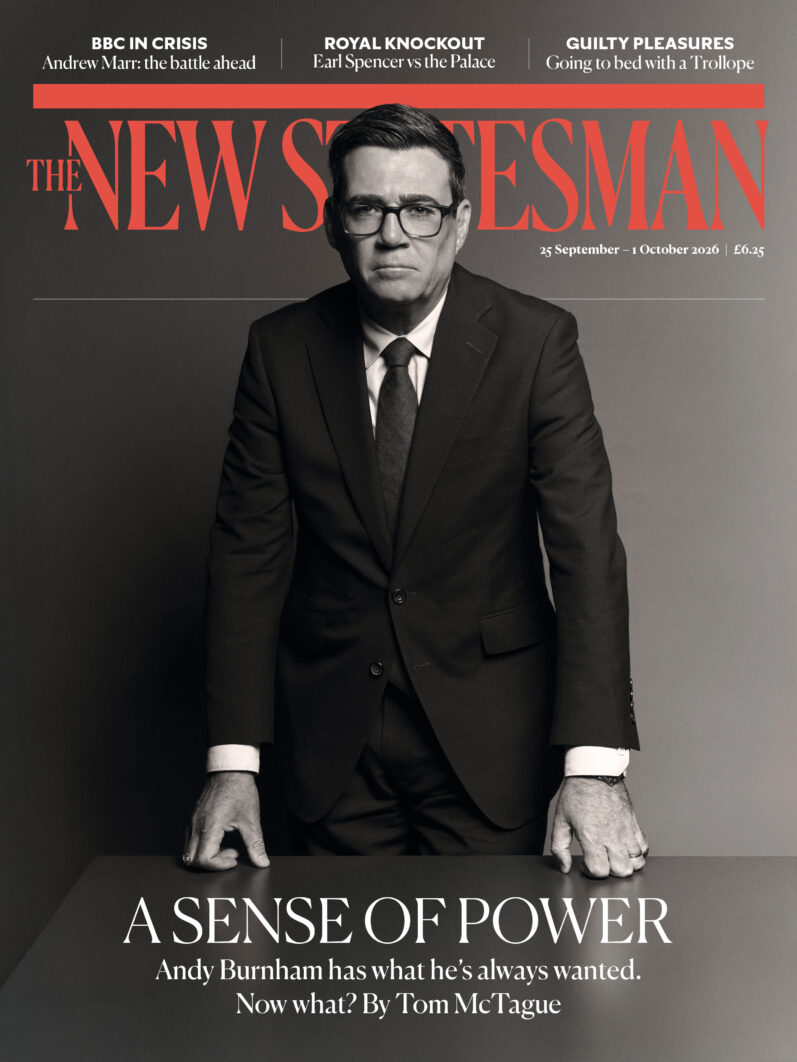
One other memory stands out, though. It was back in Liverpool and I was at the Daily Mirror. My job, as the most junior member of the lobby team, was to source a place for dinner and a pint for whichever politician we were meeting that evening. And that night it was Burnham.
By that point, he had stood once for the Labour leadership, in 2010. Although he lost to Miliband, he had not yet given up on Westminster to head north. He was shadow health secretary, still harbouring the ambition we now see before us, but not yet shaped by the power he would experience in Manchester. What sticks in my mind though is being down by the docks, walking towards some pub and Burnham saying simply: “Best place in the world, this, isn’t it.” It was the kind of thing I say to visitors when I take them to Durham.
But I believe he was sincere. Though Burnham is easy to mock for his folksy, local politics, place seems to matter to him a lot. In my profile of our still new-ish Prime Minister, he called his commitment to social justice “a very Liverpool thing”, and he paused on the significance of delivering his first conference address as leader in the city: “When you talk about fate and all of that, that does feel a bit, you know, major in my life.” It’s a fine sentiment, but here in Liverpool – in the shiny corporate heart of this regenerated modern city – it feels somehow removed from the streets and places that Burnham says informed his politics, or from his memories of the deindustrialisation and deprivation he saw in the 1980s on his weekly pilgrimage to Goodison Park.
Between 1950 and 1970, the Labour Party Conference travelled the coast of England: from Margate to Scarborough, Morecambe and Brighton. For the following three decades it mostly alternated between Blackpool and Brighton. But then came the takeover of the cities as Manchester and Liverpool muscled in, while Birmingham became home to the Tories.
If the Labour Party truly wanted to reconnect with the modern equivalent of Liverpool’s city docks, it should hold its conferences back in Margate and Scarborough, Morecambe and, indeed, Blackpool. They are the sites of the modern British disease that – at least from what he said to me – Burnham believes he is destined to fix.
[Further reading: Andy Burnham seizes control]
Content from our partners



Related

This article appears in the 24 Sep 2026 issue of the New Statesman, A Sense of Power
Join the debate
Subscribe here to comment