
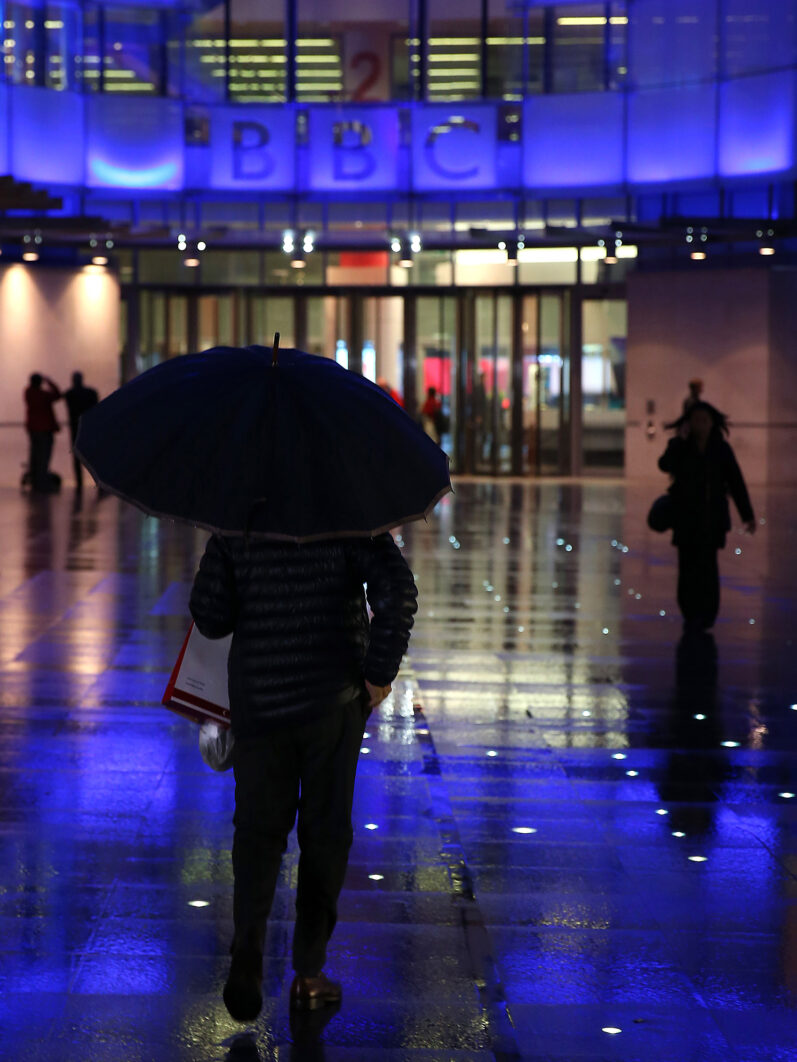
When I was told about an exciting new prime-time presenting opportunity, I assumed it was for Strictly. But I don’t have the hips for it. Instead, the Friday edition of Newsnight, which I have presented since May last year, was moving from 10.30pm to 7pm.
The shift comes as viewing habits are changing, though the news agenda stubbornly doesn’t. In its very first episode, presented by the legendary Peter Snow in 1980, Newsnight covered a US president demanding allies help with securing the Gulf, fears of Russian expansion, trade union power and trouble in prisons.
Some viewers grumbled about our latest time change, but for the first eight years after launch it would bounce around the schedule, allowing time to put on a long film before it. John Birt, deputy director-general, wanted the same time every night, and the BBC Two controller, Bill Cotton, didn’t. Really didn’t. As is customary with these things, there was talk that the row could “destroy the BBC”. Cotton lost. The BBC (and Newsnight) survived.
The triple-lock paradox
A new timeslot meant new chairs: teal green. Mine swivels, but the guests’ ones are fixed. We don’t want anyone spinning mid-show to look at the amazing view over All Souls Church and down Regent Street.

New furniture, but the same journalism. I record an interview with Kemi Badenoch in the leader of the opposition’s office in parliament’s Norman Shaw North, overlooking the Thames. I first set foot in there when David Cameron was its young occupant. In my 20-plus years covering Westminster, only he and Keir Starmer made it over the road to No 10.
Badenoch delivers newslines: taking the government to court over cuts that mean Tory-run Wandsworth Council is putting council tax up by 94 per cent; insisting Liz Truss will not be a Conservative candidate again; Donald Trump is an ally “sometimes”; and in the Spencer vs Windsor stand-off, she is “always on the side of His Majesty”.
But the most interesting moment comes on the pension triple lock. The rule – pensions rise by inflation, wages, or 2.5 per cent, whichever is highest – has created a curious political pattern: former ministers think it’s unsustainable; current ones think it’s untouchable. Badenoch is firmly in the latter camp.
I point out that she has repeatedly accused Andy Burnham of being a people-pleaser, but here she is being a pensioner-pleaser. “No, no, no,” she replies. The policy stays. Albeit with this fascinating caveat: “If that changes we will let people know.”
Bossing the outside broadcast
For the opening of the 7pm show we recorded the titles outside Broadcasting House, with a camera on a small crane, known as a jib. It took four or five takes to get it right – the swoop of the camera, me not fluffing my lines – just as the drizzle started to fall. In the final one we clinched it, only to look up and realise in the background, leaving the office at the end of the day, was Matt Brittin, the new (ish) director general. At least he won’t ask for an appearance fee.
A world of pure AImagination
Thursday morning, I swap Westminster for the West End. Baling out of a cab, I almost jog up Whitehall, which means I’m a bit out of breath when I get to the Theatre Royal Haymarket to interview Rory Kinnear. Sporting a fabulous moustache, he is starring as John Maynard Keynes in The Standard of Living, the latest creation of the seemingly unstoppable James Graham.
We talk about Keynesian economics and the modern instinct for governments to step in whenever something goes wrong, from pandemic payouts to energy bills. Are there limits? No doubt politicians will rush to see the play and make up their own minds.
I couldn’t meet Rory without discussing his father, Roy, and his role in my favourite film of all time: Willy Wonka & the Chocolate Factory. Kinnear Sr plays Henry Salt, father of spoilt brat Veruca, who follows his daughter down the bad egg shoot in a pratfall that, I learn, Rory’s son loves to watch on repeat.
I reveal to Rory that a new Netflix reality show, The Golden Ticket, features an AI-generated version of Gene Wilder, who played Wonka in the 1971 film. “Excuse me?” says Rory, who rules out his father speaking from beyond the grave. “I guess I’d probably be quite proprietorial about his voice,” he says. “Particularly as he wouldn’t have been able to give his consent.” AI might be coming for the rest of us, but not Mr Salt. As Wonka said in a pre-AI world: we are the music makers, we are the dreamers of dreams.
Matt Chorley presents Friday Newsnight from 7pm on BBC Two and iPlayer
[Further reading: Kemi Badenoch’s billionaire baloney]
Content from our partners



Related
This article appears in the 24 Sep 2026 issue of the New Statesman, A Sense of Power
Join the debate
Subscribe here to comment