
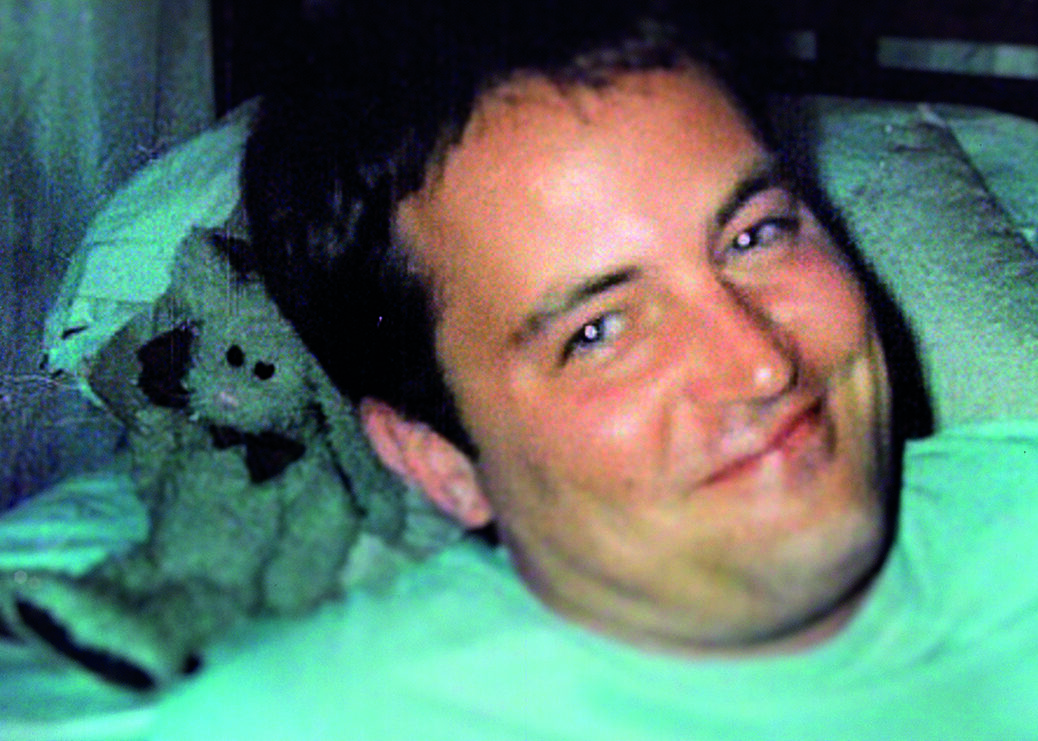
The smudged and weeping clown is a face well worn into our imagination, and it is almost too obvious an irony that so many of the greatest comedians led lives of tragedy. Matthew Perry, who died in 2023 at the age of 54, follows in a sad lineage that includes Peter Sellers and Robin Williams. His life has now been memorialised in this documentary, a compilation of interviews and archive footage that is too cutely titled The One about Matthew Perry.
You get the sense from watching it that Perry, a student of comedy and its collaterals, knew exactly what was happening to him and could have described the arc to come. A few weeks before he was cast in Friends, he prayed, “God, you can do anything you want to me, just please make me famous,” a line he was to quote and requote with lacings of remorse in years to come. As for his character in Friends, Chandler Bing, Perry called him a “guy who was trying to distract everybody from how miserable he was all the time by trying to be funny”.
These emotional vectors tore Perry’s being in two – an ego desperate for company that found fortune and glory all too thin a crowd.
For Friends sceptics, Chandler was always the series’s most engaging and unpredictable character, and Perry its most gifted performer. Admittedly, it was not hard to stand out alongside the neat bore, the gloomy nerd, the hot princess, the juvenile moron or the nomadic weirdo. But Chandler was a streak of vinegar in this saccharine sundae, and ranged beyond the wall-eyed warmth that fans of this show apparently admire. He alone seemed conscious and self-conscious, and was justly given all the iciest lines. This series lingers appropriately on Perry’s comic formation, his obsession with forebears like Chevy Chase and Dick Van Dyke. It was from these influences that Perry perfected Chandler’s explosions of physical improvisation, particularly those wild and skittering legs.

But this is only fractionally a documentary about comedy or even Friends; more space is given to the family and frailties of Matthew Perry. He was born halfway inside showbusiness, which might explain his desire to let it consume him fully. His father was the actor and singer John Bennett Perry, but his parents divorced early. As a boy, Matthew would phone up his father from Ottawa to find out what shows he was in; the only way to see him was on television. He followed his father to Los Angeles, kicking about bars with other young actors, and developing the taste for liquor that would form his first addiction. Friends arrived when he was 24, and with it came money and houses and a relationship with Julia Roberts. But Perry’s particular fate was sealed in 1997 when, filming Fools Rush In, he came off a jet ski. Like millions of other Americans, he was prescribed Vicodin. Opioids ravaged his body for the following two decades, and while they were not the direct cause of his death, they ruined the rest of his life.
This three-part documentary series is oddly shaped. The Friends era is over halfway through the second episode, and so in truth is Perry’s career; the years to come see him cycle in and out of rehab just as he cycled from unsuccessful pilot to cancelled series. The main narrator is his half-sister, an affecting presence, but behind her we glimpse the Didion-ian crowd that Perry fell in with in his extended half-life. As he tumbled through romantic relationships, we get the strange sense that recovery companions and AA girlfriends were his closest comforts. It was they who inspired him into his advocacy for a compassionate penal system for drug addicts, and in late-career turns on Newsnight.
But advocacy couldn’t prosecute Perry’s own demons, and he almost died in hospital after a burst colon brought on by opioid abuse in 2018. And it is also only in this California milieu that you would treat drug issues with more drugs. In his final years, Perry was prescribed a course of ketamine to treat depression, and it was an excess of ketamine, criminally acquired, that would eventually kill him, as he drowned in his jacuzzi. Perry’s death is drawn out in a way that stretches the bounds of taste: perhaps his friends did give the producers permission to film them weeping, but I did not need to intrude on them for so long. But, as they all bleakly acknowledge, it’s a darkness that he would have found the funny edge of. As Perry told Bill Maher when promoting his memoir, “Reality is an acquired taste.”
The One about Matthew Perry
Netflix
[Further reading: It Gets Worse couldn’t be better]
Content from our partners



Related
This article appears in the 28 Oct 2026 issue of the New Statesman, Bin the Budget
Join the debate
Subscribe here to comment