
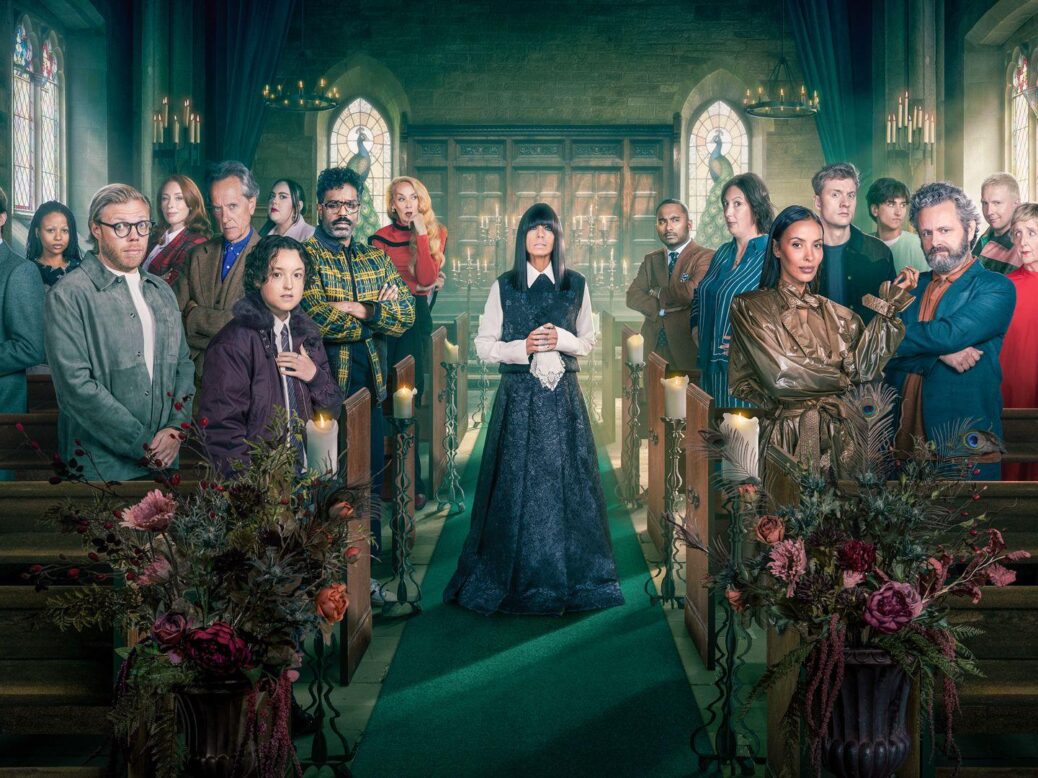
Television used to hold a mirror up to the nation. When X-Factor was at the height of its powers in the late 2000s, this was a land of optimists who understood the moral of Simon Cowell’s universe: the right amount of talent, ambition and cruelty could take anyone to the stratosphere, or at least a brief stint at Christmas number one. The difficulties of the intervening decade stamped out that mode of aspiration, naturally. And, well, who has spoken of X-Factor since 2012?
And so, if mainstream tastes can still tell us anything about the country (more on that “if” later), what to do with Celebrity Traitors? Last season it received on average 13 million views per episode – Question Time is lucky to get a tenth of that. And if you are an establishment celebrity in 2026 it is where you want to be seen: Amol Rajan is launching his solo media career alongside his appearance in season 2; Michael Sheen, Richard E Grant, Miranda Hart and Romesh Rangathan will be there too. Anyone in search of the hollowed out corpse of the monoculture, look no further.
(If you needed more proof of the Celebrity Traitor’s cultural hegemony, take Strictly Come Dancing’s 2026 roster: a celebrity dog trainer, “a world-renowned conceptual hair stylist”, and a football influencer. 2016 winner Ed Balls was hardly George Clooney, but would rank as a turbo-A lister on this year’s line-up.)
And so, if the national id is no longer captured by Cowell’s trademark snarl, or Anton Du Bec’s veneers – if Britain is no longer a nation of wannabe pop stars (individualistic ambition) or amateur celeb tap dancers (midwit escapism) – then what is it? Was Alan Carr giggling in the Scottish highlands the defining onscreen moment last year? I am worried that the most serious artistic question Britain asked itself in 2025 was thus: Is Stephen Fry good at lying? I should be able to answer that question with a better question: who cares? 13.5 million, so it goes.

We can make plenty of lofty attempts to interrogate what the popularity means. Maybe Britain is a nation with a new interest in behavioural economics, a library full of Daniel Kahneman’s lesser known contributions (Judgment Under Uncertainty: Heuristics and Biases, 1982 suddenly flying off shelves, is it?). Or perhaps the British Citizen of 2026 is compelled by deceit and trickery. The lingua franca of the entire conceit is to lie on TV for personal gain, after all. Is this just proof (as the Times asked earlier this year) of a sad, nihilistic, gloomy world? A “symptom” of our “low trust society”.
No. The Traitors invites the vanguards of Britain’s middlebrow, light-hearted cultural establishment to engage in low-consequence dishonesty for our benefit (something to talk about with a colleague tomorrow!). At the same time it encourages us to stay at home three times a week, while believing we are participating in The Culture – because, hey, I suppose it’s better than being on your phone. This is entertainment with no bite and certainly no curl of the lip; it makes the satire once general to the small screen seem a minority pursuit. Britain’s id in 2026? Deferential homebodies, somehow still in hock to the long arm of Stephen Fry.
[Further reading: Why men can’t ask women out anymore]
Content from our partners



Related

Join the debate
Subscribe here to comment