
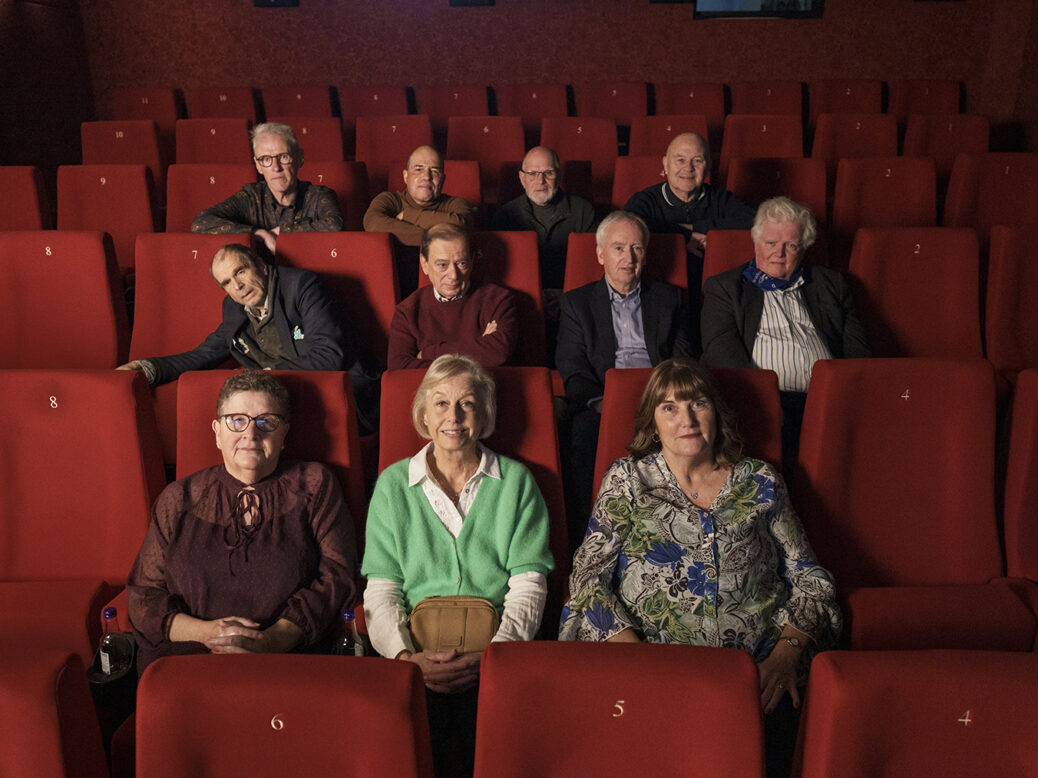
What would Seven Up! look like now? That’s the thought I couldn’t get out of my head as I rewatched some of the series past highlights in preparation for the final instalment.
Tonight (15 September), ITV will broadcast 70 Up, and British viewers will have one last chance to check in with the now-septuagenarian cohort – ten boys and four girls – they first met back in 1964 at the age of seven, when television was black and white and London Zoo still had polar bears. Every seven years since, a camera crew has turned up to see how they’re getting on: first jobs, first loves, marriages, divorces, children – even, more recently, death.
The documentary series was the brainchild of Granada Television, with most of the films directed by Michael Apted, who as a researcher was tasked with finding the children for the first film. It was originally envisaged as a standalone, inspired by the Jesuit maxim “Give me a child until he is seven and I will give you the man.” These seven-year-olds, in other words, were meant to be a portal into the future. As the introduction explains, “We brought these children together because we wanted a glimpse of England in the year 2000.”
Apted himself has been more candid about the class element of the show, particularly about his selection: “I wanted to make a nasty piece of work about these kids who have it all, and these other kids who have nothing.” Seven Up! duly shows three boys (Andrew, John and Charles) from an elite pre-preparatory school outlining their paths to Oxbridge and opining about reading the Financial Times when they’re not singing in Latin. They are juxtaposed with one who has to walk four miles to a one-room village school in Yorkshire (Nick), and two from a depressingly austere children’s home in the East End of London (Paul and Symon), one of whom asks, “What does university mean?” The girls, meanwhile, either practise ballet and speculate about hiring a nanny from the headmistress’s chintzy office of a smart London day-school (Suzy), or aspire to work in Woolworths (Lynn).

Seven Up! never intended to be a test of its own assertion that a child’s life prospects are set before they are old enough to even realise it. But by turning what was meant to be a one-off programme into a septennial series, that’s exactly what it became. Over six decades, the battle between aspirational social mobility and pre-ordained outcomes was put under the spotlight. And, for the most part, the well-to-do children remained well-to-do (two of the prep-school boys did indeed go to Oxbridge and into the law, while Suzy married a solicitor and was shown living in exactly the type of house you’d imagine). The rest move up, down, and sideways on the ladder in ways Apted and the producers could never have anticipated.
Crucially, some of the children defied the expectations set by their humble upbringings. Nick, the Yorkshire villager, went to Oxford then moved to America to work as a nuclear physicist (though he later abandoned research to work in academia). Peter, a young Liverpool boy who wanted to be an astronaut, zigzagged through life, featuring as a disillusioned teacher in 28 Up and dropping out of the show after his political comments attracted criticism, but returning in 56 Up (having subsequently become a lawyer) on the condition Apted filmed his band. He got a record deal and a musical career out of it, and published his first novel in 2025. Neil, from the same Liverpool suburb, dropped out of university and lived in a squat, but later completed a degree and spent 20 years in local politics.
Then again, even the context of social mobility versus class falls apart with some of the stories, namely that of Tony from the East End. An archetypal cockney lad with a father who was in an out of prison, he dreamed of being a jockey; when his horseracing aspirations fell through became a London cab driver, and later ventured into acting. Tony never showed much interest in university, but that didn’t bar him from financial success. In 42 Up he proudly showed off the large family home he’d been able to buy in Essex; by 49, he had another house in Spain. Nor was he an anomaly in his family. In a recent interview to mark 70 Up, he revealed “In 1970 my sister bought her first house, in Leytonstone, east London, for £11,000,” noting that the same house today would be around £400,000.
This illustrates the problem with trying to understand what has happened to “aspiration” through the lens of university and entry into middle-class jobs. It’s a blind spot the 2025 State of the Nation report from the Social Mobility Commission highlighted in stark terms: “To be blunt, too much attention has been spent on improving the outcomes for a small number of people from lower socio-economic backgrounds who can get into elite occupations, and on tracking the proportions of people within these elites from different backgrounds. Far less attention has been spent on what social mobility means for everyone else.” It matters that Nick was able to go from a village school to Oxford and become a university professor – but it matters too that Tony did nothing of the sort, yet was still able to vastly improve his family’s standard of living.
It has been decades since anyone could buy a house anywhere near London for £11,000, even accounting for inflation; driving a taxi (or, rather, an Uber) is no longer the route to a holiday home in Spain. On paper, the progress in social mobility in Britain is dramatic: in 2019, the proportion of young people in England going to university passed 50 per cent, unimaginable for the Seven Up! cohort. When they were 18, the figure was around eight per cent. But what that progress means has changed. Many more students now graduate university, but they do so saddled with debt and enter a labour market of stagnating wages and insecure work. That also makes it harder for those who don’t attend university. It’s hard to picture a young person today building a successful career as a librarian (Lynn) or university administrator (Sue) without a degree or family connections.
So: what would Seven Up! look like now? For a start no one would ever make it – audience attention spans are too short for a 62-year series, too impatient for seven-year waits. And that’s before you consider the ethical implications of putting unwitting primary school children who can’t possibly consent in any meaningful way inside a media goldfish bowl and inviting the nation to judge them. We have an over-supply of exploitative reality TV full of adults jostling for attention – we don’t need to enlist unsuspecting seven-year-olds.
But mostly it wouldn’t work because class and income have gradually unravelled since 1964, flattened in the middle and elongated at the ends. The daughter of a plumber is now doing the same degree as the son of two university-educated professionals, graduating with the same amount of debt into the same rocky labour market. The decisions they make from there – what career to go into, where to live, even who to marry and if and when to have children – would depend on how much financial help they were offered by their parents.
Indeed, the SMC’s State of the Nation report points out that while social mobility in this country might not be the crisis it is often assumed to be, there has been a marked decline in how many children earn more than their parents when they reach adulthood. It warns that “the younger generation appear to have more restricted opportunities than their parents, unless they have access to inherited rather than earned wealth”. The premise of Seven Up! was that these children’s prospects were set by their backgrounds – the schools they went to and the expectations placed upon them. That still matters to children today, but more important is whether they can expect parental gifts or inheritances.
The original cohort wouldn’t have considered any of this when they were first recruited as seven-year-olds. No doubt at 70 they have seen enough of life to draw their own conclusions, soon to be shared with the nation as their final act of chronicling Britain’s social history. But there is one thing we’ve learned from their lifelong contribution: reality is messier than either the Jesuit maxim or Seven Up!’s lofty early assumptions could ever account for.
[Further reading: Westminster’s new reading list]
Content from our partners

Related

Join the debate
Subscribe here to commentI think the article mistakes post war social mobility with the veneer of secure and well paid employment which is dependent on a growing economy. The 1963 Robbins Report expanded the number of university places but these were mostly snapped up by middle class children who had access to the information to navigate the entry system. Working class kids did not have this information but then again there were lots of other working class jobs were well paid. As a free school meals/lower working class kid myself I managed to get to univeristy in 1975 to study biochemistry at the University of Bath. It was wall to wall middle class students! Only 8-10% of school leavers went to university at that time and there were well paid jobs up until about 1979 when deindustrialisation started. The problem now is that 50% of school leavers end up with a degree but there are so few well paid jobs of any kind left to apply for whatever class you come from. In the end due to credential inflation I had to carry on and get a PhD to give myself a better chance of getting a middle class job and I managed to stay there. Thankfully I am retired now, it was a hellva ride!
Similar experience for me in late 70s Oxford but fair to say that life is what you can make of it and the Blair revolution of opening higher education to 50% of the population has merely accentuated the ability of the 7 % from private education backgrounds yes on occasion to use parental wealth or social networks to stay on top,but also to apply their inbred or taught resilience to succeed where the rest fail.