
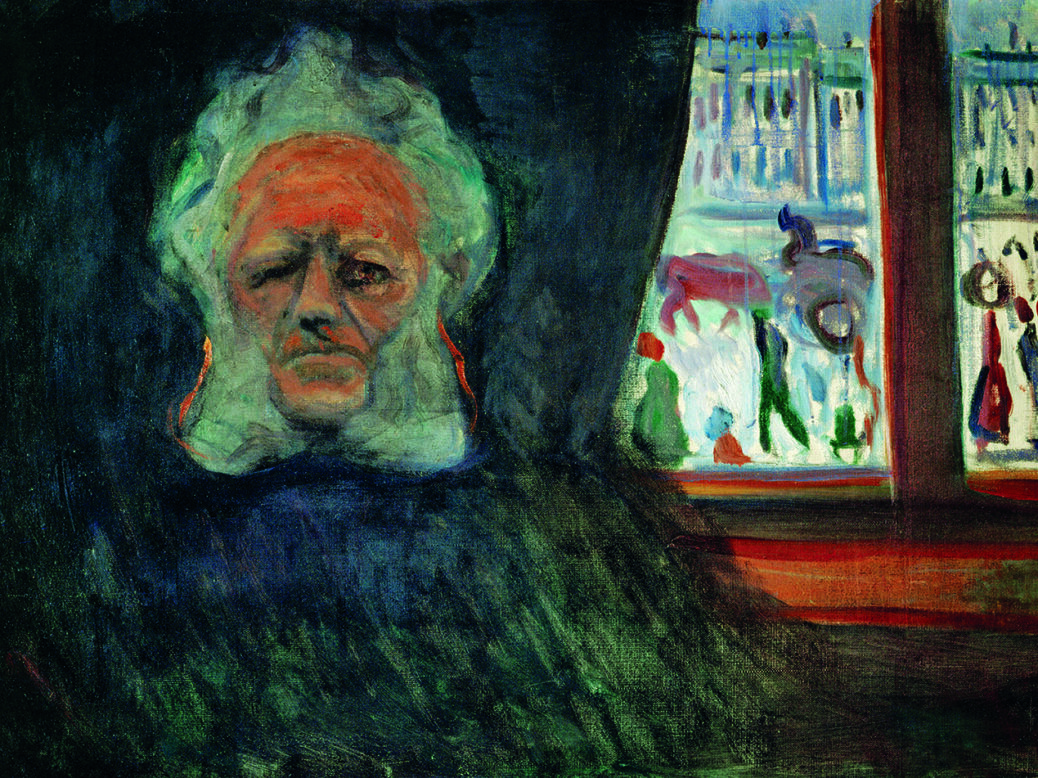
In two years’ time, world theatre will celebrate the bicentenary of the birth of Henrik Ibsen, and people will observe that the great Norwegian playwright wrote many three-act dramas but also lived one. Born into a well-off family, Ibsen was six when his father went bankrupt, and – eight years later – was apprenticed to a pharmacist, one of whose servants would bear him an illegitimate child. Gaining a reputation as a writer of historical verse dramas, Ibsen became director of a theatre in Kristiana (now Oslo) which failed and closed in 1862. Two years later, overwhelmed with financial difficulties, alcohol and depression, Ibsen left Norway for Germany and Italy, an exile that would last for 27 years.
It was thus in the bright Mediterranean sunshine that Ibsen wrote the prose dramas, set among the professional classes of contemporary Norway, on which his reputation rests. (Despite their bleak Nordic settings, Ghosts was written in Sorrento and A Doll’s House in Amalfi.) Among the early plays in this genre are the directly political Pillars of the Community, about a capitalist whose corrupt past dealings catch up with him, and An Enemy of the People, about the pillorying of a whistle-blower who exposes a public-health scandal against the economic interests of his town (a plot that re-emerged in the novel and movie Jaws).
But most of the exile plays – from A Doll’s House to Hedda Gabler – are about the crippling social and psychological constraints that society imposed on married women. In his The Quintessence of Ibsenism, his admirer George Bernard Shaw defined Ibsen’s aim as challenging the “idealism” of late Victorian society (defined as the imposition of impossible limitations on personal freedom in a social world determined by the interests of men), countered by the realism of women who stand up to them.
Acknowledging that this might not be Ibsen’s view of his own work, Shaw insists that “unless Woman repudiates her womanliness, her duty to her husband, to her children, to society, to the law, and to everyone but herself, she cannot emancipate herself… In that repudiation lies her freedom”. Ibsen’s increasing pessimism about this project is shown by its diminishing success. In A Doll’s House (1879), Nora breaks free of the shackles of her marriage (her slamming of the marital door behind her being the most impactful sound effect in 19th-century theatre). In Ghosts (1881), Mrs Alving tries to leave her husband for the clergyman she loves, but he rejects her on moral grounds. In The Lady from the Sea (1888), Ellida asks her husband to set her free and then decides not to leave him after all. In 1890, Hedda Gabler’s only way out of a loveless marriage is suicide.

After Hedda, Ibsen returned to the cold, stern country of his birth, and shifted – in his last plays – from realism into symbolism. Acting as a bridge between the two genres, the first last play was The Master Builder (1892), which I translated for the Chichester Festival Theatre in 2010, and which is now being revived at the Arcola, directed by Mehmet Ergen.
Like two of the other last plays (John Gabriel Borkman, 1896, and When We Dead Awaken, 1899), The Master Builder is about an arid marriage, menaced by the reappearance of a woman from the husband’s past, and ends with his dangerous ascent into a threatening unknown. The autobiographical background of the play is the elder Ibsen’s fondness for much younger women (among them Emilie Bardach, met in the Austrian Tyrol, and the Norwegian concert pianist Hildur Andersen).
In The Master Builder, written on the cusp of realism and symbolism, Ibsen invites us to read the storyin three different theatrical (or, in one case, poetic) languages. It is first of all a complex, subtle and well-observed psychological drama, in which Halvard Solness runs a highly successful house-building business, employing a now failed architect whom he ruined, the old man’s bookkeeper niece (infatuated with her employer) and a talented young assistant who Solness fears will outdo and overtake him. Solness’s childless wife, Aline, is increasingly aware of the bookkeeper’s situation, and is bitterly dismissive of a new house (with a fine tower) which Solness is building for her (“it will never be a home for me”).
Into this acrid web of increasingly unrepressed resentment marches a young woman who, ten years earlier in her town in the mountains, saw Solness climb up a church steeple he had built to hang a wreath on its weathervane. Infatuated by his grandeur and bravery, she has admired him ever since. Hilde’s arrival provokes the exposure and unravelling of all of the above, and culminates in her insistence that Solness prove his undiminished powers by repeating the climb, this time up the tower he has built for his wife in their new house next door.
The mechanism of the unravelling is familiar: events of the past are brought crashing into the present, illusions are shattered and guilt is confessed. There are two sins to atone for. Hilde reports that, after his climb years before, Solness had embraced and kissed her in her father’s living room, which Solness at first denies and then kind of admits (“let’s say I did it”), before promising that within ten years he’ll return and spirit Hilde away to a magic kingdom, the pledge Hilde has come to redeem. The second sin is about the origins of Solness’s success and wealth, and isn’t really a sin at all: the marital home burned down accidentally, allowing Solness to build profitable residences on its land. However, the icy night infected Aline with a fever which poisoned her two tiny boys and rendered her infertile. It wasn’t his fault, but – like his kissing of the 13-year-old Hilde – he fears it might have been something he secretly wanted, and this suspicion wracks him with guilt.
The entry of guilt into the matter opens the door to the third dramatic mode: symbolism. On top of the church steeple, Solness believes himself to be in battle with the Almighty, renouncing the god who destroyed his wife’s fertility to the sound of singing and harps. But also, perhaps to excuse himself, perhaps genuinely, Solness believes himself to be in command of vampiric demons, who do his selfish bidding. Increasingly, Hilde’s magic kingdom (later a castle in the air) becomes a metaphor for their ethereal future together.
These three modes have allowed many different, even contradictory, interpretations of The Master Builder. In Lila Raicek’s 2025 updating, My Master Builder, Solness is an egoistic philanderer, and the play centres on his wife’s rage at her husband’s infidelity. In another recent updating – Zinnie Harris’s 2017 (The Fall of) The Master Builder – the young woman comes to the realisation that she has re-entered the predatory architect’s life not to claim a kingdom but to avenge abuse. In earlier times, the play was seen as an attack on demon-worship or an affirmation of the need to stick with God. In Britain, most managements to which the play was first submitted found it incomprehensible, and the Daily Telegraph dismissed it as “written, rehearsed and acted by lunatics”.
For me, the play’s enduring strength is that its three modes allow the audience to judge the characters’ actions in contradictory ways – as Shaw has it, a play that makes “the spectators themselves persons of the drama”. If Solness’s guilt is a pose and Hilde’s esteem just a ploy, then the play is not just less interesting but it also gives the audience nothing very interesting to do.
Something contemporary spectators might want to do is to recall that a man who wrote some of the greatest female parts ever written, in plays that anatomised the institutional entrapment of marriage more acutely than anyone else, railed in his latter years against “feminist fanatics”, opposed universal suffrage and, in three of his late plays, elbowed women off centre stage, turning his eye on the very masculinity of which he had been such a stern critic.
Master builder Solness, the embezzler John Gabriel Borkman and the misanthropic sculptor Arnold Rubek (When We Dead Awaken) are all selfish men who have imprisoned their wives in loveless marriages. As Solness clambers up the scaffolding towards the summit of the steeple, alongside the harps and the singing, can we hear the slamming of a door?
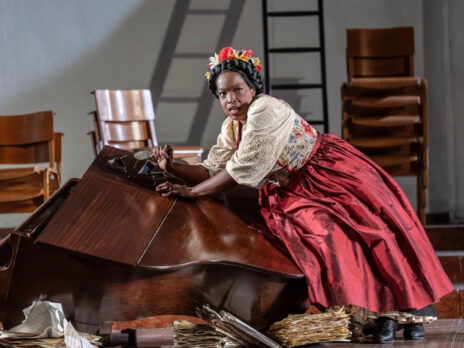
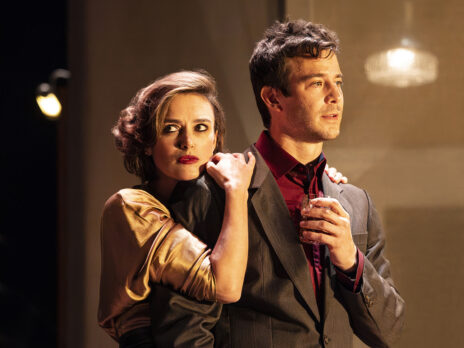
David Edgar’s adaptation of The Master Builder is at the Arcola Theatre, London E8, until 21 November
[Further reading: Britain’s economy is ready to blow]
Content from our partners



Related

This article appears in the 14 Oct 2026 issue of the New Statesman, Fool Britannia
Join the debate
Subscribe here to comment