
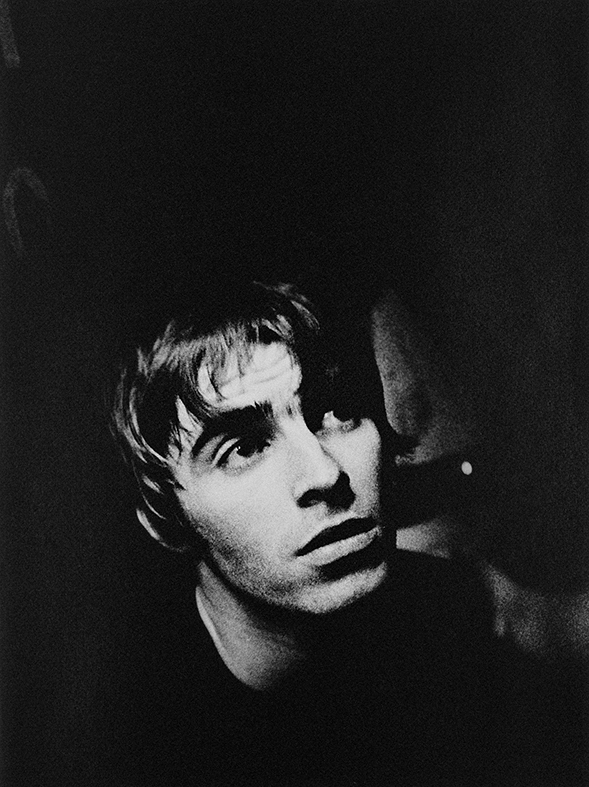
In 1994 I stood three feet from Liam Gallagher in a small dark room and watched him do almost nothing: hands behind his back, chin up, that adenoidal snarl pouring out of him. My boyfriend at the time was a photographer, one of the first to shoot Oasis, and he’d brought me along. He’d played me a couple of the songs, but really I was there for the ride.
And then I saw Liam. Bloody hell. It wasn’t the voice alone, though the voice was extraordinary. It was the certainty, the total, unembarrassed self-belief, at a volume most people can’t manage in private. My jaw was somewhere near the floor. I fancied him beyond all reason and, while I never screamed at them, followed them round the country or threw my knickers at the stage, I listened to them constantly and went to every gig I could.
More than 30 years later, that night came back to me as I sat in the cinema with my daughter watching Oasis: Don’t Look Back in Anger. Before we went in, she told me that her boyfriend’s mum had cried when she saw it. I didn’t think I would. I was wrong. I cried loads.
What I hadn’t expected was quite why. It wasn’t seeing Oasis back together. It was the shock of recognising my own youth in it: the songs, the crowds, the clothes, the swagger, all of it suddenly enormous on a cinema screen.

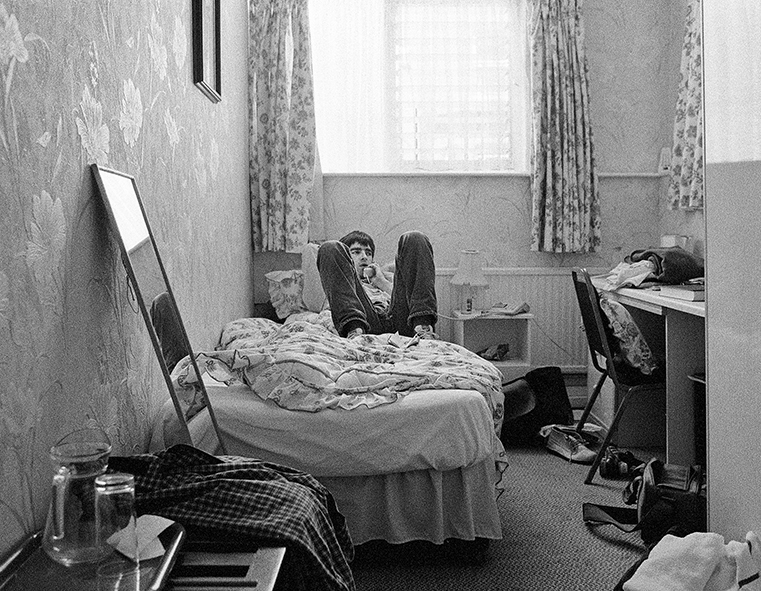
And then, a few minutes in, one of my ex’s photographs appeared on the screen: Noel sprawled across a floral bed in a cramped room, trainers still on, looking impossibly young. I’d first seen that picture more than thirty years earlier. Whatever critical distance I’d brought into the cinema went at that moment.
His job did occasionally come with excellent perks. There were VIP passes, and there were nights I only half remember, because it was the nineties, and the nineties did to memory roughly what the sixties are supposed to have done. But some moments have stayed particularly sharp: Maine Road, 1996, sitting next to Noddy Holder in the VIP seats while Oasis played Cum On Feel the Noize. Noddy sang along to every word of his own song, handed back to him at football-stadium volume by the biggest band in the country, a scarf held aloft above his head for the duration, enjoying every single second of it.
A few months later came Knebworth, where, as of this week, they are headed once more: four nights next September, 31 years on. The first time round was two nights in a Hertfordshire field in front of a quarter of a million people, the biggest outdoor shows the country had ever staged, and the tickets were a national event in themselves. Around two and a half million people spent a day that May hammering redial or queuing outside record shops, and every last ticket was gone within hours.
I was spared the scramble. My ex had passes again, and the record company laid on a coach, so a big giddy gang of us were bussed up together, the anticipation building the whole way. By rights I shouldn’t remember any of it. But I do, or enough of it: the scale, the noise, the sensation of standing at the exact centre of the decade. It was epic, back when epic still meant something more than a good sandwich.
There is, of course, an argument for knowing when to leave well alone. Last year’s reunion was supposed to be the last word. I understand the worry and I can’t feel it. I was in that field in 1996, at the shows the whole legend rests on, and the prospect of more doesn’t diminish the memory. It lets in the millions who tried for tickets last summer and never got near a stadium. For most fans, this is simply a second chance. Even the ticketing has apparently been chastened, with fixed prices this time and no algorithm quietly inflating them while you queue. Whether Knebworth can possibly bear the weight of all that memory is another matter. I’d still go.
What I loved about Oasis then, and what the film understands completely, is that they were a form of permission. The nineties, for me, were rave culture and its aftermath: a decade that had decided, more or less collectively, to go out and enjoy itself. Oasis were the house band for that decision.
And there it is again in the film, all over the world. Losing themselves completely, singing until their voices go, arms around strangers, grown men crying, parents and children disappearing into the same songs. There is something almost startling about watching people surrender themselves so completely to an experience now, when we’re so used to documenting our lives while we’re supposedly living them. And God, how we need it.
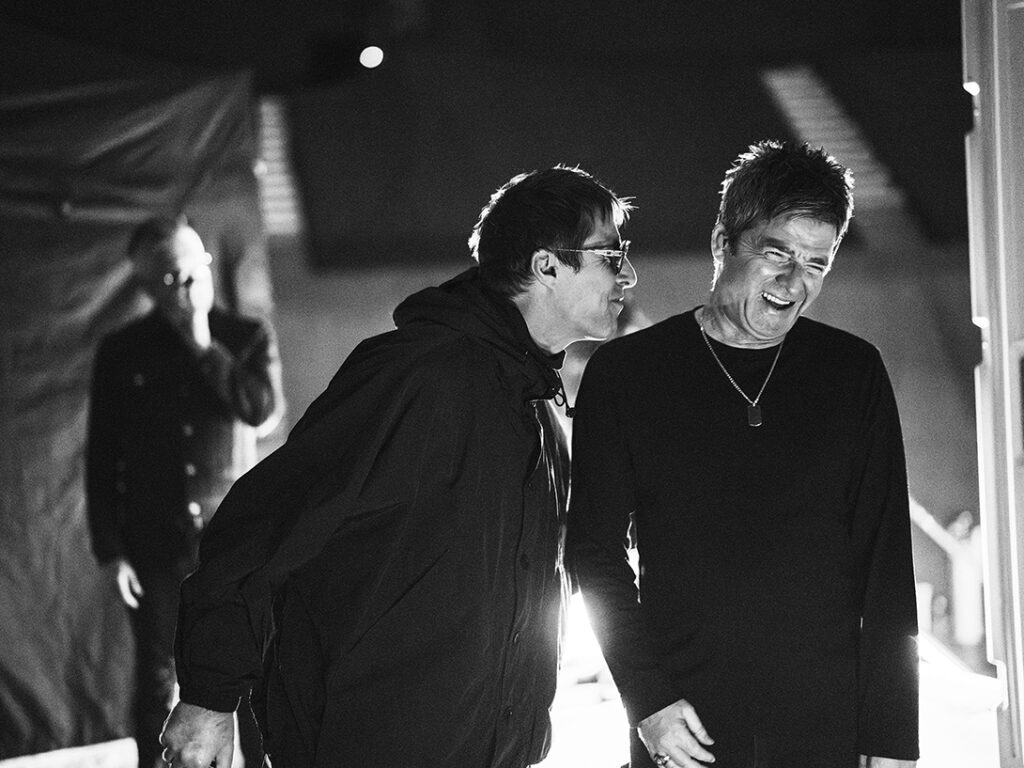
Liam’s prescription is rather simpler. “Put the phones down, that’s a start,” he says towards the end of the film, before advising everyone to sing their hearts out, get drunk, fall over and piss their pants. “There’s always tomorrow to clean that mess up.” And that, really, is what Oasis have always offered: permission, for a couple of hours, to stop standing outside yourself watching and just fucking well go for it.
I was a Britpop girl to the core, mad about Pulp, fond of Blur and most of the rest of the scene, but Oasis had an energy, an aggression, a sheer full-on-ness the others didn’t. And no other band had Liam. Pulp were clever and knew it; Blur had been to art school and wanted you to know it. Oasis had none of that anxiety about wanting things too much. They wanted to be the biggest band in the world and seemed to have no doubt that they would be. That complete absence of self-doubt was intoxicating to me. I was in my early twenties and painfully insecure; Liam appeared to have been born without the part of the brain that wondered what anybody else thought. Standing in a crowd while he sang was like being handed a sick note excusing you from self-consciousness.
And then, of course, it all blew up. Noel walked out in 2009 and for the next 16 years the brothers seemed to take almost as much pleasure in insulting each other as they once had in being in a band together. The barbs were funny, often spectacularly mean, and so relentless that the idea of a reunion gradually became a joke in itself. People kept asking, because people always did, but nobody seriously thought it would happen. I certainly didn’t. Which is why the moment they finally walked on stage together again mattered before they’d even played a note. The songs were always going to be there, the astonishing thing was that they were.
I never stopped listening to Oasis, and my daughter grew up hearing a lot of them. There’s a photograph of Liam on her bedroom wall, taken by my old boyfriend, who is still a dear friend. He took his own daughter to the reunion at Wembley last summer; I took mine. I’d tried and failed to get tickets and had pretty much resigned myself to missing the reunion altogether. But my partner, knowing how much I wanted to go, somehow found two. We were up in the gods because that was what he could get. It didn’t matter. When Live Forever started and I stood there singing it with my daughter, a song older than she is and half again, while the grown men around us wept openly into their pints, the only word that fits is religious.
People say that about Oasis crowds and it sounds like hyperbole until you’re in one. The documentary keeps circling the same idea, and everyone in it reaches instinctively for the language of faith. Liam’s own word, deployed constantly, is “biblical”, and for once in his long career of magnificent overstatement it’s doing honest descriptive work.
The film goes in big on forgiveness too, which is the most religious idea of the lot, and the one the whole enterprise depends on. No forgiveness, no reunion. One of my favourite moments hands the pulpit to a vicar, who describes looking out of his window one day to find hundreds of people walking past, all in the same direction, all heading for one of the reunion gigs. A pilgrimage in everything but name.
And this is the film’s real gift. I saw the reunion from one seat, a long way up. The film gives you everybody else’s view: the queues snaking round stadiums from dawn, thousands of people packed together singing every word, fans in Cardiff and Manchester and on the far side of the world, kids hearing the songs live for the first time beside parents hearing them again after 16 years. Watching it, I got to attend the gig I was actually at over and over, from everywhere.
The brothers, meanwhile, are on top form, softened slightly by age and perhaps by the sheer scale of the welcome back, but still funnier than almost anyone else allowed near a camera. There’s a brilliant moment when Noel watches his brother balance a tambourine on his head mid-song, a move he freely admits would make him look an utter c***, and yet when Liam does it, “it’s the greatest thing I’ve ever seen.”
It’s hard to argue with him. What Noel seems to recognise, perhaps more clearly after all these years apart, is that Liam has always been unapologetically himself. “I’m free to be whatever I / Whatever I choose,” Noel wrote more than thirty years ago. Liam may be its most perfect expression. He’s 53 now, off the booze and cigarettes, standing stiller than ever. But he’s still got it, whatever it is: the thing I saw from three feet away in a small dark room in 1994.
Halfway through the film, my daughter leaned over to me in the dark.
“God,” she whispered, “he’s still cool, isn’t he?”
[Further reading: Sydney Sweeney has made a deal with the devil]
Content from our partners



Related


Join the debate
Subscribe here to comment