
Lance Oppenheim is suddenly a director to be reckoned with. Still only 30, he has made a series of innovative and acclaimed documentaries, from an early short about a long-term cruise passenger, The Happiest Guy in the World, to Some Kind of Heaven, about the world’s largest retirement community in Florida, and Spermworld, about unregulated sperm donors and their recipients.
But his fame has exploded with the release of You Can See Everything in the US. This three-hour documentary about the Theranos fraudster Elizabeth Holmes and her partner Billy Evans has had rave reviews and the biggest opening for a documentary since Fahrenheit 9/11 in 2004. It presents the impenitent Holmes in the weeks before she went to prison and then continues the story two years later, recruiting Amanda Seyfried, who played her on TV, for a series of re-enactments. It’s said to be mind-boggling.
We’ll have to wait until 20 November for its release in the UK. In the meantime, Primetime, Oppenheim’s first drama feature, starring Robert Pattinson, is in its way no less the story of a person consumed by their own myth.
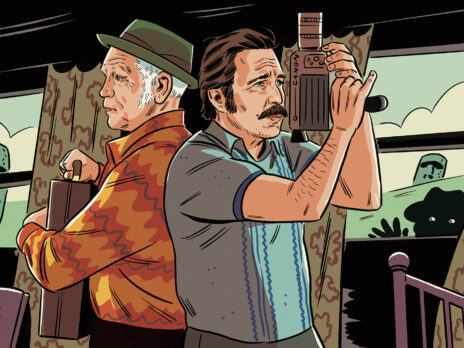
To Catch a Predator was a reality TV sting series, presented by Chris Hansen, that ran in the States from 2004 to 2007. In it, adult men were lured to staged houses in cities across America in the belief that they were meeting underage teenagers for sex. Filmed by hidden cameras, they were then confronted by Hansen, using catchphrases such as, “Why don’t you take a seat over there?” and, “You see how this looks, right?”

Many of these “predators” were duly prosecuted, but the series came to an end after Hansen and his crew, enthusiastically backed by the local police in Texas, pursued one subject, a district attorney, to his own house, where he shot himself on camera. NBC settled out of court with the man’s sister. Hansen, though, one of those Teflon celebrities, currently runs his own true-crime streaming service, TruBlu, presenting a similar series called Takedown with Chris Hansen, and a podcast, Predators I’ve Caught.
Oppenheim had long been fascinated by Hansen and his reputation, which was why, a couple of years ago, his wife paid $40 for Hansen to record a Cameo video, in which he congratulated Oppenheim on the success of Spermworld, before celebrating his own projects. It set Oppenheim thinking.
The downfall of To Catch a Predator has already been the subject of a regular documentary last year, Predators, directed by David Osit. Oppenheim, with debut scriptwriter Ajon Singh, takes a different approach, which he has dubbed “docu-fantasia”. That is, he has assumed the right to dramatise, to fictionalise, the facts of Hansen’s life and career as he pleases. There’s no problem doing this in the States, where public figures face a high bar in defamation cases and the courts grant such dramatisations First Amendment protection (Donald Trump threatened to sue the makers of the film about his younger life The Apprentice, but managed no more than a cease-and-desist letter).
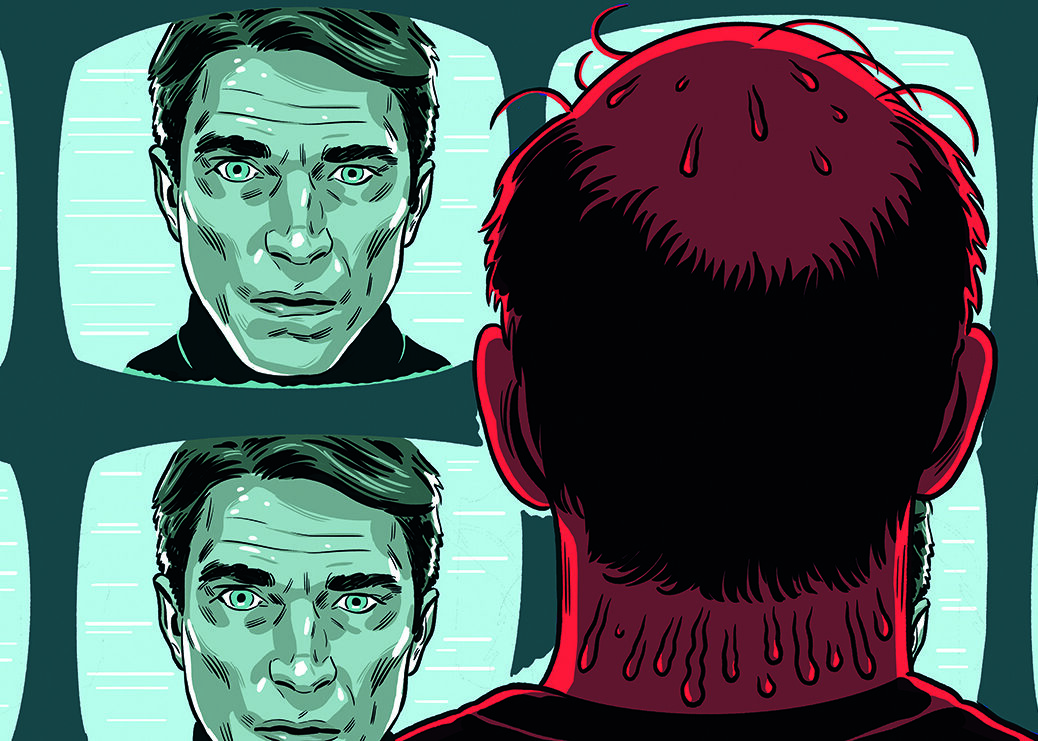
Primetime, filmed in quasi-documentary style, mixing video and digital quality footage into a weird collage, thus takes the dubious mixture of fact and fiction that To Catch a Predator employed and turns it on its head. Here’s Hansen caught by fiction. “Why would they not contact or consult me? Because they don’t care about the facts,” he haplessly protested to the Hollywood Reporter.
They do care about the performance, though. Pattinson is fantastically good as Hansen, not just capturing his mannerisms and speech patterns but giving us a man completely overtaken by his own celebrity and mythos, coming to believe that “there used to be a pillory in every civilised town – now there’s a TV in every civilised home and I’m on it”.
Nothing he does is acting, the fictional Hansen claims. He even tells the actor recruited as a teenage lure for the predators, “Decoy Dan” (winningly played by Skyler Gisondo, a former child actor, now 30: great casting), that they’re cleansing the world of an ancient evil, a darkness that exists outside of space and time.
Primetime is clammily compelling until the last act which, ironically, because it sticks to the facts, can be seen coming from a little too far. Maybe You Can See Everything bends reality further? Meanwhile, the real Chris Hansen has booked commercials for his streaming service, starring himself, to run before every theatrical showing of Primetime in its first four weeks of release in America. You couldn’t make it up.
Primetime is in cinemas on 30 October
[Further reading: Humza Yousaf’s private war]
Content from our partners



Related


This article appears in the 28 Oct 2026 issue of the New Statesman, Bin the Budget
Join the debate
Subscribe here to comment