
“I’m better than you are!” “I’m better than you are!” Those lines are from the 1964 movie, Fail Safe, screamed by Colonel Cascio, a right-wing officer in the American Strategic Air Command. After he is told to order the shooting down of American planes mistakenly on their way to drop a nuclear bomb on Moscow, Cascio has a violent breakdown in the SAC control room. Rather than follow that command, the purpose of which is to avoid a nuclear war, Cascio tries to seize authority and is dragged away by military police shouting his declaration of superiority over – in his eyes – the Washington elites who gave him his orders.
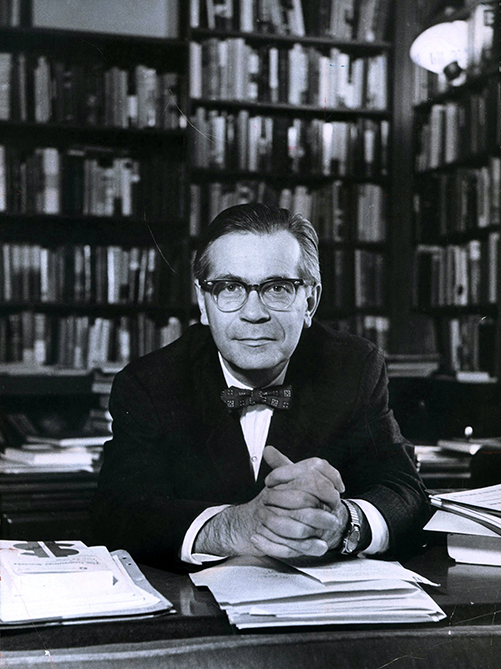
The year after the movie was released, an obscure Columbia University historian named Richard Hofstadter published a book called The Paranoid Style in American Politics; some of its essays already been published and almost certainly influenced the making of the film. Though the book traced conspiratorial sentiments from nearly the beginning of the republic, it argued that a sea change had taken place in the nation’s paranoid thinking. The old conspiratorialists believed they were still in possession of their country. They found themselves in a predicament. The contemporary ones believed that the country had been stolen from them. They thought they were in an emergency.
The culprits were plain to see: intellectuals and cosmopolitans, socialists and communists, treasonous figures situated at the very pinnacle of American power. They were abetted by the high taxes and activist government of the New Deal and a “mass media” controlled by foreign agents. Or as Senator Joseph McCarthy put it: the country was in the hands of those who came from “the finest homes, the finest college education, [who had] the finest jobs in government… The bright young men who are born with silver spoons in their mouths are the ones who have been worst.” The ones who thought, insinuated McCarthy, they were better than you and me.
The remedies were also clear. Abolish the income tax. Root out the pampered elites from government and universities, especially Harvard and Columbia – McCarthy brought his inquisitorial power to bear on both. Cultivate and elevate right-wing media personalities who specialise in, as Hofstadter wrote, “turning a tendency towards paranoia into a vocational asset”. Above all, spread the revelation, with evangelical fervour, of “a vast and sinister conspiracy, a gigantic and yet subtle machinery of influence set in motion to undermine and destroy a way of life”.

Leave aside Hofstadter’s stunning prescience. One of the common objections to his argument is that in a country where so much is happening beyond the average citizen’s control or comprehension, paranoia is just another mental technique to get through the day. This is absurdly glib. The radical right in the late 1950s organised a political paranoia on the largest scale. The 1964 Republican presidential candidate, as Hofstadter points out, embodied it: Barry Goldwater, like Donald Trump, made irrational “decisions that reflected the outsider’s cast of mind”. Liberals simply did not exhibit a similar mental state.
Until then, the country had settled its sometimes turbulent contradictions into a liberal consensus that both parties agreed to. There were, in the rarefied regions of the left, genuine Soviet spies like Julius Rosenberg, but a sophisticated national machinery of paranoia was entirely on the right. That was so if for no other reason than that the liberals, including in the right’s eyes a liberal Republican like Dwight Eisenhower – who complied with McCarthy’s attacks on the university when he was president of Columbia – had held power since the New Deal.
Right-wing paranoia, from the John Birch Society to McCarthy, was self-evident. What was the truly vulnerable part of Hofstadter’s argument was also its most brilliant. Its vulnerability lay in the fact that it derived its power from a purely speculative psychologising. The peculiar thing about the revolutionary fervour on the right, Hofstadter observed, was that it was taking place at a time of great prosperity. It wasn’t economic hardship driving people to embrace conspiratorial ideas. It was an anxiety about status. Waves of immigration, combined with the “rootlessness and heterogeneity of American life” made people profoundly uncertain of where they were situated in society. Worse, it made them wonder to what extent they were themselves American.
The “interest politics” that people pursued in order to throw their support behind policies that improved their lives had ceased to be relevant. “Status politics” took its place. Now there was a sizeable group of citizens who made their choices out of unconscious fear, anxiety and rage, rather than the more rational perception of what practical opportunities one type of politics or another afforded them. Hofstadter the former communist – he briefly belonged to the party during the Depression – flipped Marx on his head. It wasn’t material forces dialectically driving history. It was raw emotion, liberated by material comfort.
America’s innovation, the lack of a class structure, had become its tragic flaw. Unable to orient themselves in an ironbound yet clarifying hierarchy, the right sought to steady themselves by means of strong feelings. And nothing steadies like hatred. “We Americans,” Hofstadter observed, “are always trying to raise the standard of living, and the same principle now seems to apply to standards of hating.” Seething with an underdog’s pent-up vitality for getting its own back, the radical right possessed no positive programme for change. Such programmes of reform were for Franklin D Roosevelt’s New Deal eggheads; for socialists and communists who thought collectively to the detriment of individual freedom. Instead, the radical right drew positive energy from a negative space. It called on its supporters to “prohibit, to prevent, to censor and censure, to discredit, and to punish”. They were not Jacksonian. They were Jacobean. They were proto-Trumpian.
Since the object of their rage and outrage was the establishment – government, higher education, media, culture in general – it almost goes without saying that the ancestors of Maga were not conservative. They lacked the “temperate and compromising spirit of true conservatism in the classical sense of the word”. Hofstadter borrowed the term “pseudo-conservative” from Theodor Adorno’s The Authoritarian Personality to characterise this novus Americanus turbulentus. The radical right “show signs of a serious and restless dissatisfaction with American life, traditions and institutions”. In Adorno’s words, “the pseudo-conservative is a man who, in the name of upholding American values and institutions… consciously or unconsciously aims at their abolition”.
No wonder the pseudo-conservatives seemed “to prefer authoritarian allies or none at all”, to express “a persistent fear and suspicion of their own government”, to “want to have nothing to do with the democratic nations of western Europe”. These forerunners of the 277 executive orders Trump has signed in his second term threw themselves, most unconservatively, into a “flood of proposals to write drastic changes into the body of our fundamental law”. Most lethally, like the insurrectionist manqués that they were, they expressed “a profound if largely unconscious hatred of our society and its ways”. They might well have, if they could have, constructed a gigantic fight cage upon the ruins of American institutions and values on the White House lawn.
Hofstadter himself embodied some of the left’s own ruinous flaws, some of which led in a dialectical pas de deux to the radical right. Conservative Americans had other reasons to drift towards radical sentiments than status anxiety. There were the edgier products of popular culture, for one thing, which by the 1960s led to TV shows and movies that took direct aim at traditions and norms everyday Americans held dear. Longing to hold on to the values of God and country, without using them as pretexts to injure other people, did not deserve to be called pathological. It is worth asking whether Hofstadter himself was not being paranoid when he labelled as paranoid other people’s understandable fright about the future.
It is easy to imagine that conservative intellectuals and operatives, offended by the turn of liberals like Hofstadter and others like him towards psychological polemic, gradually set about mainstreaming sentiments that were once confined to the outer limits of the conservative world. Having seen their normative fears and anxieties pathologised as paranoia might well have inspired their descendants, two generations later, to launch an unabashedly pathological personality into the White House in merry defiance. It would have happened in any case. It is hardly Hofstadter’s fault that he observed the likes of McCarthy and the John Birchers and called a spade a spade. Before anyone else, he saw the boundaries of practical politics dissolve into the whirlpools of psychic life. Paranoia is no longer a political style limited to one side. It is a new sort of collective faith. (What is the belief in God but paranoia in reverse.) Like knots of weeds keeping a hillside from collapsing, this dark new religion is probably all that is keeping America from disintegrating altogether.
Richard Hofstadter’s The Paranoid Style in American Politics has been republished by Penguin Modern Classics
[Further reading: Ed Miliband’s dynamism is remaking Britain’s foreign policy]
Content from our partners



Related


This article appears in the 10 Sep 2026 issue of the New Statesman, The World According To Ed
Join the debate
Subscribe here to commentBuilding on the theme of Presidential paranoia I saw that Fletcher Knebel’s excellent 1965 novel ‘Night of Camp David’ is to be made into a film. I hope I can get to see it before it’s too late!