
We are all Janeites now. Jane Austen mania reigns, with more film and TV adaptations rushing to our screens than ever before. We could credit the 250th anniversary last year of the author’s birth, the BookTok craving for romance, the solace provided in our cash-strapped times by Austen’s depiction of genteel poverty… or, for whatever reason, we wish now to revel in the sweet solidarities of her female-led dramas of sisterhood.
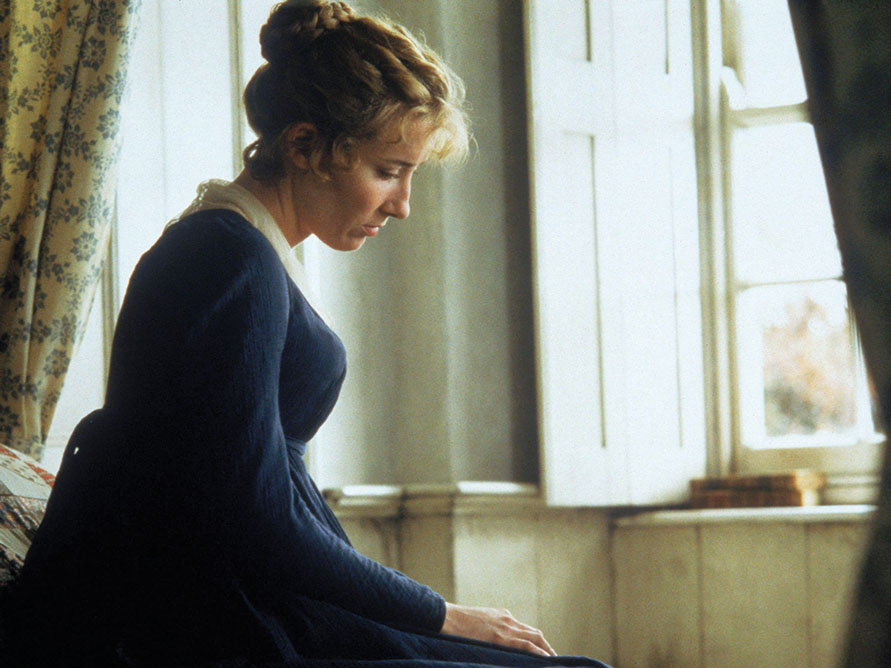
I have high hopes for Georgia Oakley’s new Sense and Sensibility, starring Daisy Edgar-Jones and George MacKay and adapted by the novelist Diana Reid. However, without mimicking Austen’s style too much, I confess that another version has a lasting hold on me: the classic Sense and Sensibility from 1995, directed by Ang Lee with a screenplay by, and starring, Emma Thompson – my favourite screen adaptation of Austen’s books.
This is no small compliment, nor an easy choice. How could it be, given the zeitgeisty joys of Amy Heckerling’s Clueless, transferring Emma to mid-Nineties LA, or the austere passion of Roger Michell’s Persuasion, which appeared the same year, treading on the lace-trimmed hem of the BBC’s blockbuster Pride and Prejudice series.
Sense and Sensibility was the first Austen novel I read, and I was a teenager when the film was released. I returned to it recently after a pilgrimage to Chawton Cottage in Hampshire, where Austen lived out her last years. There she published four novels, including Sense and Sensibility in 1811, working at her compact writing table. Austen described her vocation as “the little bit (two inches wide) of ivory on which I work with so fine a brush”. Touring the fairly snug quarters that Austen shared with her mother, her sister Cassandra and that tiny table is an apt preparation for rewatching the 1995 movie. Sense and Sensibility is a story about a family of women evicted from their comfortable home, forced to downsize into a cottage: reduced domestic circumstances that curtail their future hopes of marriage. Their world shrinks. The film emphasises this, with Lee’s cinematographer Michael Coulter shooting through doorways, pulling the camera back to push his figures deeper into the frame. Characters bump into each other as they enter and exit rooms, thwarted at every turn.

There are three sisters, but we are mostly concerned with the eldest two. First is Elinor Dashwood – played by Thompson, who had recently acquired her first Oscar for Howards End. She is decorous and pragmatic: she balances the family books and worries about propriety. Next in line is Marianne – played by Kate Winslet, just before Titanic – who is romantic and impetuous, given to forceful opinions about poetry and reckless walks in the rain. These two heroines embody, in turn, sense and sensibility. Eleven-year-old Margaret – played by the future New Statesman columnist Myriam François – is too young to entertain suitors; her role is considerably expanded for the film, including many of its best laughs. Their mother, Mrs Dashwood, is a winsome Gemma Jones. The film’s biggest star, thanks to Four Weddings and a Funeral (1994), is Hugh Grant, who plays Edward, a charming, shy man seemingly falling for Elinor. Marianne is courted by the upright Colonel Brandon – a suave Alan Rickman – but loses her heart to Willoughby (Greg Wise, who married Thompson in real life), a dream lover who may turn out to be a libertine.
The producer Lindsay Doran admired the book for its two heroines and abundance of action, and had long cherished the idea of making an adaptation before she found the ideal writer in Thompson. They had worked together on the Kenneth Branagh romantic thriller Dead Again (1991), and Doran was impressed by her comic sketch writing. Out of this inspired decision came Thompson’s first feature screenplay, for which she won an Oscar. Four years in the writing, it balances Austen’s fierce emotion with her delicate humour. Lee was a more surprising choice: the Taiwanese director, acclaimed for family stories, including the breakthrough foodie comedy-drama Eat Drink Man Woman (1994), had never shot in English. His style surprised the cast. He asked them to hand in essays about their characters and his notes were succinct, often harsh. Grant nicknamed him “the brute”. But his sensitivity to the novel’s overlapping relationships, the spaces the characters move in and the restraints placed on their behaviour, carry through beautifully from his Taiwanese work. In one scene Elinor and Edward are reunited, but in the presence of a third party, making a display of affection suffocatingly impossible. Lee confessed 19th-century England was strange to him, but he soon found connections with his youth in Taiwan “with one foot in that feudal society… the essence of social repression against free will – I grew up with that”. (Ten years later, Lee won an Oscar for directing Brokeback Mountain, playing a similar tune.) His culinary interests come through too: a wealthy landowner’s garden party is over-catered with wobbling aspics, haunches of meat and a whole table of desserts, while the Dashwoods run their household without sugar or beef. “I realised that all along I had been trying to do Jane Austen without knowing it,” Lee told a journalist after the shoot. “Jane Austen was my destiny.”
Sense and Sensibility, for all its awareness of the cost of living, is unmistakably an indulgence. It is exquisite to look at – Lee shoots the rural south of England, whether drenched in drizzle or sunlight, as prettily as a painting by Gainsborough. Although Thompson reveres Austen’s turns of phrase, she intelligently takes liberties with the text, indulging in the kind of drama the novel often shuns. Willoughby’s first entrance is enhanced by the romanticism of Marianne’s imagination: he emerges in a storm, on a rearing horse, and falls to his knees. Thompson even wrote herself a clinch with Grant, detailing in her shoot diary: “Kissing Hugh was very lovely. Glad I invented it. Can’t rely on Austen for a snog, that’s for sure.” The scene was cut, but it can be viewed online and it’s just as sweet as Thompson says.
But the film begins and ends with cash, not romance. It opens with the death of Henry Dashwood, leaving a married son from his first marriage and our heroines from his second. Their family home is to go down the male line, but the father trusts his son to ensure the now homeless women’s financial security. This sets up a bleakly comic sequence in which the unfeeling daughter-in-law (villainess Fanny, played hilariously by Harriet Walter) argues her husband down from offering his half-sisters £3,000 a year to nothing. What Austen conveys in pages of narration, Thompson whittles down to a few vignettes: an economy of wit that sets the tone for a film that comes alive in the silences. Thompson’s screenplay has many of Austen’s best lines, but also allows a carefully chosen image to say even more.
The film closes with a marriage party. Coins are thrown into the air: a liberal redistribution of money and heartfelt emotions, both of which have been carefully guarded in the preceding two hours. Financial considerations always frame the marriage plots in Austen, but this adaptation makes it clear that kindness is a currency, too.
And the happiness of this ending is less to do with marriage than the sisters staying together, “living almost within sight of each other”, writes Austen, if not quite as closely as Jane and Cassandra did at Chawton. We are supposed to think of this, I think. Elinor is often pictured scribbling with a quill, a nod to Thompson’s authorship but also to Austen herself. The sisterly bond is one of the film’s best qualities and leads to its most emotive scenes: Elinor at Marianne’s sickbed. This is a film convinced that sense and sensibility are complementary virtues, much like the companionship of beloved sisters. Or an English comedienne and a Taiwanese filmmaker.
Pamela Hutchinson is the author of The Curse of Queen Kelly (Sticking Place Books)
[Further reading: Pressure is a film that should have remained a play]
Content from our partners



Related

This article appears in the 16 Sep 2026 issue of the New Statesman, Will AI kill us all?
Join the debate
Subscribe here to comment